

About Khalifeh Glassblowers
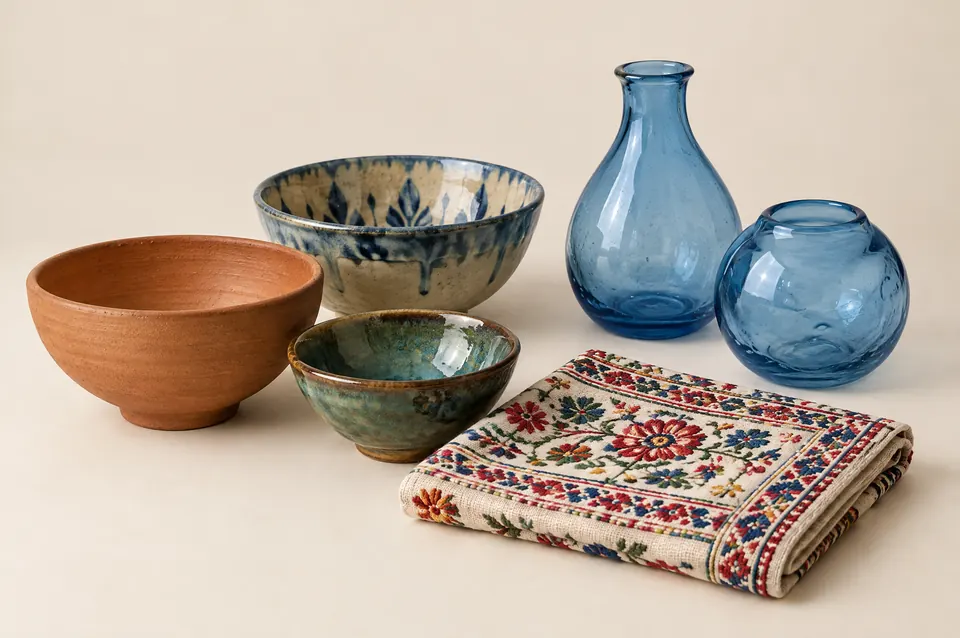
In the coastal town of Sarafand in South Lebanon, the Khalifeh family keeps alive one of the region’s most ancient crafts: hand-blown glass. Widely reported as among the last traditional glassblowers in Lebanon, they work at a wood-fired furnace, gathering molten glass on a long pipe and shaping it by breath and hand into pitchers, cups, vases and lanterns.
Much of their glass is made from recycled bottles and broken glass, melted down and reborn in soft blues, greens and ambers characteristic of the craft. The Phoenician coast is historically associated with the birth of glassmaking, and the Khalifeh atelier represents a living, fragile link to that heritage.
Why Khalifeh Glassblowers Matter
The Khalifeh atelier safeguards a craft that stretches back to the Phoenician coast and now teeters on the edge of disappearing. Every hand-blown piece is a small act of preservation, keeping an irreplaceable Lebanese skill and its ecological, recycled ethos alive.