
Top 10 Beaches to Visit in Lebanon (Public and Local Favourites)
Sandy turtle beaches in Tyre, clear rocky coves near Batroun and seafood lunches by the water in Anfeh: here is where to swim on the Lebanese coast, and how to do it well.
- Region
- Lebanese coast, Tyre to Tripoli
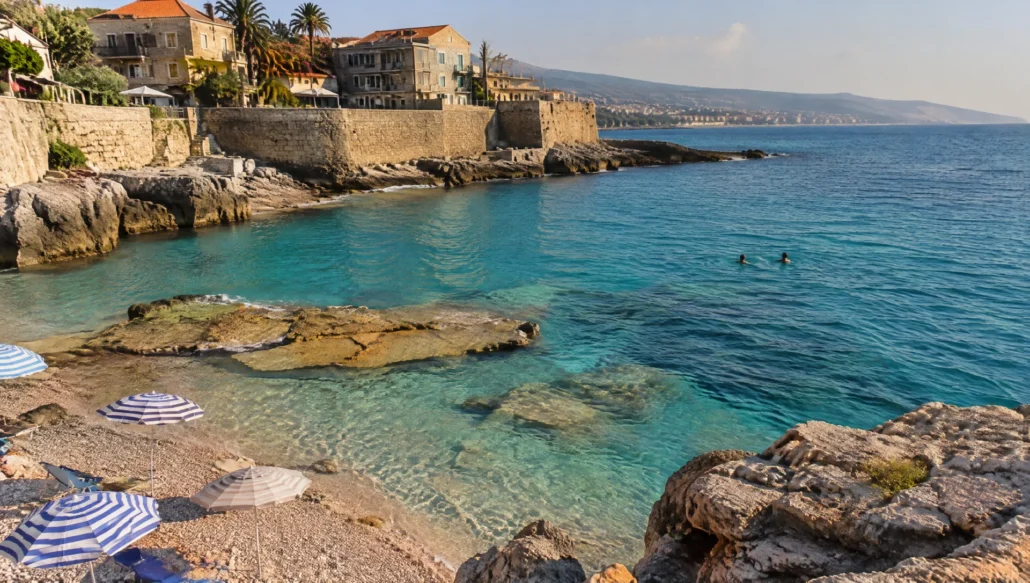
Lebanon has a little over 200 km of coast, and most of it is rocky: limestone shelves, pebbles and small coves, with sandy stretches mainly in the south and around Jbeil and Batroun. Much of the shoreline is taken up by private beach resorts that charge an entry fee, but there are still good public beaches if you know where to look, and plenty of simple places where you rent a chair and an umbrella for a small fee and eat fish with your feet almost in the water.
This guide covers both: free public beaches and the low-key beach spots that locals like, from Tyre in the south to the islands off Tripoli in the north, plus ideas for a slower, wellness-minded trip on the coast.
How we chose
We kept the real beaches from the old version of this page and removed one that is in Jordan, not Lebanon. We checked each area against recent Lebanese media and reserve information, favouring clean water, public access and a nice setting. Beach clubs open, close and rename often, so we name areas first and only mention a few long-running places. Water quality varies year to year; Lebanon’s National Council for Scientific Research (CNRS) publishes regular reports on which stretches are safe for swimming.
1. Tyre public beach (Tyre, South Lebanon)
The long sandy beach south of the old city is the best public beach in the country. It lies inside the Tyre Coast Nature Reserve, created in 1998, which protects more than 380 hectares of coast including nesting beaches for endangered loggerhead and green sea turtles and the ancient Ras el Ain springs. In summer, simple kiosks rent tables, chairs and umbrellas and serve drinks and grilled fish.
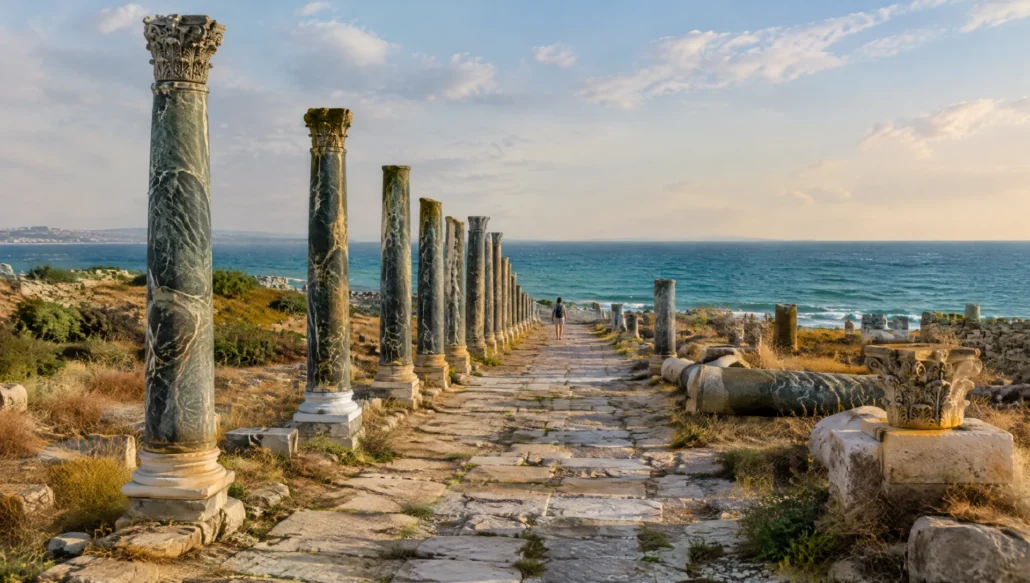
Combine a swim with a walk around Tyre’s Roman ruins and the old port. Tip: the turtle nesting areas are fenced off in season, so keep to the public zone and never leave rubbish on the sand. El Boutique Hotel is a seaside hotel close to the beaches if you want to stay.
2. Batroun old town and Al Bahsa (Batroun, North Lebanon)
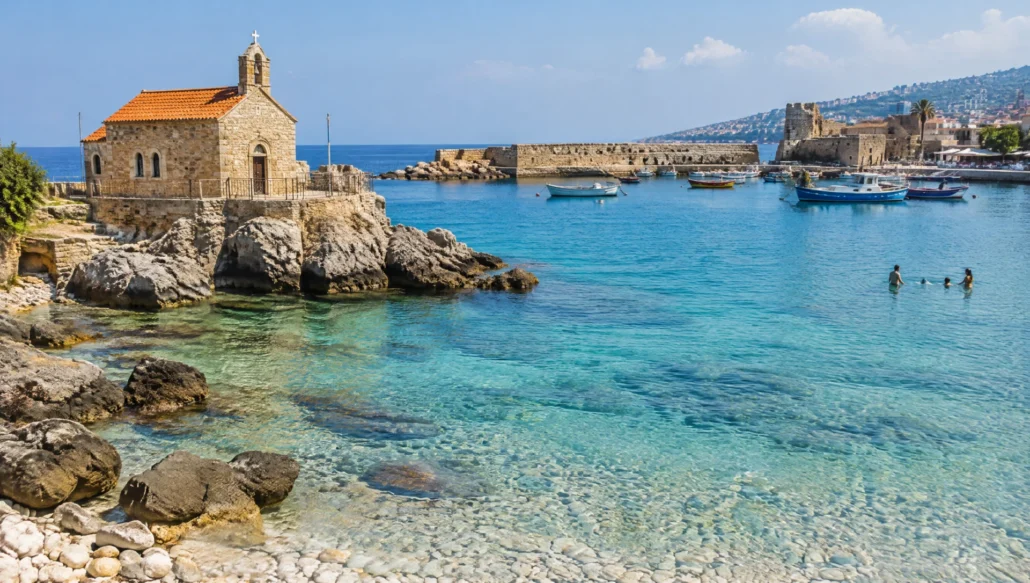
Batroun is the most popular beach town in Lebanon for a reason: an old stone town with a Phoenician sea wall, small sandy and pebbly coves, and plenty of places to eat. Al Bahsa near the old port is a small public beach where you can rent a lounger, with cafés and bars a few steps away.
Along the coast toward Thoum, you will find easygoing beach bars like Pierre and Friends. Tip: sunset is the moment here, and the old souk is lovely for an evening walk afterwards. For a calm night, look at Beit Al Batroun in Thoum.
3. Joining Beach and Abu Ali (Kfarabida, Batroun district)
Just south of Batroun, the coast at Kfarabida has some of the clearest water in Lebanon. Joining Beach is a rocky spot where a cliff drops into the sea and confident swimmers explore small caves below, and nearby Abu Ali is a small pebble cove reached by a steep path from the road.
There are few or no facilities at Abu Ali, so bring a towel, water and a mat. Tip: wear water shoes and bring a snorkel; the rocky seabed is the attraction.
4. Anfeh (Koura, North Lebanon)
Anfeh is a fishing town on a rocky peninsula with turquoise water, white and blue painted cabins and swimming straight off the rocks. It has become one of the most photographed spots on the coast.
The real draw is the seafood restaurants on the water, where you can swim before lunch and stay all afternoon. Chairs and umbrellas are cheap to rent along the shore. Tip: come on a weekday to avoid the summer crowds.
5. Chekka (Batroun district)
A few kilometres north of Anfeh, Chekka has a public beach and a string of seafood restaurants by the sea. It is less polished than Batroun, and the town is industrial in places, but the coast just outside it is pleasant for a swim and a long fish lunch.
Tip: treat it as a stop on a coastal day between Batroun, Anfeh and Tripoli rather than a destination on its own.
6. Byblos public beach (Jbeil)
Below the old city of Byblos, a small public pebble beach sits close to the ancient port, with cheap chairs and umbrellas for rent. You can swim in the morning, then walk to the citadel and the old souk.
For a more comfortable stay, the Byblos Sur Mer hotel sits on the seafront by the old port. Tip: in summer, check the dates of the Byblos International Festival, which takes over the old town on concert nights.
7. Amchit (Jbeil district)
North of Byblos, the Amchit coast has a public stretch and a few relaxed beach places with a laid-back, almost tropical feel, including Jungle Beach. The water is clear and the atmosphere easier than the big resorts.
Tip: Amchit is a quick hop from Byblos, so you can base yourself in one and swim at the other.
8. Jiyeh (Chouf coast, south of Beirut)
About 30 km south of Beirut, Jiyeh has free public beach access and some of the best sand close to the capital, alongside beach resorts such as Lazy B, which is landscaped with grass and decking around the rocks.
It is the easiest sandy beach for a half-day trip from Beirut. Tip: leave early on summer weekends, as traffic on the southern highway builds quickly.
9. Palm Islands Nature Reserve (off Tripoli)
About 5.5 km off El Mina, Tripoli, the Palm Islands are three flat rocky islands protected as a nature reserve since 1992 and listed as a Ramsar wetland of international importance. They are a nesting ground for green turtles and a stopover for migrating birds, and visitors come to swim off the beach on the main island.
The islands are open to visitors only in summer, roughly July to September, and fishermen run boats from the Mina port. Tip: there is little shade, so bring a hat, water and sunscreen, and take everything back with you. For a night in Mina, Beit el Nessim is a guesthouse in the old quarter.
10. Ramlet al Bayda (Beirut)
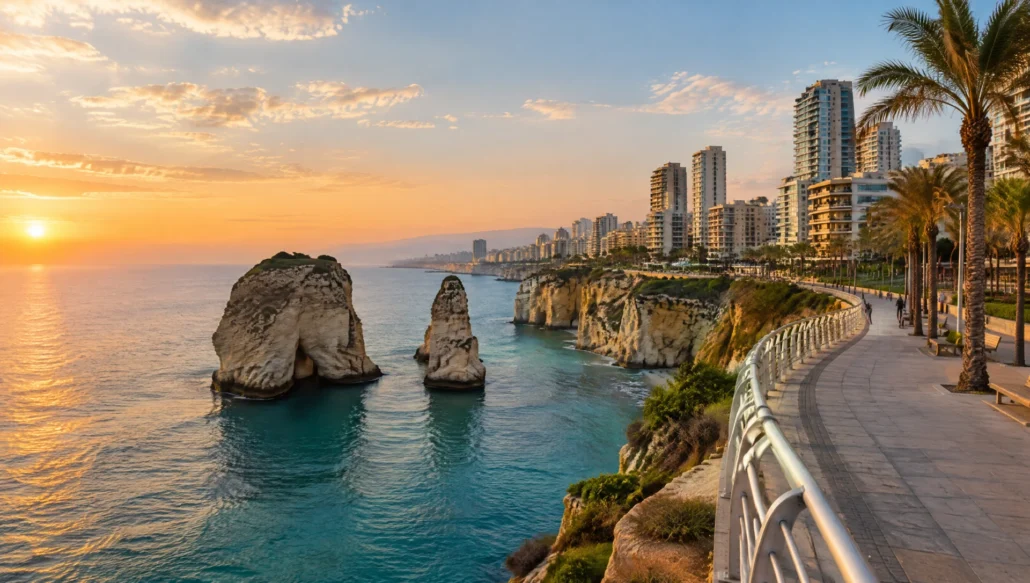
Beirut’s only large public sandy beach, below the corniche south of Raouche, is where families play football and volleyball and people walk at sunset. It is a real part of city life and great for a stroll.
Recent reports, however, describe the water as polluted, with sewage outlets nearby, so we would walk here rather than swim. Tip: come for the sunset and then head to a café on the corniche.
A slower seaside trip for wellness travellers
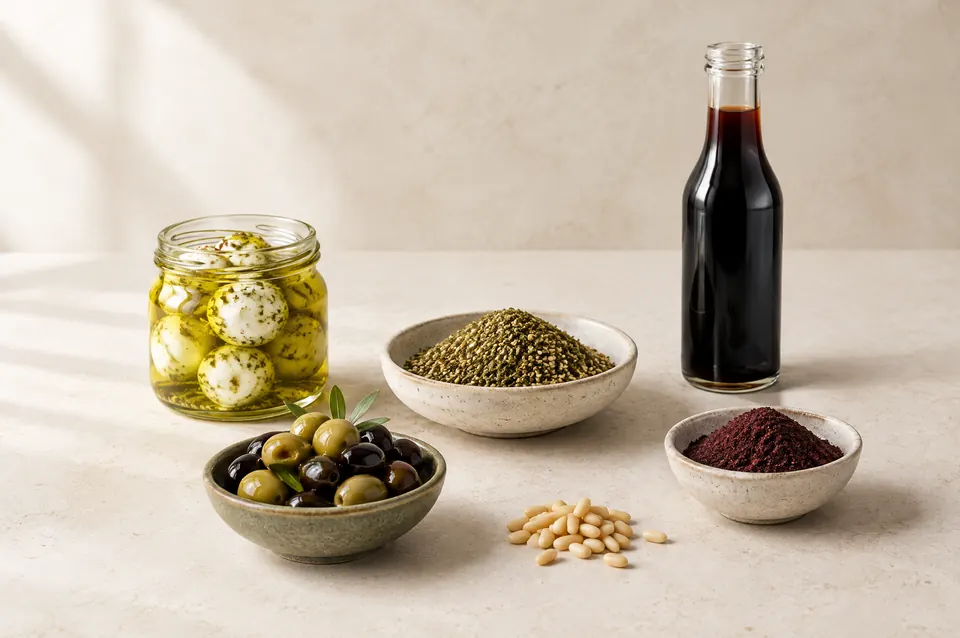
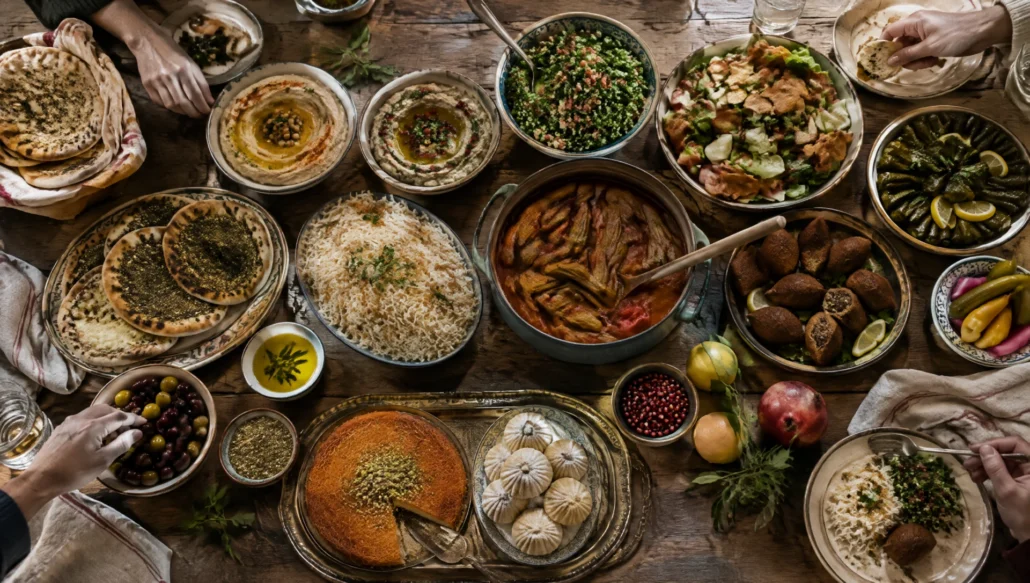
If you want rest more than parties, base yourself in Batroun or Byblos, where you can walk everywhere, swim in the morning and eat simply. Start the day with an early walk on the Beirut corniche or along Batroun’s sea wall, when the air is cool. Spend a quiet afternoon at Anfeh or Kfarabida rather than the big resorts, and save a day for the mountains, where the Jeita Grotto or a cedar forest walk balances the heat of the coast. Seaside hotels with spa services, like Byblos Sur Mer, make an easy base. Eat like a local: fattoush, grilled fish, za’atar manakish in the morning and fresh fruit.
Tips
- The swimming season runs from about May to October; the water is warmest in August and September.
- Many private beaches charge entry; public beaches are free, but chairs and umbrellas cost a small fee.
- Check the latest CNRS water-quality report before swimming near big cities.
- Bring water shoes. Much of the coast is rocky, and sea urchins are common.
- Take your rubbish home; public beaches depend on visitors to stay clean.
- For the south, check current travel advice before you go.