

Seaside Beirut: Corniche, Zaitunay Bay and Raouche on Foot
Beirut’s best free attraction is its waterfront. Here is how to walk it from the marina near downtown to Pigeon Rocks, with stops for food along the way.
- Region
- Beirut waterfront, Minet el Hosn to Raouche
- Time needed
- Half a day to a full day
- Best time to visit
- April to June, September to November
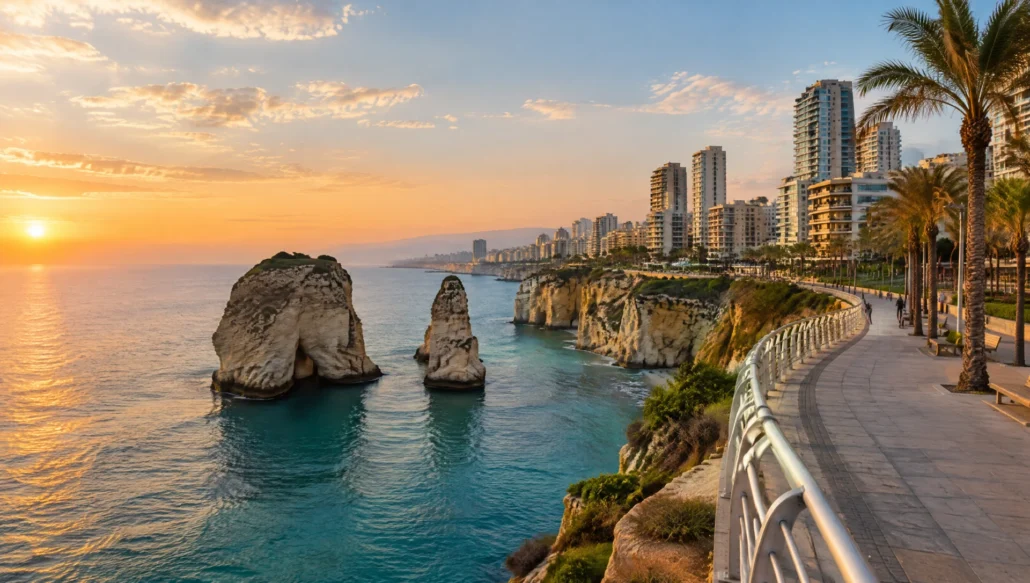
Beirut faces the sea on two sides, and the stretch from the downtown marina to Raouche is where the city comes to breathe. Families walk here after work, fishermen cast lines off the rocks, men play backgammon on folding chairs and juice sellers push their carts along the railing. You can walk the whole route in about two hours without stopping, but it is much better spread over a slow afternoon that ends with the sun going down behind Pigeon Rocks.
This guide follows the water from east to west: Zaitunay Bay at the edge of downtown, the Corniche through Ain el Mreisseh and past the lighthouse, and finally Raouche. Everything here is outdoors and free, so the only real planning is choosing the right time of day.
What to see
Zaitunay Bay
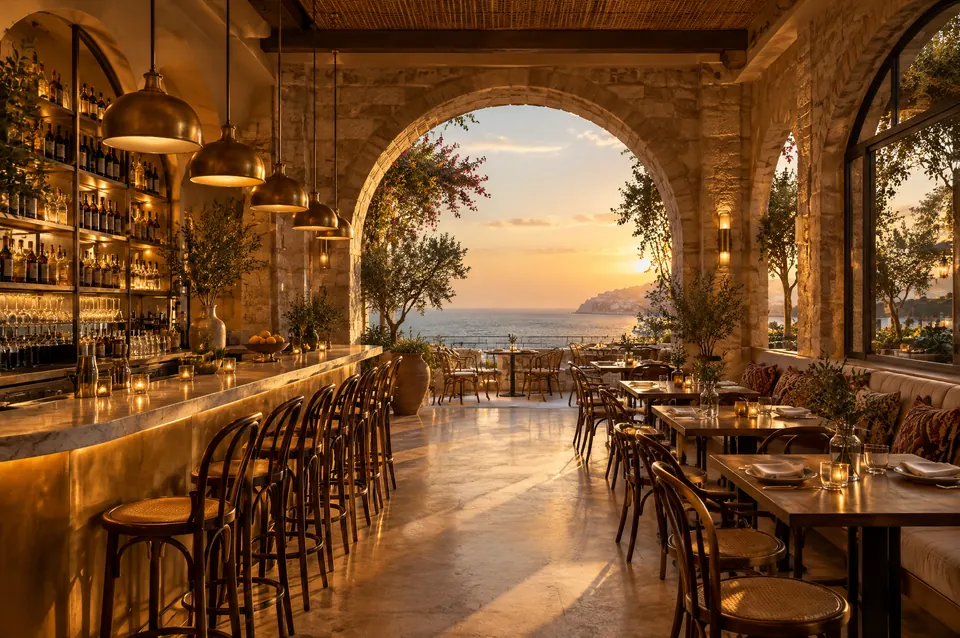
Zaitunay Bay is a pedestrian promenade along the Beirut Marina in Minet el Hosn, a few minutes from downtown. Yachts line the water and a row of cafés and restaurants spreads out onto the boardwalk, nearly twenty of them in recent years, from Lebanese grills to Italian and seafood. It is the most polished part of the seafront and a good place to start with a coffee or end with dinner.
Ain el Mreisseh and the Corniche
West of the marina, the Corniche begins in earnest. This is old Beirut seafront: the Ain el Mreisseh mosque, the little fishing harbour and the stretch where young men dive off the sea wall in summer. The wide sidewalk continues for several kilometres along Avenue de Paris and General de Gaulle Avenue, with palm trees, benches and the sea crashing below. On clear days you can see the mountains behind the city.
The Manara lighthouse and AUB
Halfway along you pass the Manara district, named after Beirut’s lighthouse. The striped modern lighthouse stands just inland of the Corniche, with the old one nearby. Above you on the hill is the American University of Beirut, whose leafy campus runs down to the sea. Its Archaeological Museum holds the oldest evidence of people in Beirut: flint tools found on the shore near Raouche.
Raouche and Pigeon Rocks
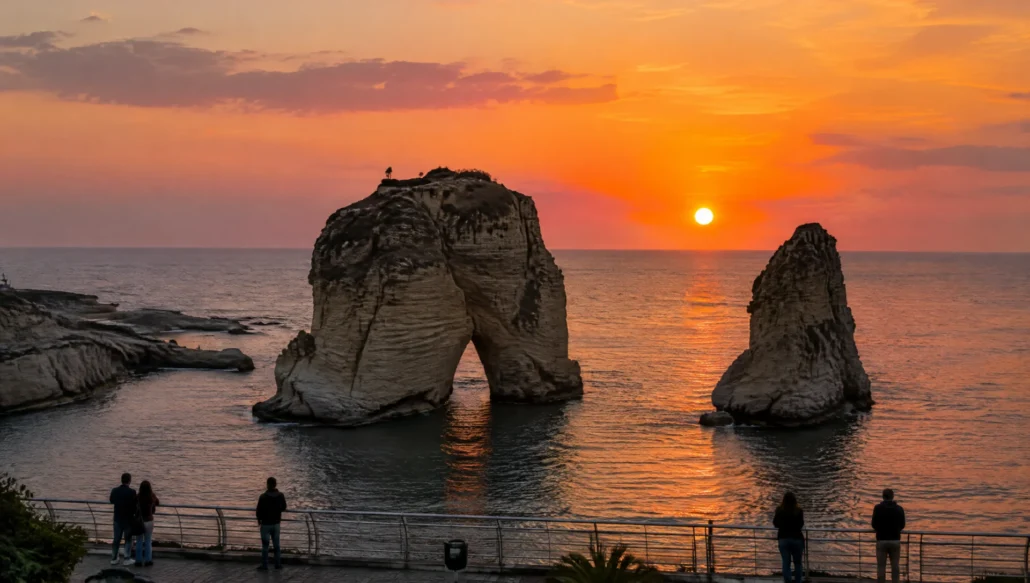
The walk ends at Raouche, where two great limestone rocks stand just offshore. The larger one has a natural arch at its base. Cafés with terraces line the cliff top along Avenue de Paris, and the viewpoint is the classic place to watch the sunset. Next to it lies Dalieh, a rocky headland long used by fishermen and swimmers, which has been at the centre of a public campaign against its privatisation.
A suggested afternoon
Afternoon
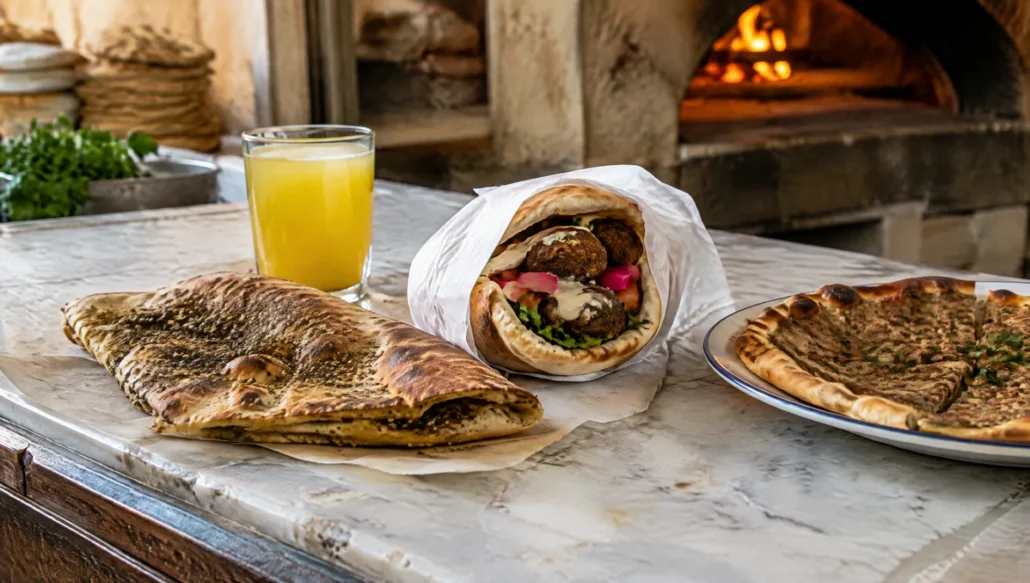
Start around 3 pm at Zaitunay Bay with coffee by the yachts. Walk west past Ain el Mreisseh, stopping to watch the fishermen at the old harbour. Pick up a fresh juice or a ka’ak (the sesame bread sold from carts) on the way.
Late afternoon
Keep going past the Manara lighthouse. If you have time, climb the hill to Hamra for a snack: Barbar is a Beirut institution for kafta sandwiches and manakish, and Booza Society makes stretchy Levantine ice cream if you need something cold.
Evening
Arrive at Raouche for sunset. Find a spot on the railing or take a terrace table above the rocks. Afterwards, walk back up into Hamra for dinner, or take a taxi back to Zaitunay Bay for a meal on the water.
Where to eat
Zaitunay Bay is the place for a sit-down meal facing the sea, with grilled fish, mezze and international menus side by side. Along the Corniche, eating is more casual: corn on the cob, lupini beans, ka’ak and fresh juice from carts. The streets of Hamra, a short walk uphill, have the city’s widest choice of cheap eats and cafés, including Urbanista for coffee and a quiet table. For more on Beirut’s snack culture, see our street food guide to Beirut.
Practical tips
- Go late in the day. The Corniche has very little shade, and the midday sun is fierce from May to October.
- Weekend evenings are the liveliest, with families out in force. Weekday mornings are calm and good for runners and walkers.
- Wear comfortable shoes. The sidewalk is wide but uneven in places.
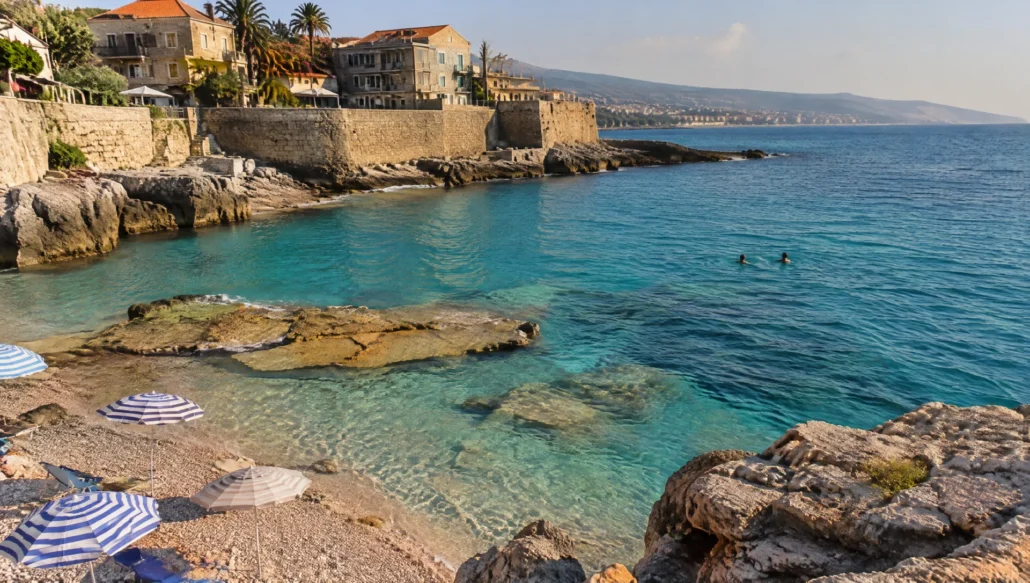
- The sea here is rough and rocky. Swimming off the Corniche is only for strong local swimmers. Use a beach club or a proper beach instead.
- Carry some cash for carts and small cafés. Taxis and app rides are easy to find along the main roads.
- Follow local news before you go and avoid any area where crowds or gatherings are forming.
Nearby
Downtown Beirut, a short walk inland from Zaitunay Bay, has Martyrs’ Square, the Roman baths and the Mohammad al-Amin Mosque. The Sursock Museum in Achrafieh is a 15 minute taxi ride. For sandy beaches and clean water, head north to Byblos or Batroun: our list of the top beaches in Lebanon has the details, and our sunset spots guide covers more places like Raouche.