
10 Best Wineries to Visit in Lebanon, from Bekaa to Batroun
From Roman cellars in the Bekaa to organic terraces above the Qadisha Valley, these are ten Lebanese wineries worth planning a day around.
- Region
- Bekaa, Batroun and Mount Lebanon
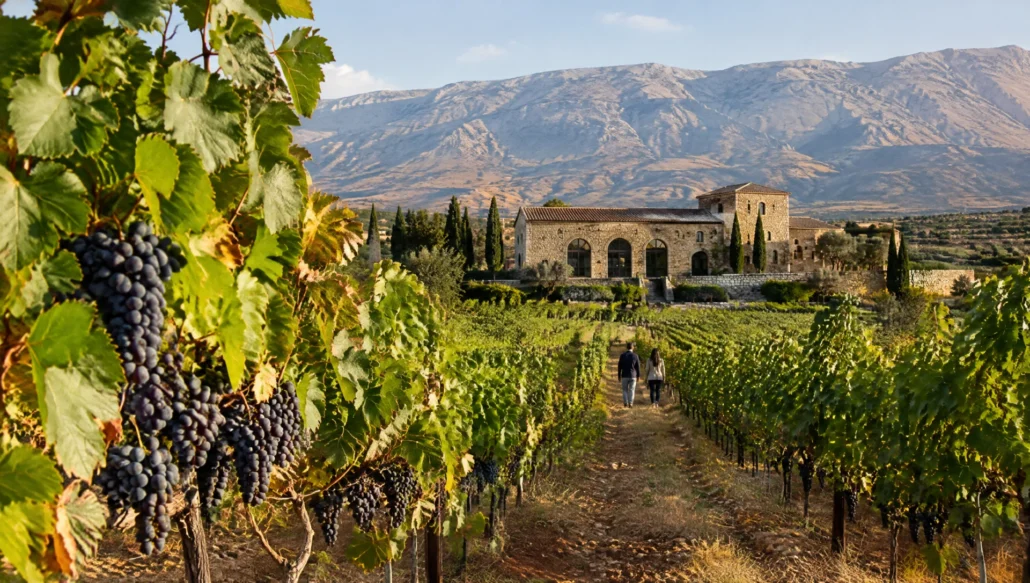
People have made wine on this coast since the Phoenicians shipped it across the Mediterranean, but modern Lebanese wine really starts in 1857, when Jesuit priests planted vines near Zahle. Today most of the country’s wine still comes from the Bekaa Valley, where vineyards sit at around 1,000 m between two mountain ranges, with hot days, cold nights and very little summer rain. Batroun, Mount Lebanon, the Qadisha highlands and Jezzine have added a new generation of smaller estates.
A winery visit here usually means a cellar tour, a tasting and often a long lunch among the vines. Lebanon’s own white grapes, obeideh and merwah, are worth asking about wherever you go.
How we chose
We kept the wineries from the old version of this page that are real and still producing, corrected their details (Château Kefraya is in the West Bekaa, not the Chouf, for example), and checked founding dates against the wineries’ own sites and published references. We favoured estates that welcome visitors and that give a sense of different regions. Visiting arrangements change, so treat everything below as a starting point and book ahead.
1. Château Ksara (Ksara, near Zahle, Bekaa)
Château Ksara is Lebanon’s oldest and largest winery, founded by Jesuits in 1857 and now sold in more than 40 countries. The highlight of a visit is the cellar: a network of tunnels first dug in Roman times and rediscovered and extended by the monks, where bottles age in steady cool air.
It is set up for visitors in large numbers, which makes it a good first stop on a Bekaa day. Tip: pair it with lunch in Zahle along the Berdawni river, and pick up a bottle of their arak too.
2. Château Kefraya (Kefraya, West Bekaa)
On the foothills of Mount Barouk at about 1,000 to 1,100 m, Château Kefraya belongs to the Bustros family. Vines were planted in 1951 and the estate began making its own wine in 1979; its red Comte de M is one of the country’s best known bottles.
Visits are well organised: a little train runs through the vineyards to a viewpoint, there is a small museum and cellar tour, a room showing how arak is distilled, and a workshop where you can blend your own cuvée. Lunch is at the estate restaurant among the vines. Tip: stay over at the Chateau Kefraya Guest House and visit neighbouring West Bekaa estates the next morning.
3. Domaine des Tourelles (Chtaura, Bekaa)
Founded in 1868 by a French engineer, François Eugène Brun, Domaine des Tourelles is one of the oldest wineries in the country and still works from its historic stone buildings in Chtaura, which feel very different from the newer estates.
Tourelles has been a champion of Lebanese grapes such as obeideh and of old-vine Cinsault, and it also makes a well-regarded arak. Tip: it is a short drive from Ksara, so the two fit easily into one day.
4. Château Musar (Ghazir, Keserwan, with Bekaa vineyards)
Château Musar was founded in 1930 by Gaston Hochar and made famous abroad by his son Serge, who kept exporting through the civil war. The grapes grow in the Bekaa at around 1,000 m, but the wine is made and aged in Ghazir, about 24 km north of Beirut, in an old castle above Jounieh Bay.
Musar’s reds are blends of Cabernet Sauvignon, Cinsault and Carignan, released late and built to age; the white is made from obeideh and merwah. Tip: visits to Ghazir are by appointment, so contact the winery well before your trip.
5. IXSIR (near Batroun, North Lebanon)
Founded in 2008, IXSIR sits in the hills just outside Batroun and sources grapes from vineyards in several regions, at altitudes from roughly 400 to 1,800 m. Its winery building, partly dug into the hillside around an old stone house, has won awards for its environmental design.
It is a popular stop because it combines a tasting with a long Lebanese lunch and views toward the sea. Tip: build a Batroun day around it, with a swim or a walk in the old town afterwards.
6. Château Belle-Vue (Bhamdoun, Mount Lebanon)
In Bhamdoun, above Aley on the old Beirut to Damascus road, Château Belle-Vue revived abandoned mountain terraces in 2000 and now makes long-aged, Bordeaux-style reds such as La Renaissance. The family behind it is tied to the village’s old hotel tradition, and the estate runs a small hotel of its own.
This is a good choice if you want a mountain winery within an hour of Beirut. Tip: it is a natural stop on the way to or from the Chouf.
7. Mont d’Almaz (Beit Menzer, above the Qadisha Valley)
Mont d’Almaz is a family winery run by the Saade family in Beit Menzer, in the Bsharri highlands above the Qadisha Valley. They grow organic grapes at about 1,260 m and make a small range of reds, including a Malbec, which is unusual in Lebanon.
It is the winery to pair with a hike in the Holy Valley or a visit to the Cedars of God. Tip: call ahead, as it is a small family operation.
8. Sept Winery (Batroun hills)
Sept is a small, low-intervention winery in the Batroun mountains and one of the pioneers of natural and biodynamic winemaking in Lebanon. Expect wines that are more about character than polish.
Tip: if you like this style, look up other young Batroun producers such as Clos du Phoenix in Eddé and Atibaia in Smar Jbeil.
9. Karam Wines (South Lebanon)
Established in 2002, Karam Wines was the first winery in South Lebanon, growing grapes in the high, cool hills of the Jezzine region. It helped show that good wine in Lebanon is not only a Bekaa story.
Tip: combine it with a visit to the Jezzine waterfall and old souk, and check road conditions in the south before you go.
10. Coteaux du Liban (Chtaura area, central Bekaa)
Based in the central Bekaa, Coteaux du Liban makes red, white and rosé wines plus arak, and is an easy addition to a Ksara and Tourelles itinerary.
Tip: smaller wineries like this one usually ask visitors to book in advance, which also means you are more likely to be shown around by the people who make the wine.
Tips
- Plan by region: a Bekaa day (Ksara, Tourelles, Coteaux du Liban, Kefraya), a Batroun day (IXSIR, Sept and its neighbours), or a mountain day (Belle-Vue, Mont d’Almaz).
- Book tastings in advance, especially for small estates and for weekends.
- Do not drive after tastings. Hire a driver or join an organised wine tour.
- September and October are harvest time, the most lively season to visit.
- Ask to taste wines made from obeideh and merwah, Lebanon’s native white grapes.
- Most estates sell bottles at the cellar door; browse more producers in our Lebanese wine and beer directory.