




How to Make Zaatar Manakeesh (Lebanese Za’atar Flatbread)
Manousheh bi zaatar is Lebanon’s breakfast: soft flatbread, za’atar and olive oil, eaten hot from the oven. Here is how to make it at home.
- Prep time
- 25 min plus 1 hour rising
- Cook time
- 6 to 8 min per batch
- Serves
- 8 manakeesh
- Difficulty
- Easy
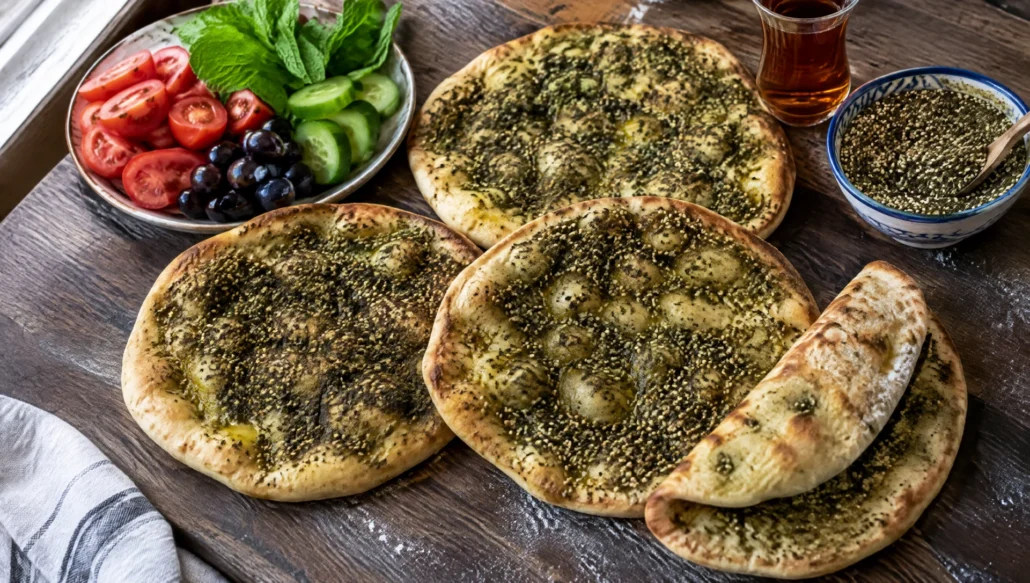
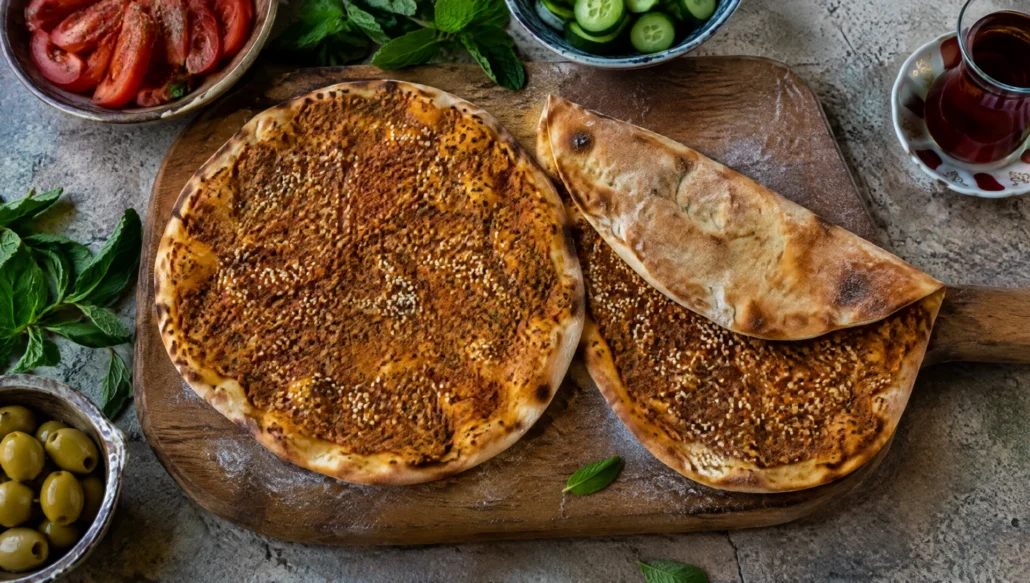
Manakeesh (singular manousheh) are round flatbreads baked with a topping, and the most loved of them is manousheh bi zaatar: dough spread with a paste of za’atar and olive oil. The name comes from the Arabic word for engraving, after the dimples pressed into the dough with your fingertips. In Lebanon, mornings start at the neighborhood furn (bakery), where the baker slides manakeesh into a blazing oven and hands them over folded in paper, often with tomato, cucumber, mint and olives.
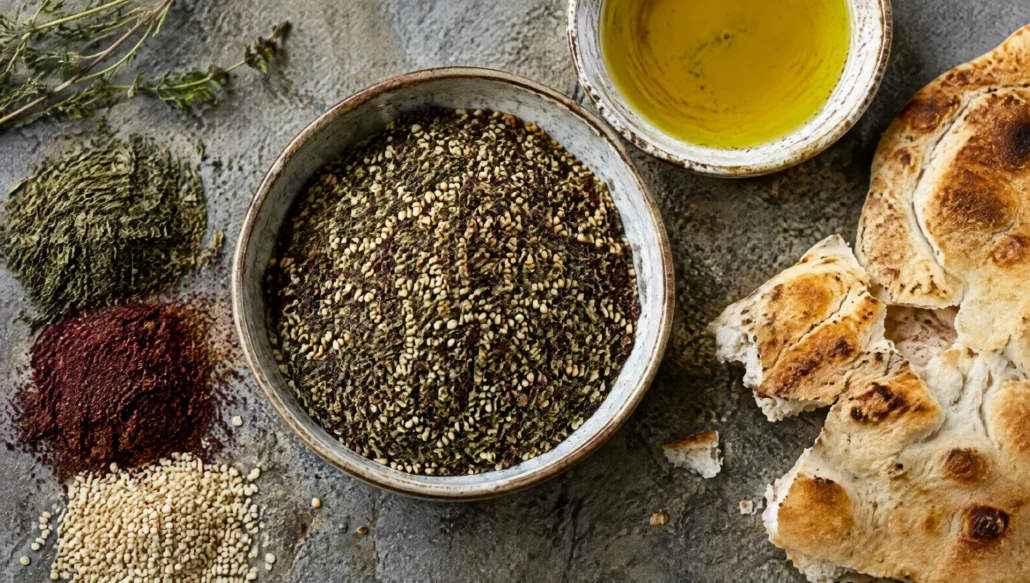
Lebanese za’atar is a blend of dried wild thyme (or oregano), sumac, toasted sesame and salt. Good za’atar, generous olive oil and a hot oven are the whole secret. At home you will not match a bakery’s stone oven, but a preheated tray at your oven’s highest setting comes close.
Ingredients
For the dough
- 500 g (4 cups) all-purpose flour, plus a little for dusting
- 7 g (2 1/4 teaspoons, one packet) instant or active dry yeast
- 1 teaspoon (4 g) sugar
- 1 1/2 teaspoons (9 g) fine salt
- 60 ml (1/4 cup) extra virgin olive oil
- About 300 ml (1 1/4 cups) warm water, 38 to 40°C (100 to 105°F)
For the topping
- 60 g (about 1/2 cup) Lebanese za’atar mix
- 120 ml (1/2 cup) extra virgin olive oil
To serve (optional)
- Sliced tomatoes, cucumbers, fresh mint, olives and labneh
Instructions
- If using active dry yeast, stir it with the sugar into the warm water and leave for 5 to 10 minutes, until foamy. Instant yeast can go straight into the flour.
- In a large bowl, mix the flour, salt (and sugar and instant yeast, if using). Add the olive oil and most of the water and stir until a shaggy dough forms. Add the rest of the water a little at a time until no dry flour remains.
- Knead on a lightly floured surface for 8 to 10 minutes (or 5 minutes in a stand mixer with a dough hook) until the dough is smooth, soft and springs back when poked.
- Place it in a lightly oiled bowl, turn to coat, cover and leave in a warm spot for about 1 hour, until doubled in size.
- Meanwhile, stir the za’atar and olive oil together into a loose, spreadable paste. Let it sit so the herbs soften.
- Place a heavy baking tray upside down (or a pizza stone) on the middle rack and heat the oven to 250°C (480°F), or as high as it goes, for at least 30 minutes.
- Punch down the dough and divide it into 8 pieces of about 100 g (3.5 oz). Roll into balls, cover and rest for 10 minutes so they are easier to stretch.
- On a floured surface, roll or press each ball into a round about 18 cm (7 inches) across and 5 mm (1/4 inch) thick. Press your fingertips all over the surface to make dimples, leaving a thin rim.
- Spread 1 1/2 to 2 tablespoons of the za’atar paste over each round, all the way to the rim. Stir the paste each time, since the oil settles.
- Transfer two or three rounds at a time onto a sheet of baking paper and slide them onto the hot tray. Bake for 6 to 8 minutes, until the edges and underside are golden and the za’atar smells toasty but has not darkened.
- Serve hot, flat or folded in half, with the vegetables on the side.
Tips for the best zaatar manakeesh
- Roll thin. A 1 cm (1/2 inch) dough bakes up thick and bready instead of soft and chewy.
- Be generous with oil in the topping. Dry za’atar burns and tastes bitter.
- For a softer bread, wrap the baked manakeesh in a clean towel for a few minutes.
- The dough can rise slowly in the fridge overnight for more flavor; bring it to room temperature before shaping.
Variations
- Half and half (nuss w nuss): top half with za’atar and half with grated akkawi or mozzarella.
- Cocktail: za’atar topped with cheese, tomato and olives.
- Add finely chopped onion or a little chili flakes to the za’atar paste.
How to serve and store
Manakeesh are best within an hour of baking. Freeze cooled ones in a bag for up to a month and reheat in a hot oven for 3 to 4 minutes.
The za’atar is the star, so buy a fresh Lebanese blend from a producer like Mountain Boons in the Chouf or Zeit Boulos, which also makes the olive oil. Prefer to mix your own? Follow our Lebanese za’atar mix recipe.