
History in Tyre: A Day Trip to Lebanon’s Ancient Port City
A Phoenician island city turned Roman showpiece, with columns by the sea and one of the largest hippodromes the Romans ever built. Here is how to see it in a day, and what to check first.
- Region
- Tyre (Sour), South Lebanon
- Time needed
- A full day
- Best time to visit
- March to May, October and November
Tyre (Sour in Arabic) sits on a headland about 80 km south of Beirut, and few towns anywhere pack so much history into a short walk. This was one of the great Phoenician city states: its ships traded across the Mediterranean, it founded colonies such as Carthage and Cadiz, and legend credits it with the purple dye once reserved for royalty. In 332 BC Alexander the Great took the island city only after building a causeway out to it, which is why the old town is now joined to the mainland.
The ruins that survive are mostly Roman and Byzantine, and they are on the UNESCO World Heritage List as two separate sites. This guide covers what to see, how to shape a day, and what to know about visiting Tyre right now.
Before you go: Tyre in 2026
Southern Lebanon was hit hard by the war that began in March 2026. Israeli strikes damaged parts of Tyre, including the administrative office of the archaeological site and nearby columns, capitals and mosaics, and the Al Bass site was damaged in April. In July 2026 UNESCO added Tyre to its List of World Heritage in Danger at Lebanon’s request. Check your government’s travel advice and local news before planning a trip, confirm that the sites are open, and follow any instructions from the Lebanese authorities. The rest of this guide describes Tyre as it is when visits are possible.
What to see
Al Mina, the city site
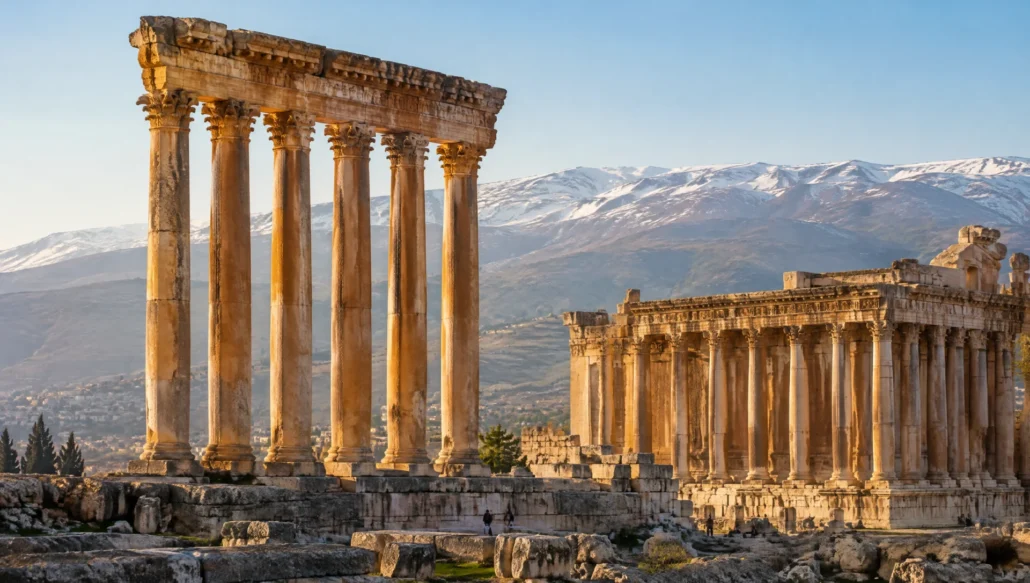
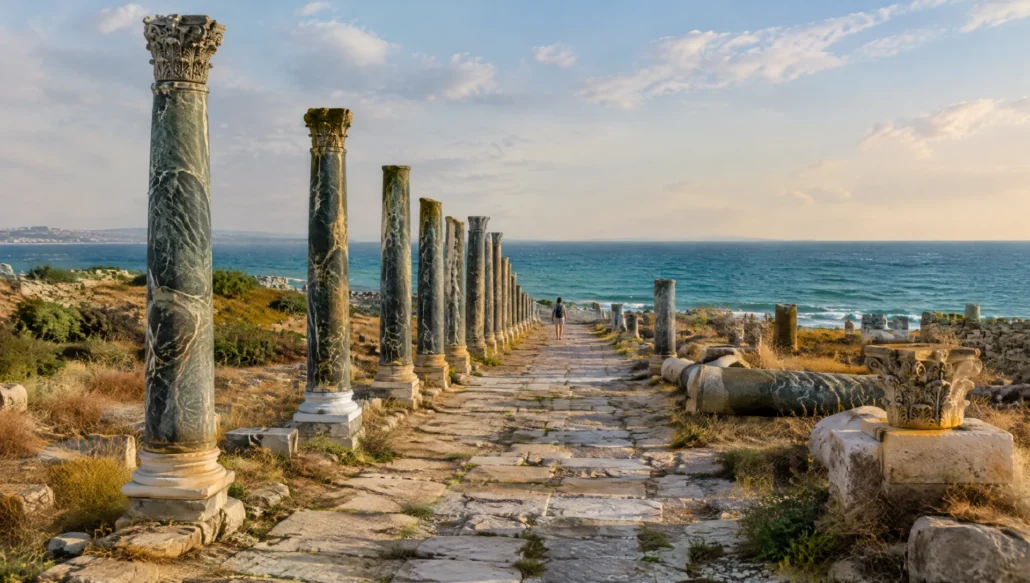
On the old peninsula, a long Roman colonnaded road paved with marble runs toward the sea, flanked by green cipollino columns. Around it lie Roman baths, two palaestrae (exercise grounds), a rectangular arena and a residential quarter, with the remains of a 12th-century Crusader cathedral and sections of Crusader wall. The sea is right beside you, which makes this one of the most beautiful ruin walks in Lebanon.
Al Bass, the necropolis and hippodrome
On the mainland, a monumental road runs past hundreds of carved stone sarcophagi to a Roman triumphal arch from the 2nd century AD. Beyond it is the hippodrome, also 2nd century, one of the largest ever built in the Roman world: you can still see the long central spine the chariots raced around, and the scale only hits you when you stand at one end. Remains of a Roman aqueduct cross the site too.
The old town and fishing port
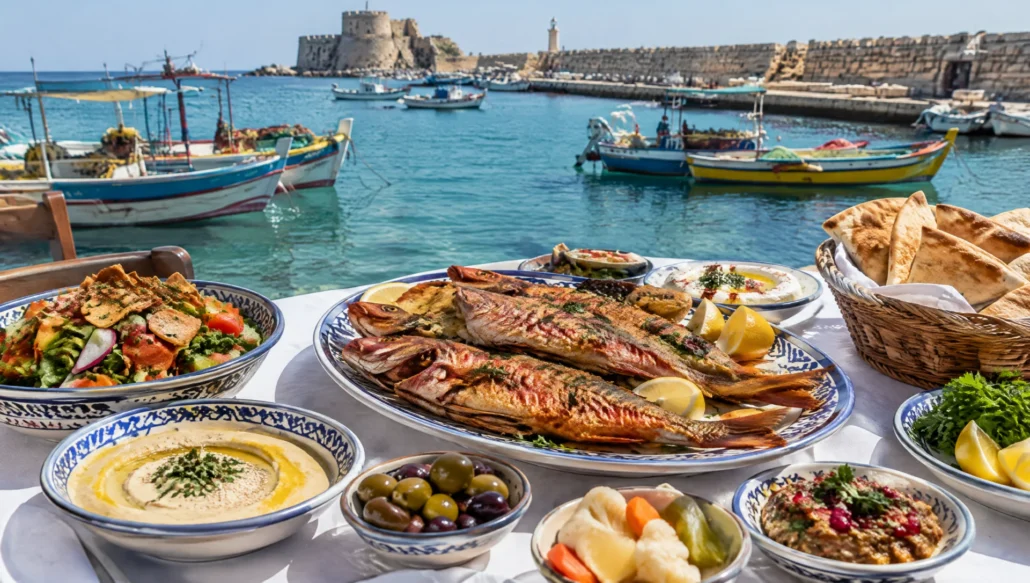
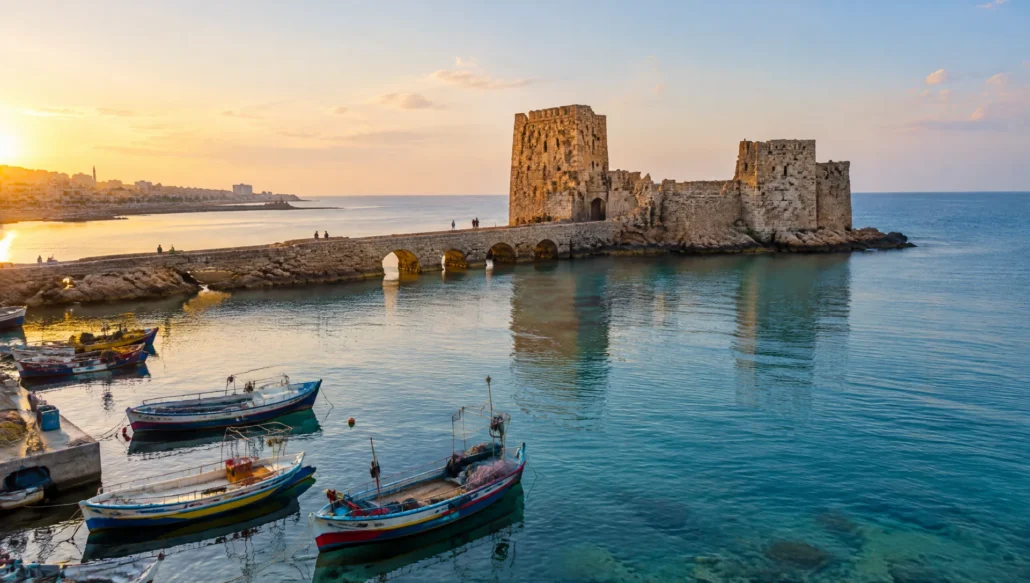
Between the two sites, the old quarter around the harbour is where Tyre still lives. Wooden fishing boats tie up in the small port, and the narrow lanes of the Christian quarter behind it are lined with old sandstone houses and churches. The covered souk near the port is the place for spices, sweets and a quick lunch.
Tyre Coast Nature Reserve
South of the city, the Tyre Coast Nature Reserve protects one of the longest sandy beaches left in Lebanon, along with freshwater springs and nesting sites for sea turtles. In summer, part of the beach is open for swimming, with simple tented cafés serving drinks and grilled fish.
A suggested day
Morning: Al Bass
Leave Beirut early, as the coastal highway can be slow through Khaldeh. Start at Al Bass before the heat builds: the necropolis, arch and hippodrome have almost no shade. Allow around two hours, and wear a hat.
Midday: port and souk
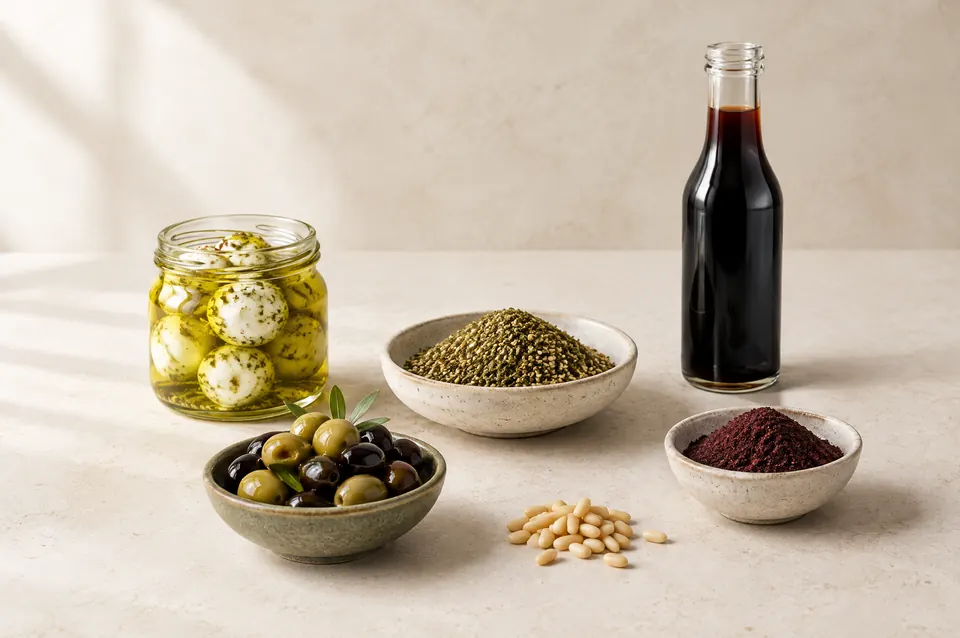
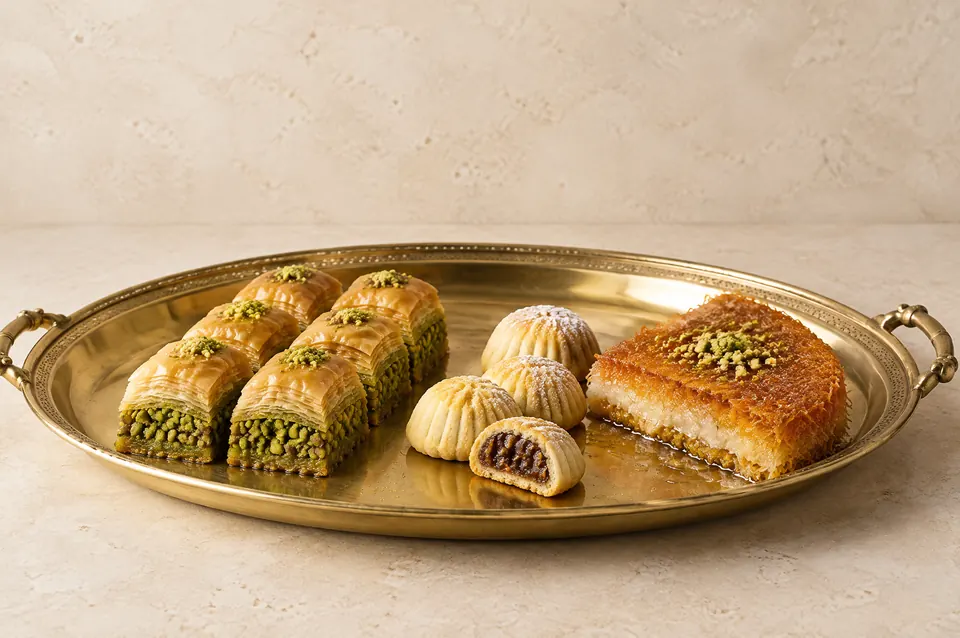
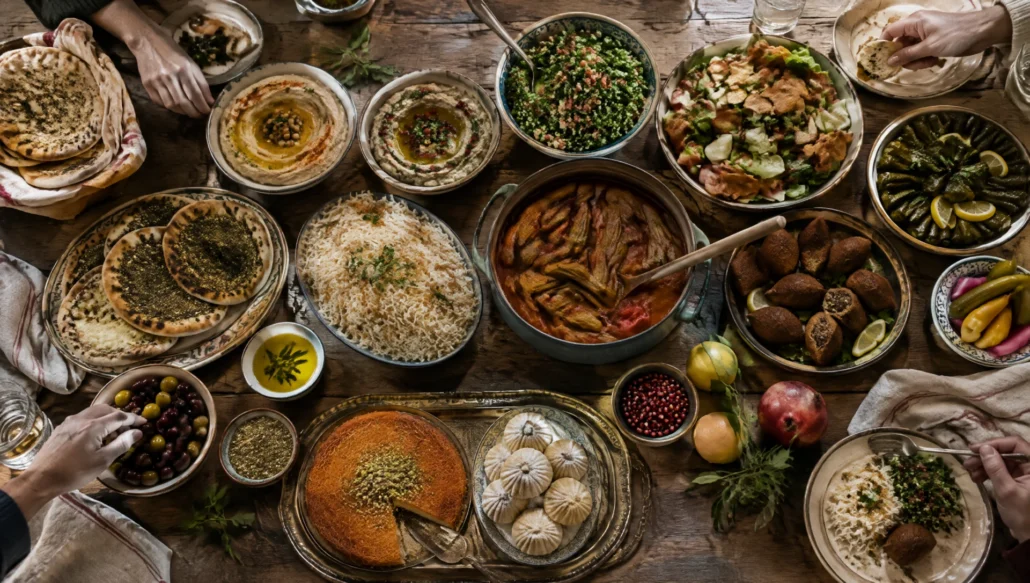
Drive to the old town and walk the fishing port. Lunch on fish by the harbour, or put together a picnic of man’oushe and fruit from the souk. Finish with something sweet from Al Shareq Sweets, a Tyre pastry shop.
Afternoon: Al Mina and the sea
Walk the Al Mina site in the softer afternoon light, when the columns glow against the water. In summer, end with a swim at the nature reserve beach. If you would rather not drive back in the dark, El Boutique Hotel is a seaside boutique hotel close to the beaches.
For more on what to order, see our guide to local food in Tyre.
Nearby
- Sarafand: on the coast road north of Tyre, the Khalifeh Glassblowers still blow recycled glass by hand, a craft long tied to this stretch of coast.
- Sidon (Saida): 40 km north, with its Crusader Sea Castle, old souks and soap tradition. Stop at Al Yaman Factories, making tahini, halawa and Turkish delight in Sidon since 1882. Read our Sidon Sea Castle guide.
- The National Museum in Beirut: two of the finest marble sarcophagi found in Tyre’s necropolis are on display there, a good way to finish the story back in the capital.
Practical tips
- The two archaeological sites are separate and each has its own entrance. Ask at the gate whether one ticket covers both.
- Spring (March to May) and autumn (October and November) are the most comfortable months. Summer midday heat on the ruins is intense.
- Dress modestly in the old quarter and the souk, and carry cash for small shops.
- Stay on marked paths. The ruins are fragile, and after the 2026 damage some areas may be fenced off.