
Sidon Sea Castle Guide: History, Old Souks and Where to Eat
A Crusader castle on the water, vaulted souks and a 17th century soap factory: Sidon packs thousands of years into a few walkable streets.
- Region
- Saida, South Lebanon
- Time needed
- Half a day to a full day
- Best time to visit
- October to May; summer mornings
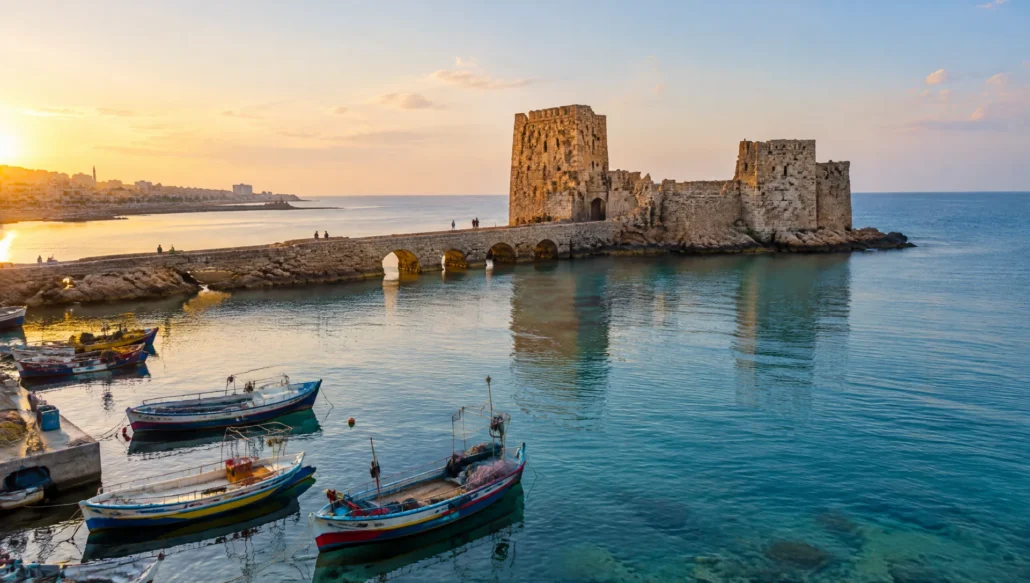
Sidon (Saida in Arabic) is one of the oldest cities on the Mediterranean, a Phoenician port that has been lived in for thousands of years. Its best known landmark is the Sea Castle, a small Crusader fortress built in 1228 on an island just off the harbour and joined to the shore by a stone causeway. Behind it lies an old city of vaulted souks, caravanserais and soap workshops that still feels like a working neighbourhood rather than a museum.
It is an easy trip from Beirut, the sites are close together, and you can see the castle, the souks and two good museums on foot in one unhurried day, with time left for falafel and sweets.
What to see
Sidon Sea Castle (Qalaat al Bahr)
The Crusaders built the castle in the 13th century on an islet that was once the site of a temple to Melqart, the Phoenician god later linked with Heracles. When the Mamluks took Sidon they partly destroyed it, then rebuilt it, and Emir Fakhreddine II restored it again in the 17th century. Today you see two towers joined by a wall. Look closely at the outer walls: old Roman columns were laid in sideways as reinforcement, so the stone ends poke out like rows of round buttons.
The west tower is the better preserved. It has a large vaulted hall and a staircase up to the roof, where a small domed mosque from the Ottoman period sits beside views over the fishing harbour, the old city and the sea. The stairs are narrow and uneven, so watch your step.
The old souks
Cross the road from the causeway and you are in the souks: narrow covered lanes with vaulted ceilings, lined with carpenters, spice sellers, sweets makers, fishmongers and shops selling household goods. Wander without a plan. The lanes are small enough that you will keep coming back to the same few landmarks.
Khan el Franj
The Khan of the Franks is a 17th century caravanserai, a large rectangular courtyard surrounded by two levels of arcades where merchants once stored goods and rested their animals. It dates from the era of Emir Fakhreddine II, when it hosted European merchants (the Franj of its name) and travellers, and it is in remarkably good condition.
Hammam al Jadeed
This 18th century Ottoman bathhouse, despite its name meaning the new bath, is one of the old city’s quieter treats: a series of domed rooms with small glass openings in the ceilings that let in pools of light.
Audi Soap Museum
Set in a 17th century soap factory (parts of the building may be older), the Audi Foundation’s museum opened in 2000 and explains how olive oil soap has been made in this region for centuries, from boiling and pouring to cutting and stacking the bars into tall drying towers. It also shows objects found when the site was excavated. The gift shop sells olive oil soap made by a family of traditional soap makers.
Debbane Palace
Inside the old souk, this Ottoman residence was built in 1721 by Ali Agha Hammoud and later bought by the Debbane family, who lived in it until 1978. Its divans, liwan (a vaulted hall open to the courtyard), coloured tiles and red tiled roof show the Damascene style of the period. It now operates as a museum.
Temple of Eshmun
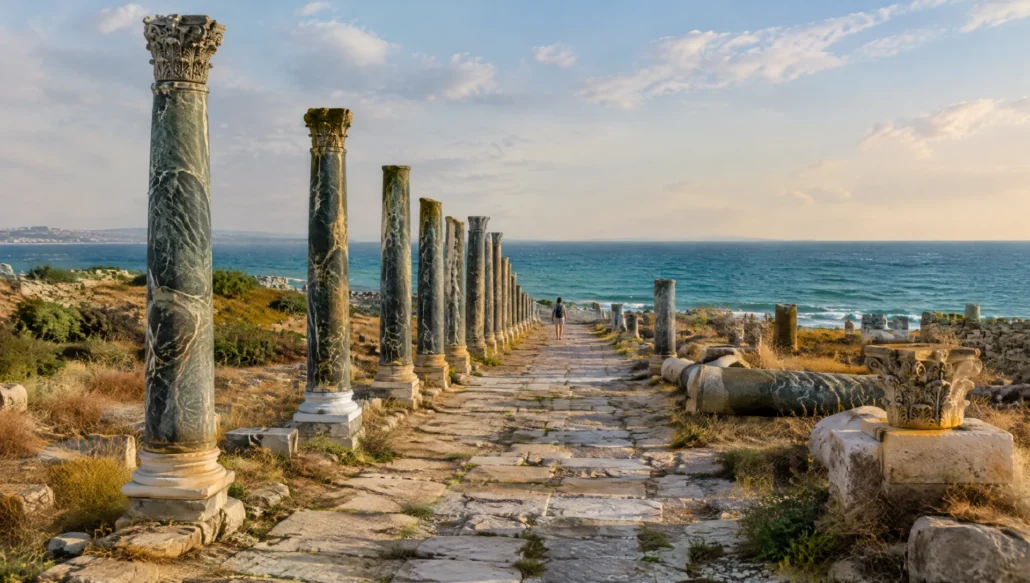
About two kilometres northeast of the city, on the Awali river, are the remains of a Phoenician temple to Eshmun, the god of healing. Later rulers added their own touches, so you will see Persian, Hellenistic and Roman details side by side, with plants slowly taking over the stones. It is a short taxi or car ride from the old city.
A suggested day
Morning
Arrive early, before the heat, and start at the Sea Castle. Walk the causeway, climb the west tower and take in the harbour from the roof. Then head into the souks while the shops are opening and the bakeries are busy.
Afternoon
Have lunch in the old city, then visit the Soap Museum and Debbane Palace, both a short walk apart in the souk. Finish with Khan el Franj and a coffee. If you have a car, drive out to the Temple of Eshmun in the late afternoon light.
Evening
Walk the seafront corniche as the fishing boats come in, and stop for sweets before driving back. In Ramadan, the old city comes alive after iftar, and local operators such as Vamos Todos run guided Saida tours that end with an iftar meal.
Where to eat
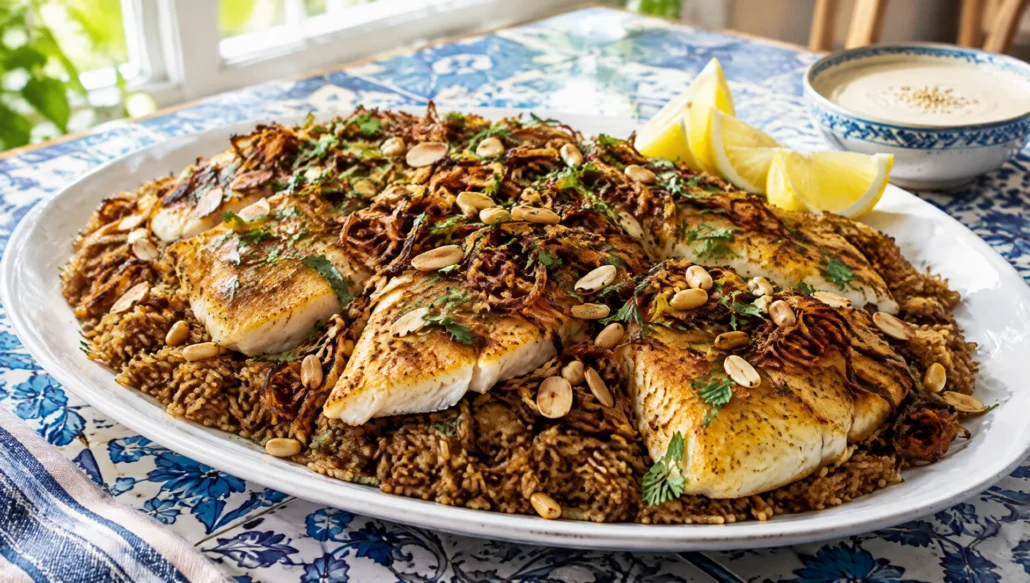
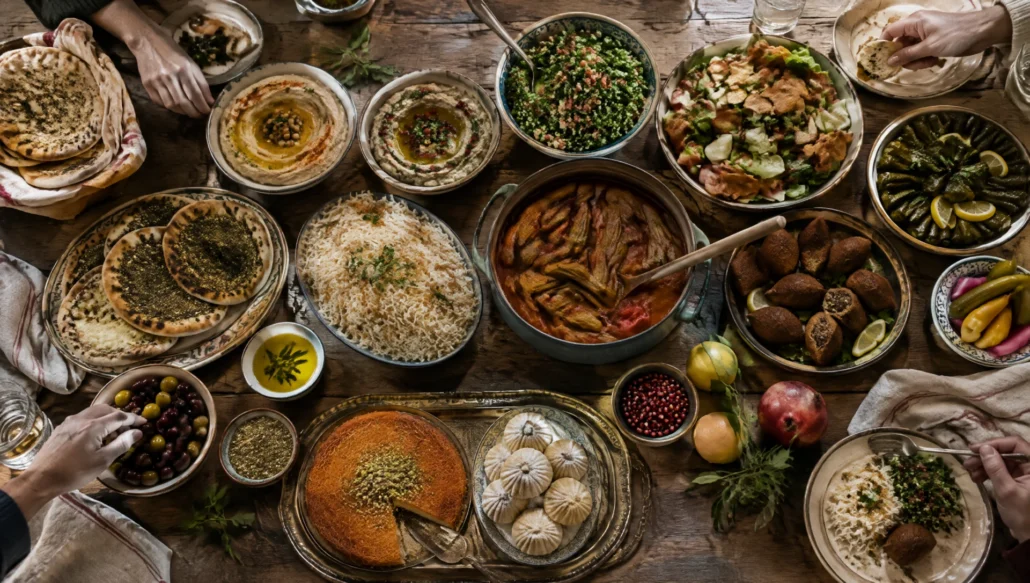
Sidon is a fishing town, so this is the place to try sayadieh, the fisherman’s dish of spiced rice cooked in fish stock with caramelized onions and fried fish (make it at home with our sayadieh recipe). Falafel is the other local habit, and Abou Rami’s Falafel on the waterfront is the name everyone gives you. For a sit down mezze with a view, Saida Rest House sits right beside the Sea Castle.
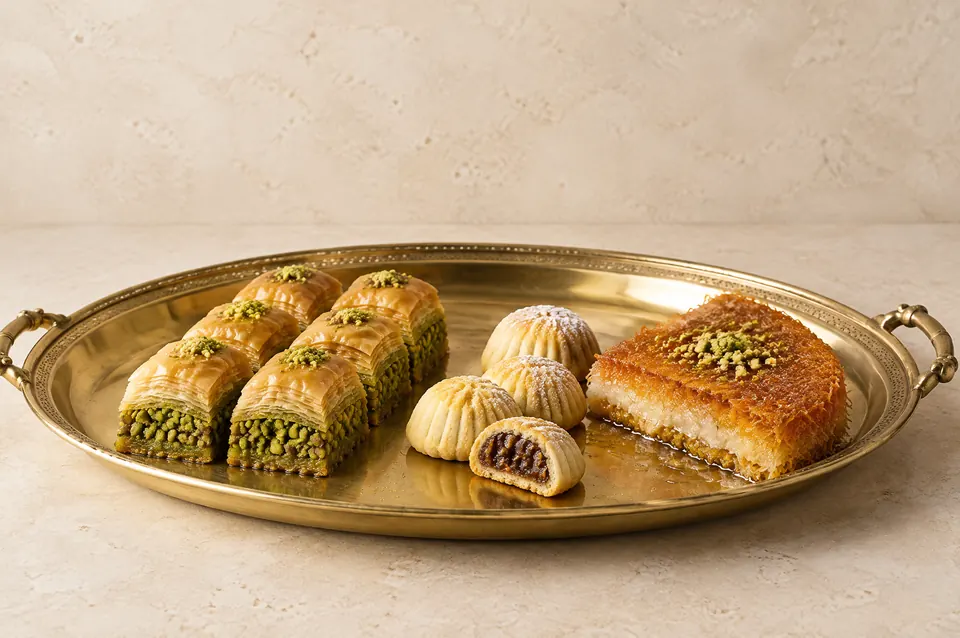
Saida is also a sweets city. Kanaan Sweets has family roots in the trade going back to 1946 and makes knefeh, maamoul and baklava. Tamimi Sweets is known for its nammoura and semolina sweets, and Ramadan Pastry is the address for festive sweets during the holy month. Before you leave, buy a bag of saniora, the crumbly biscuit closely tied to Saida. For something to take home, Al Yaman Factories has been making tahini and halawa in Sidon since 1882.
Practical tips
- Wear flat shoes with grip. The castle stairs and the old city lanes are polished stone.
- Carry cash in small notes for entry tickets, falafel and sweets. Card payments are not always accepted in the souks.
- Dress modestly in the old city, which is a conservative, lived in neighbourhood, and cover shoulders if you enter a mosque.
- Summer is hot and humid. Visit in the morning, or come between October and May.
- Friday midday is quieter in the souks, since many shops close for prayers.
- Opening times for the museums change, so check before you go.
Nearby
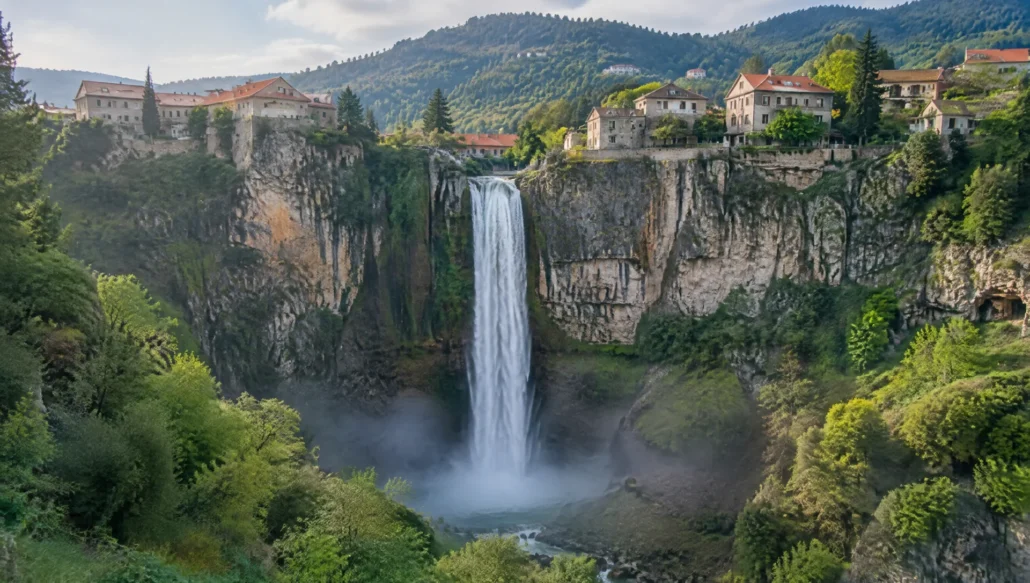
Ten minutes inland, Maghdouche is home to Our Lady of Mantara, a shrine and cave where tradition says the Virgin Mary waited while Jesus preached in Sidon. Further south, Tyre has Roman ruins listed by UNESCO and a lovely old port (see our Tyre day trip). Inland, the road climbs to Jezzine and its waterfall, covered in our Jezzine guide.