



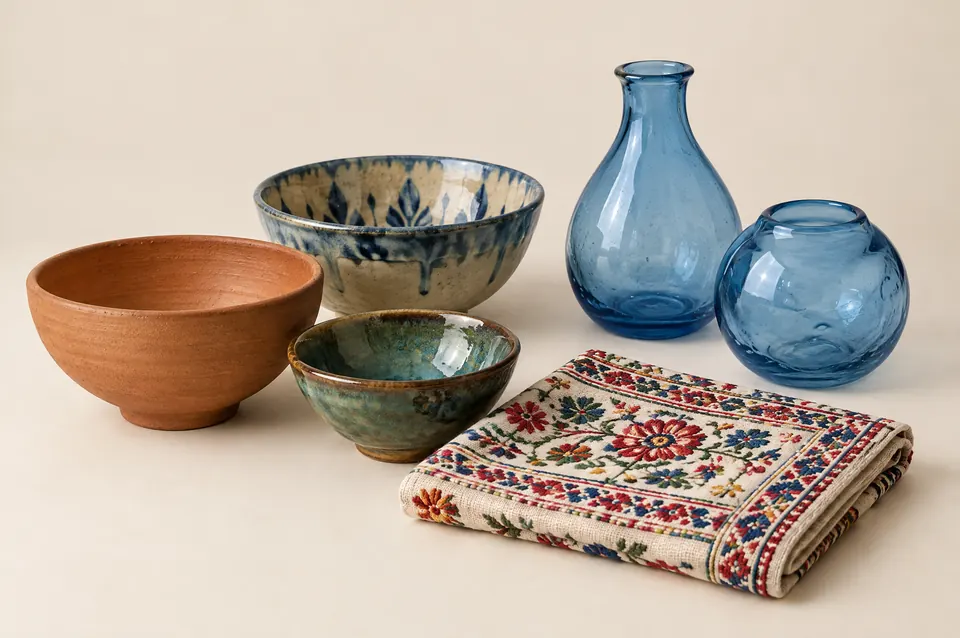
GGRIL was set up in 2012 to stop green and amber glass from ending up in Lebanese landfills, where tens of millions of bottles were going each year. Cedar Environmental, led by engineer Ziad Abi Chaker, was one of its founding institutions. Rather than run its own plant, GGRIL supplies cleaned waste glass to the country's remaining glassblowers, including the Khalifeh family workshop in Sarafand and glass factories in Tripoli, and sells what they make. After the August 2020 port explosion, it collected shattered window glass from damaged buildings and had it reblown into commemorative water jugs, carafes and cups. The range now includes traditional ibriks, wine carafes, cubic vases and lamp shades, and its packaging also uses Lebanese recycled glass and paper. Sales proceeds go back to the artisans.
Green Glass Recycling Initiative Lebanon (GGRIL) at a glance
- Set up in 2012 to keep glass bottles out of landfills
- Works with the Khalifeh glassblowers in Sarafand and factories in Tripoli
- Reblew glass from Beirut blast-damaged windows into jugs and cups
- Proceeds go back to the glassblowing artisans
Who is behind Green Glass Recycling Initiative Lebanon (GGRIL)
- Ziad Abi Chaker (Founder). Source: ourstosave.substack.com