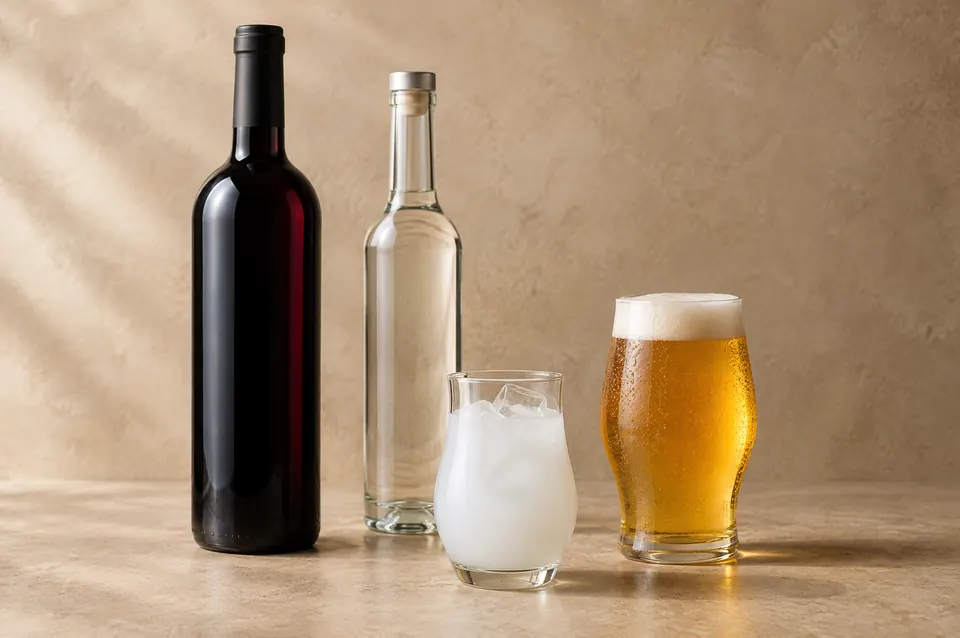
Lebanon’s wine story is usually told through the Bekaa Valley, its main wine region, but boutique estates now farm terraces in Batroun, the hills of Mount Lebanon and the high north near the Cedars. Many work with indigenous grapes such as Merwah and Obeideh and make only a few thousand bottles a year.
How we chose
Every winery here is listed in the Made in Liban directory and grows or makes its wine in Lebanon. We focused on small, independent estates with clear published information, and we wrote each entry from that information alone. We have not scored or tasted the wines, so use this as a guide to who is doing what and where.
Batroun and the north
Atibaia
In Smar Jbeil above Batroun, the Massoud family turned a 17th-century stone house into a cellar in 2007 and replanted fallow terraces between 400 and 600 meters. The red blends Syrah, Cabernet Sauvignon and Petit Verdot, and the white is half Chardonnay, half Viognier. Since 2022 visitors can pair the wines with local food. Visit Atibaia
Clos du Phoenix
Six hectares in Eddé, certified organic since 2016, look out over the Mediterranean. Wines are fermented with indigenous yeasts and sulfite use stays under half the permitted limit. Output is about 10,000 bottles a year, including the Citadelle cuvées. Visit Clos du Phoenix
Domaine S.Najm
Agricultural engineer Salim Najm and oenologist Hiba Najm run this estate at the end of the road into Chabtine, where vines share the land with olive trees around 200 years old. The family has made olive oil and arak for more than 60 years and added red wine in the early 1990s. About two hectares give roughly 5,000 bottles a year. Visit Domaine S.Najm
Heya Wines
Heya, Arabic for she, is a natural wine project by Michelle Chami and Claudine Lteif, first made in 2022 at Mersel Wine. Farha co-ferments apples with the native Merwah grape, and Kanz is a red aged in Lebanese amphorae. Women who work the harvest are paid the same as men and appear on the labels. Visit Heya Wines
Mont d’Almaz
The Saade family came home to Beit Menzer in the Bsharri district and planted vines at 1,260 meters above the Qadisha Valley. Every grape comes from the one village and is farmed organically. Its Malbec is presented by retailers as a first for Lebanon.
Muse du Liban
Agricultural engineer Nadim Khoury founded Muse in 2015 with vineyards at about 1,800 meters in Ainata, near the Cedars, which the winery calls the highest in Lebanon. Michel Rolland has consulted from the start, and the range includes a white from the indigenous Obeidy grape. Visit Muse du Liban
Mount Lebanon and Byblos
Château Belle-Vue
Naji and Jill Boutros began replanting Bhamdoun’s old terraces in 2000, leasing plots from local families to keep land in local hands. Vineyards sit between 950 and 1,250 meters, and reds such as La Renaissance are aged for years before release. The estate also runs a seven-room hotel, Le Telegraphe de Belle-Vue. Visit Château Belle-Vue
Iris Domain
Started in 2003 near Btalloun with vines gifted by Château Belle-Vue, this organic estate of under five hectares makes small micro-cuvées from its own grapes. It is named after the rare Iris sofarana, and part of every bottle sold goes toward bringing the flower back. Visit Iris Domain
Château Bybline
A father and his son, Bordeaux-trained winemaker Joseph Abi Ghanem, restored this 1.5-hectare vineyard in Wata El Joz after the civil war and made their first white in 1996. Merwah remains the signature wine, alongside Cinsault, Carignan and Cabernet Sauvignon.
Domaine St Gabriel
The story starts in 1926, when Meriena Gebrayel returned from Brazil to the family land in Ghalboun, behind Byblos. Her grandchildren Elie and Gaby later planted a hillside with grapes from Sangiovese to Muscat Petit Grain, and the domaine makes 30,000 to 35,000 bottles a year.
West Bekaa
Terre Joie
Near Kefraya, the Saade family began planting in 2008 on about ten hectares that climb to 1,400 meters, farmed organically. CinLight, a 100 percent Cinsault from roughly 30-year-old vines, is one of its best-known bottles. Visit Terre Joie
Reserve Ammiq
One family has grown vines in Ammiq for more than four generations, inside a UNESCO biosphere reserve. Bush vines trained in the old gobelet style give Cabernet Sauvignon, Carignan and Cinsault, about 15,000 bottles a year.
Tips
- Contact a winery before driving out; small estates often welcome visitors by appointment.
- Try at least one wine from an indigenous grape such as Merwah or Obeideh.
- Pair a visit to Batroun’s wineries with the coast, since several estates sit within a short drive of the town.
- Boutique runs are small, so buy a favourite when you find it.
- Never drink and drive on mountain roads; book a driver or a tour if you plan to taste.
Frequently Asked Questions
What grapes are native to Lebanon?
Are there organic boutique wineries in Lebanon?
Which Lebanese wineries have the highest vineyards?
Further reading
- A Perfect Afternoon at Atibaia Winery (Lebanon Traveler)
- 6 Amazing Boutique Lebanese Wineries (Lebanon Traveler)
- Our Story (Heya Wines)
- 209 Lebanese Wine: Lebanese wineries by region
- Behind the Name (Iris Domain)
Browse every brand in Wine and Beer, or submit a brand we should add.