




How to Make Sfouf (Lebanese Turmeric Semolina Cake)
Sfouf is the bright yellow semolina cake that turns up next to the coffee pot in Lebanese homes. It takes 15 minutes to mix and keeps for days.
- Prep time
- 15 min plus 15 min resting
- Cook time
- 30 to 35 min
- Serves
- 12 (about 24 pieces)
- Difficulty
- Easy
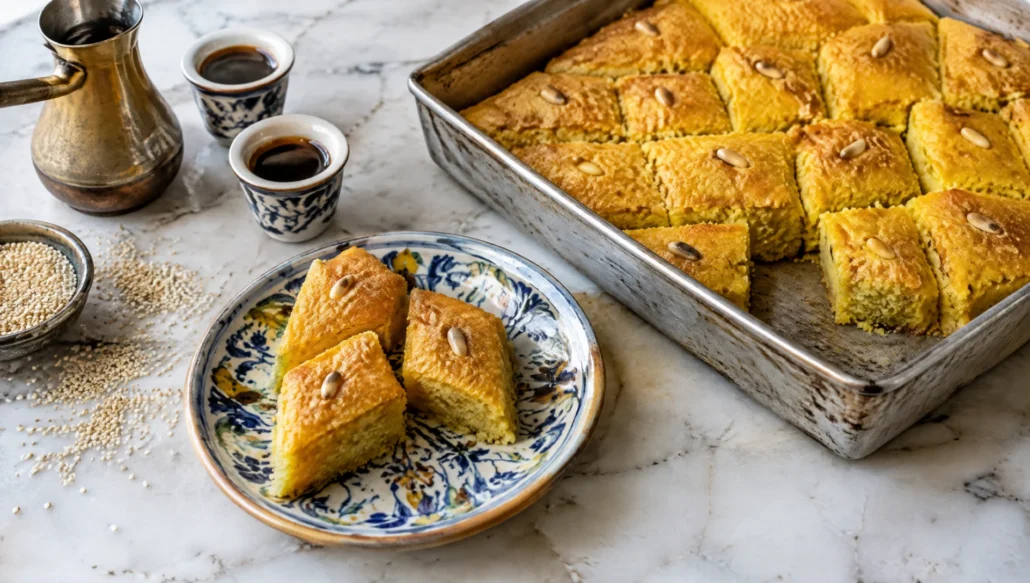
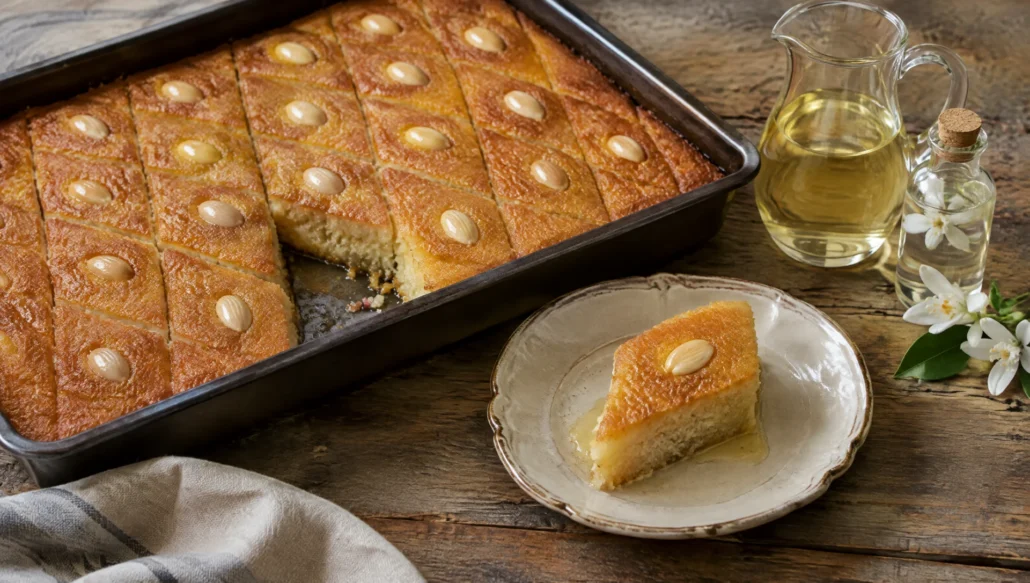
Sfouf (sometimes written sfoof) is a simple tray cake made with semolina, flour, sugar and turmeric, which gives it its sunny color and a gentle earthy note. Ground anise adds a soft licorice warmth, and the tray is greased with tahini rather than butter, so the bottom bakes into a thin, toasty, nutty crust. Each diamond gets a pine nut or a few blanched almonds on top.
You will find sfouf in bakeries and at home in every part of Lebanon, usually with tea or Turkish coffee in the afternoon. It is the kind of cake people bake to welcome guests or send to neighbors, because it travels well and keeps. Because it uses no eggs, it is easy to make dairy free for Lent (see the variations below). A good sfouf is moist, a little crumbly, and not too sweet.
Ingredients
For a 23 x 33 cm (9 x 13 inch) baking tray.
For the cake
- 330 g (2 cups) fine semolina
- 125 g (1 cup) all-purpose flour
- 200 g (1 cup) white sugar
- 1 tablespoon (7 g) ground turmeric
- 2 teaspoons (8 g) baking powder
- 1 teaspoon (2 g) ground anise (yansoon)
- 1/4 teaspoon fine salt
- 360 ml (1 1/2 cups) whole milk, at room temperature
- 160 ml (2/3 cup) neutral vegetable oil, or half oil and half melted butter
For the tray and topping
- 2 tablespoons (30 g) tahini
- 2 tablespoons (18 g) pine nuts, or 24 blanched almonds
- 1 tablespoon (9 g) sesame seeds (optional)
Instructions
- Heat the oven to 180°C (350°F) with a rack in the middle.
- Spoon the tahini into the tray and spread it over the base and up the sides with a pastry brush or your fingers. A thin, even coat is enough.
- In a large bowl, whisk the semolina, flour, sugar, turmeric, baking powder, anise and salt until the mixture is an even yellow with no streaks of white.
- Pour in the oil and rub it into the dry mix with your fingertips for 1 to 2 minutes, until it looks like damp sand. Coating the semolina in fat first is what keeps sfouf tender.
- Add the milk in two or three additions, stirring with a spatula only until no dry pockets remain. The batter will be thick but pourable, like a loose pancake batter.
- Let the batter rest for 15 minutes so the semolina can absorb some liquid. It will thicken slightly.
- Pour the batter into the tray and smooth the top. Tap the tray on the counter twice to release air bubbles.
- With the tip of a knife, lightly mark the surface into diamonds (about 6 lines one way and 4 the other, on the diagonal). Press a pine nut or an almond into the center of each diamond and scatter sesame seeds over the top if using.
- Bake for 30 to 35 minutes, until the top is deep yellow with light golden edges, the cake springs back when pressed and a skewer in the center comes out clean.
- Cool in the tray for at least 30 minutes, then cut along the marked lines. It slices more cleanly once fully cool.
Tips for the best sfouf
- Use fine semolina (smeed na3em). Coarse semolina gives a gritty, dry cake.
- Do not add more turmeric for color. Past about 1 tablespoon it turns bitter.
- Check at 30 minutes. Overbaking is the most common reason sfouf turns dry.
- Turmeric stains: use a metal or glass tray and wash your brush right away.
Variations
- Vegan sfouf for Lent: replace the milk with the same amount of water, oat milk or almond milk, and use only oil.
- Sfouf bi debs: replace the sugar with about 250 ml (1 cup) of carob molasses (debs kharroub) and reduce the milk by 120 ml (1/2 cup). The cake turns brown, not yellow, and has a deep caramel flavor.
- Add 1 tablespoon of orange blossom water to the milk for a floral note.
How to serve and store
Serve at room temperature with tea, mint tea or Turkish coffee. Keep the pieces in an airtight box at room temperature for up to 4 days, or freeze them wrapped for up to 2 months. Sfouf tastes better on day two, once the crumb has settled.
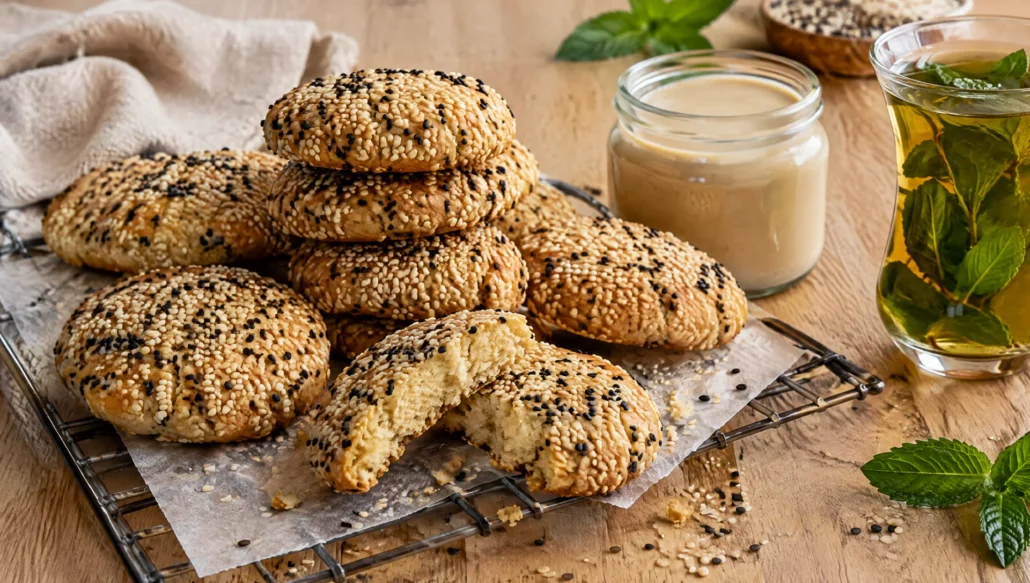
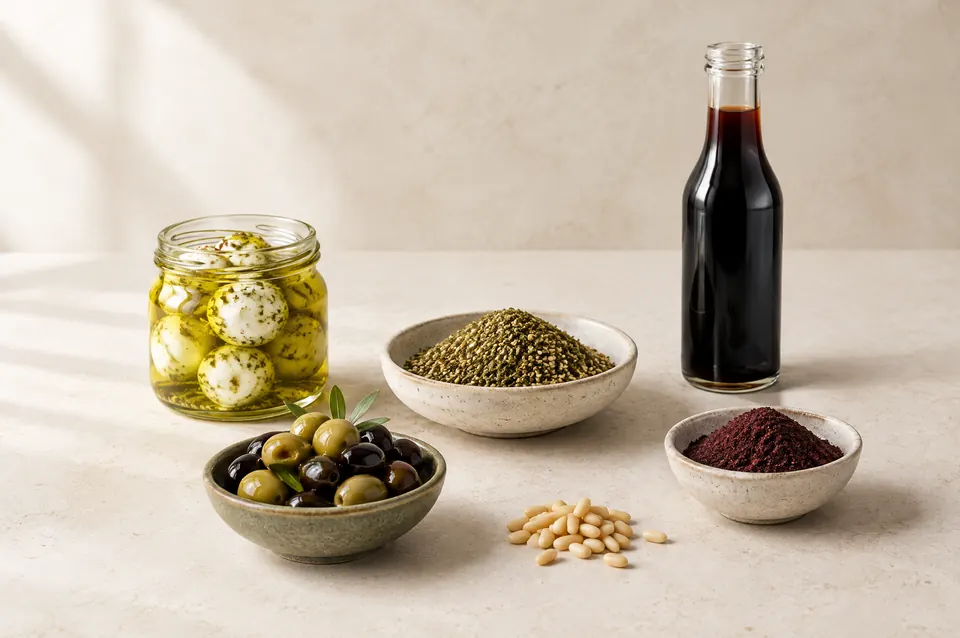
The tahini matters here, since you taste it in the crust. A Lebanese one such as Al Wadi Al Akhdar or the organic tahini from Adonis Valley works well, and you can find pine nuts and more pantry staples in our nuts and dried fruits listings.