


How to Make Namoura: Lebanese Semolina Cake with Syrup
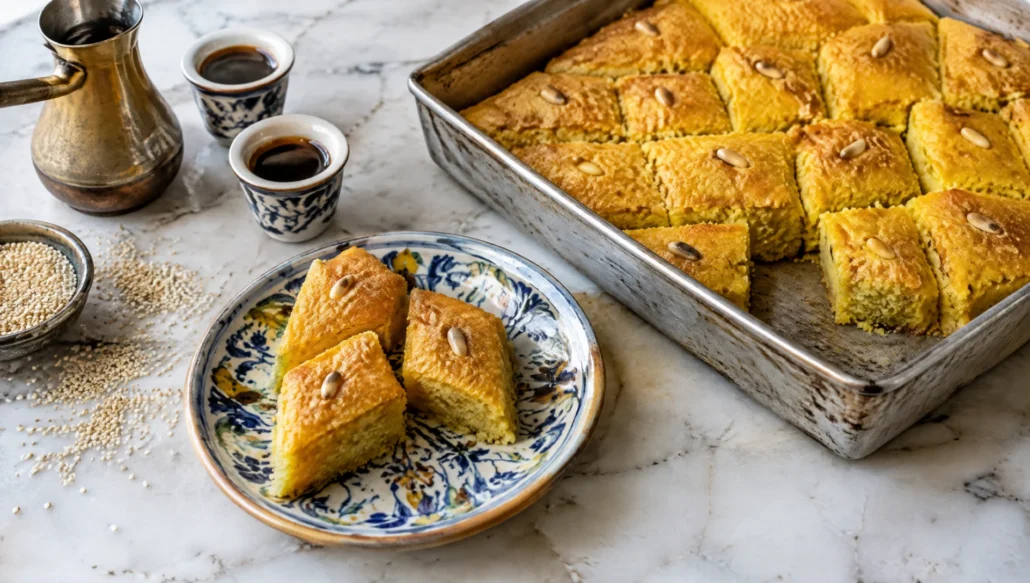
A moist, sandy semolina cake with an almond on every square, soaked in fragrant syrup. Namoura is what Lebanese sweet shops sell by the tray.
- Prep time
- 20 minutes, plus 30 minutes rest
- Cook time
- 40 minutes
- Serves
- 24 pieces
- Difficulty
- Easy
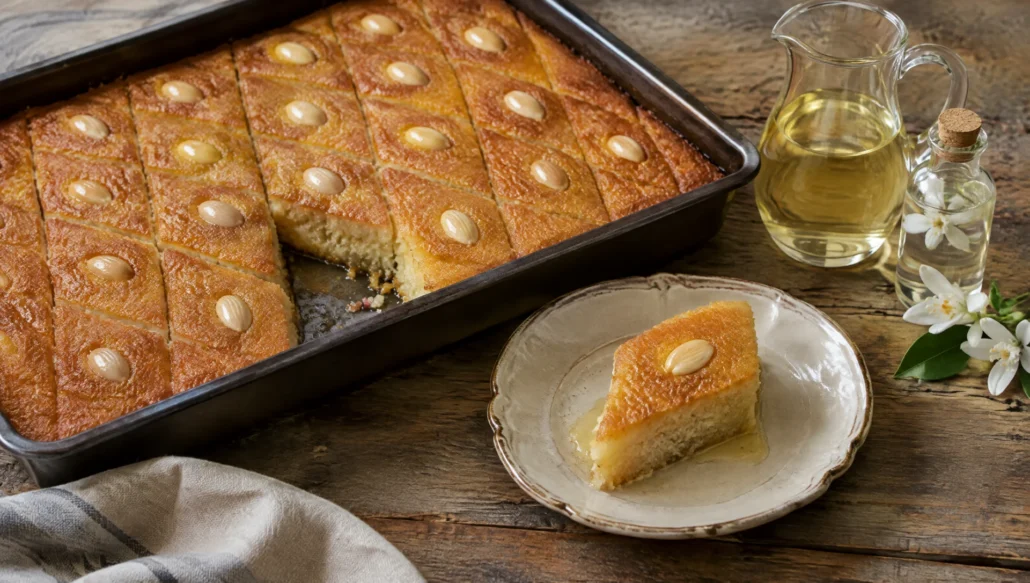
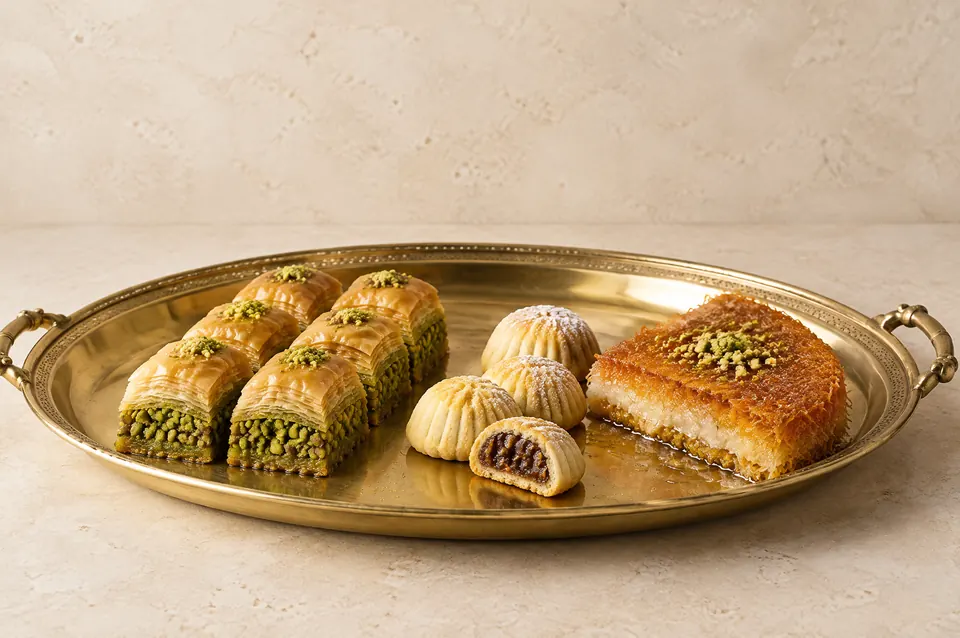
Namoura (nammoura) is a semolina cake baked in a big tray, cut into diamonds or squares, crowned with a blanched almond and drenched in sugar syrup scented with orange blossom or rose water. Egypt calls a close cousin basbousa, and in parts of Syria and Palestine it goes by harissa. In Lebanon it sits on the counter of every sweet shop from Tripoli to Saida, and it is a favorite during Ramadan, at family gatherings and with afternoon coffee.
The texture you want is moist and slightly sandy, never cakey or dry. Three things get you there: coarse semolina, a rest before baking so the grains swell, and cold syrup poured over the cake the moment it comes out of the oven. The tray is greased with tahini, a Lebanese bakery trick that gives the bottom a nutty, toasted crust.
Ingredients
For the syrup (atter)
- 400 g (2 cups) sugar
- 240 ml (1 cup) water
- 1 tbsp (15 ml) lemon juice
- 1 tbsp (15 ml) orange blossom water
- 1 tsp rose water (optional)
For the cake
- 2 tbsp tahini, for the pan
- 400 g (2⅓ cups) coarse semolina
- 40 g (½ cup) unsweetened desiccated coconut
- 150 g (¾ cup) sugar
- 1½ tsp baking powder
- ¼ tsp salt
- 250 g (1 cup) plain whole-milk yogurt
- 115 g (½ cup) unsalted butter or ghee, melted
- 120 ml (½ cup) whole milk
- 24 blanched almonds
Instructions
- Make the syrup first so it has time to cool. Combine the sugar, water and lemon juice in a saucepan over medium heat and stir until the sugar dissolves. Bring to a boil, then simmer without stirring for 8 to 10 minutes, until slightly thickened (about the texture of maple syrup).
- Take it off the heat, stir in the orange blossom water and rose water and let it cool completely. Chill it if you have time.
- Spread the tahini over the bottom and sides of a 23 x 33 cm (9 x 13 inch) baking pan with your fingers or a brush.
- In a large bowl, mix the semolina, coconut, sugar, baking powder and salt.
- Add the yogurt, melted butter and milk and stir with a spatula until evenly moistened. The batter will be thick, like wet sand. Do not beat it.
- Spread the batter evenly in the pan and smooth the top with a wet hand or the back of a spoon. Cover and leave to rest for 30 minutes.
- Heat the oven to 180°C (350°F) with a rack in the middle.
- With a sharp knife dipped in water, score the batter into 24 squares or diamonds, cutting about halfway down. Press an almond into the center of each piece.
- Bake for 35 to 40 minutes, until the top is deep golden and the edges pull away from the pan. For extra color, place it under the broiler (grill) for 1 to 2 minutes, watching closely.
- As soon as the pan comes out of the oven, cut along the score lines all the way through. Slowly pour about three quarters of the cold syrup over the hot cake, letting it soak in. Add more if the cake still looks dry after 5 minutes.
- Leave the namoura to absorb the syrup for at least 1 hour before serving.
Tips for the best namoura
- Cold syrup on hot cake, always. If both are hot, the namoura turns soggy. If both are cold, it will not absorb.
- Coarse semolina gives the classic sandy bite. Fine semolina alone makes it cakey.
- The rest before baking is not optional. It lets the semolina hydrate so the cake stays tender.
- Keep extra syrup on the table for anyone who likes it sweeter.
Variations
- Namoura bil ashta: spread half the batter, add a layer of thick ashta cream, then cover with the rest. Popular in Beirut and Tripoli shops.
- Without coconut: replace it with the same weight of extra semolina.
- Pistachio topping: scatter ground pistachios over the top after soaking instead of almonds.
How to serve and store
Serve at room temperature with Arabic coffee or tea. Keep covered at room temperature for 2 days, or in the fridge for up to 5 days. Bring it back to room temperature before serving, or warm it briefly so the butter softens again.
For flower waters and tahini, look for Lebanese brands like Al Yaman or Cortas. If you want to taste namoura made the southern way first, Tamimi Sweets in Saida is known for it.