


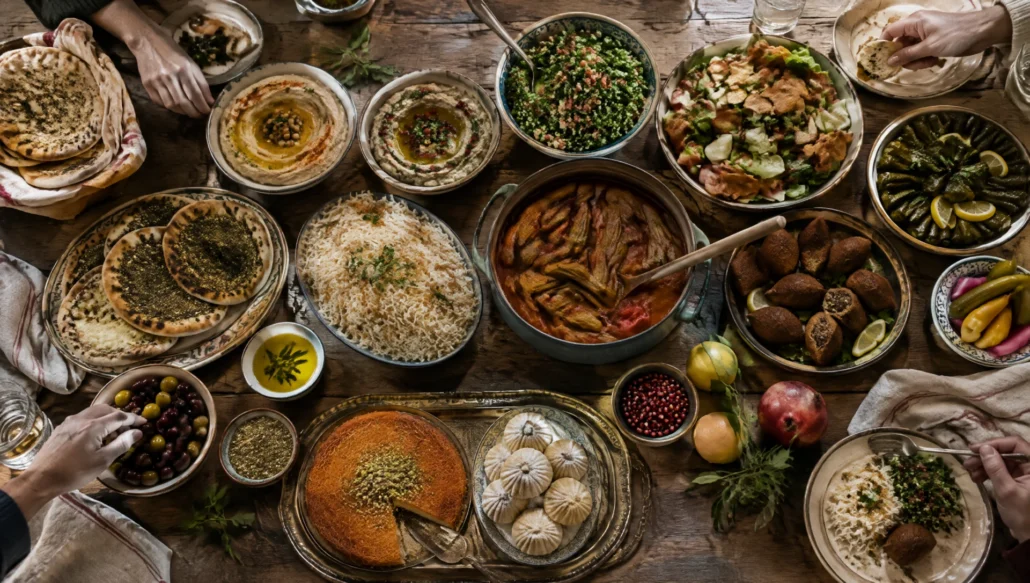
The Best Waterfalls in Lebanon: 8 Falls Worth the Drive
Most of Lebanon’s waterfalls are fed by melting snow, which means spring is the time to go. Here are eight that are worth the drive, with tips on when and how to see them.
- Region
- Across Lebanon
Lebanon is a small country with a lot of water falling off a lot of limestone. Snow piles up on Mount Lebanon all winter, soaks into the rock, and comes out again in spring through caves, springs and cliffs. That is why most of the country’s waterfalls are at their loudest from March to May and much thinner by late August.
This list keeps the real falls from the old version of this page and drops the ones we could not confirm. Several are a day trip from Beirut, and most pair well with a village lunch, a short hike or a winery on the way home.
How we chose
We picked falls that are well documented, reachable by car plus a reasonable walk, and worth the drive for their setting as well as the water. We checked locations and key facts against reserve sites, encyclopedia entries and Lebanese travel media. We did not rank by height, because published heights vary a lot between sources. Two entries in the old list (Balou Balaa and Baatara) were the same place, so they are now one.
1. Jezzine Waterfall (Jezzine, South Lebanon)
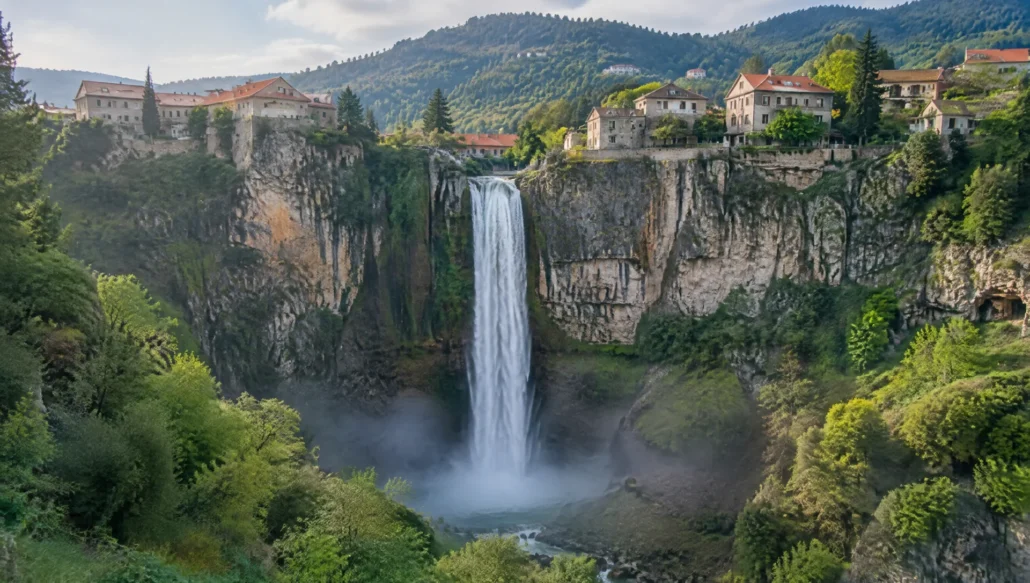
Jezzine sits at about 950 m above Sidon and calls itself the “City of Falls”. The main fall drops off a cliff right at the edge of town, and in spring you hear it before you see it. Older articles often repeat that it is one of the highest in the world; that claim does not hold up, but the fall is tall (sources give figures up to about 90 m) and the setting is lovely, with stone houses, pine forest and the valley opening below.
Make a day of it: walk the old souk, where Jezzine’s craftsmen have made knives with inlaid handles for generations (Haddad Cutlery is the best known family name), and visit the grotto linked to Emir Fakhreddine. For wine on the way back, Terre Brune makes high-altitude wines in the Jezzine area. Tip: the viewpoint restaurants by the fall are busiest on Sunday afternoons, so go in the morning.
2. Afqa Waterfall and Grotto (Afqa, Jbeil district)
At around 1,200 m in the mountains behind Byblos, the Nahr Ibrahim (the ancient Adonis River) bursts out of a huge limestone cave in a cliff face and tumbles into the valley. This is the place of the Adonis myth: he was said to have been born and killed here, and the red earth that colours the river after spring storms was read as his blood. The ruins of a temple to Aphrodite stand near the grotto.
The drive up through Qartaba or Lassa is part of the reward, with deep gorges and terraced villages. Visit in spring for full flow. If you want to stay the night, La Reserve Afqa is a guesthouse in the village itself. Tip: the rocks near the cave mouth are slippery and the current is strong, so admire it from the path.
3. Baatara Gorge Waterfall (Tannourine, Batroun district)
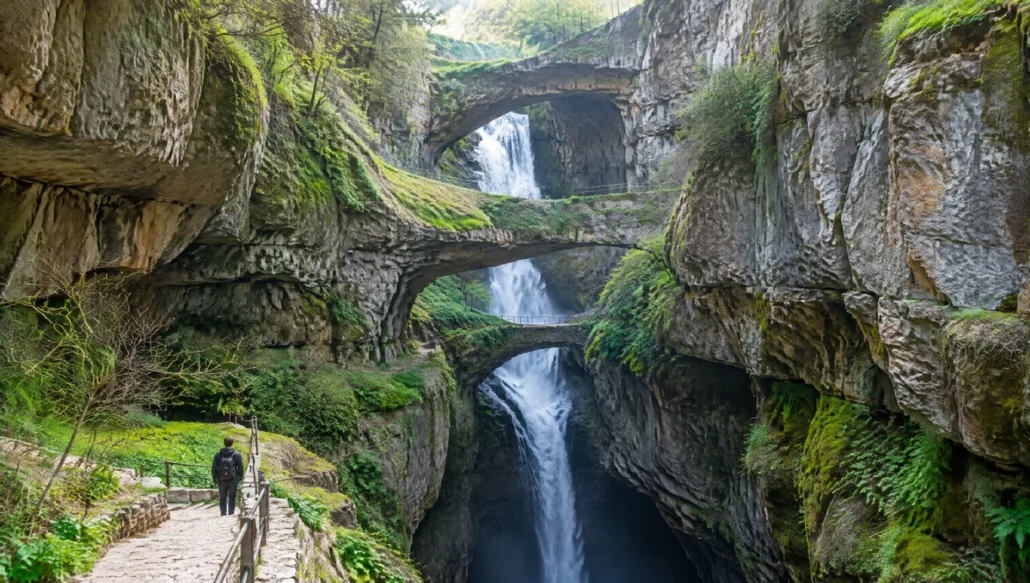
Probably the most photographed fall in Lebanon. Meltwater pours down behind three natural limestone bridges stacked one above the other and disappears into the Balaa pothole, a deep chasm in Jurassic rock. It was documented by a French speleologist in 1952 and today sits on the Lebanon Mountain Trail, near the village of Chatine on the road from Laklouk to Tannourine.
From the parking area it is a short walk down to the viewing platforms, so it suits families. The cascade only really runs during the spring melt (roughly March to May); in summer you see the bridges and the abyss but little water. Tip: combine it with the Tannourine Cedar Forest Nature Reserve, a short drive away.
4. Qannoubine and the Qadisha Valley falls (Bcharre area, North Lebanon)
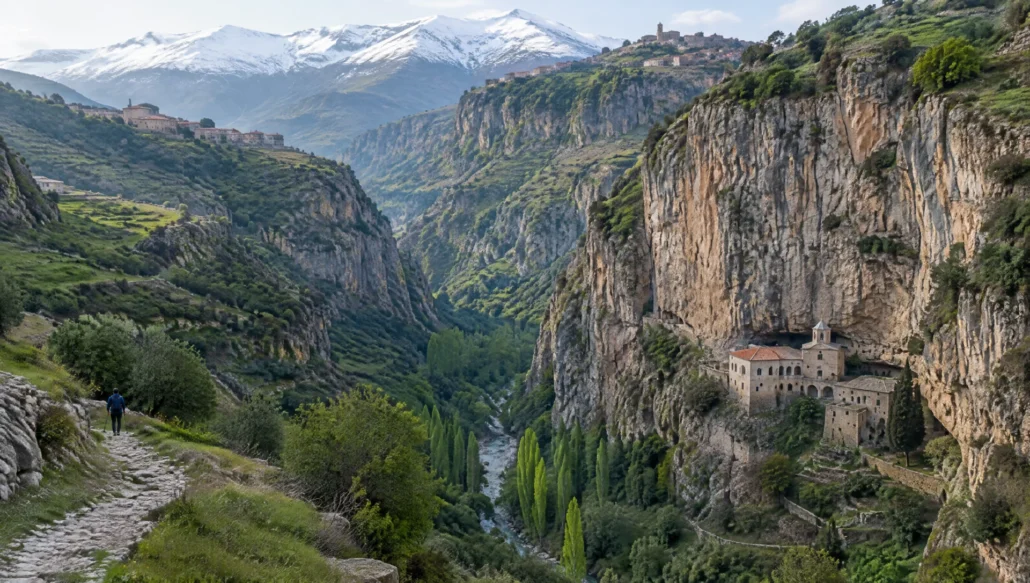
The Qadisha Valley, the Holy Valley of the Maronites, is a UNESCO World Heritage Site together with the Cedars of God above it. Snowmelt from Mount Makmel feeds the Qadisha River, and in spring thin falls spill down the cliffs near Qannoubine monastery and around the Qadisha Grotto below Bcharre.
The best way to see them is on foot: walk down into the valley from the road above Qannoubine and continue along the river path toward Deir Mar Lichaa, a monastery built into the rock. Bcharre has the Gibran Museum and apple orchards on the slopes; Les Vergers des Cèdres is a Bcharre producer worth looking up. Tip: wear proper shoes, as the paths are steep and stony.
5. Kfarhelda Waterfall (Kfarhelda, Batroun district)
The Nahr el Jawz runs through the villages of Kfarhelda, Beit Shlela and Bsetine el Ossi, about 70 km from Beirut, watering orchards along the way. Above Kfarhelda it drops in a series of falls into green pools, and the classic outing is a river walk of a few hours from the village up to the source, with old stone steps on the steeper parts.
This is one of the few falls that is also fun in summer, when local hiking groups run “hike and swim” days and people cool off in the pond. Dale Corazon is one of the outfits that has led this walk. Tip: bring water shoes and a dry bag.
6. Ouyoun el Samak (Akkar and Dennieh border)
About 30 km northeast of Tripoli, “the springs of the fish” are a chain of emerald lakes in a forested valley, linked by streams and a waterfall you can view up close from a suspended footbridge. Trout farms and riverside restaurants line the road, and grilled trout is the lunch of choice.
It is far from Beirut (roughly 95 km), so most people combine it with a hike in the surrounding hills. Tip: weekdays are much calmer than summer Sundays.
7. Baakline Waterfall (Baakline, Chouf)
Baakline, about 45 km southeast of Beirut, was the capital of Mount Lebanon before the early 17th century. Its fall is gentler than the others on this list; the pull is the blue-green colour of the water and the shaded restaurants beside it. It fits neatly into a Chouf day with Deir el Qamar and Beiteddine.
In the village, the old Serail now houses the Baakline National Library, and Bkerzay nearby is a ceramics studio and estate known for handmade pottery. Tip: autumn is pleasant here too, even when the flow is lower.
8. Jisr el Hajar and Nabaa el Laban (Kfardebian, Keserwan)
Not a classic tall fall, but one of the most striking water spots in Mount Lebanon. A huge natural stone bridge, Jisr el Hajar, spans a stream fed by the Nabaa el Laban spring above Kfardebian, and in snowmelt season the water rushes and spills through the rocks beneath it. The Roman temple ruins at Faqra are close by.
Section 13 of the Lebanon Mountain Trail passes here between Faraya and Kfardebian, so you can see it as part of a proper hike. Tip: in winter the area is ski country and the road can be icy; late spring is ideal.
Tips
- Go between March and May for strong flow. By September, Baatara and the Qadisha falls can be close to dry.
- Do not swim near the base of big falls or cave mouths; currents and falling rock are real risks. Swim only in calm pools like Kfarhelda.
- Wear shoes with grip. Wet limestone is very slippery.
- Pack your rubbish out. Many of these places have no bins and depend on visitors to keep them clean.
- Mountain roads are narrow and winding, so allow more time than the map suggests and start early.
- For the far north and the south, check current local conditions and travel advice before you set off.
For longer walks around several of these falls, see our best walking trails in Lebanon, and for a full day in the south, our Jezzine guide.