




How to Make Lebanese Rice Pudding (Riz bi Haleeb)
Riz bi haleeb is the creamy, gently perfumed rice pudding Lebanese families keep in the fridge in little bowls. It needs only rice, milk, sugar and a patient spoon.
- Prep time
- 10 minutes
- Cook time
- 45 minutes
- Serves
- 6
- Difficulty
- Easy
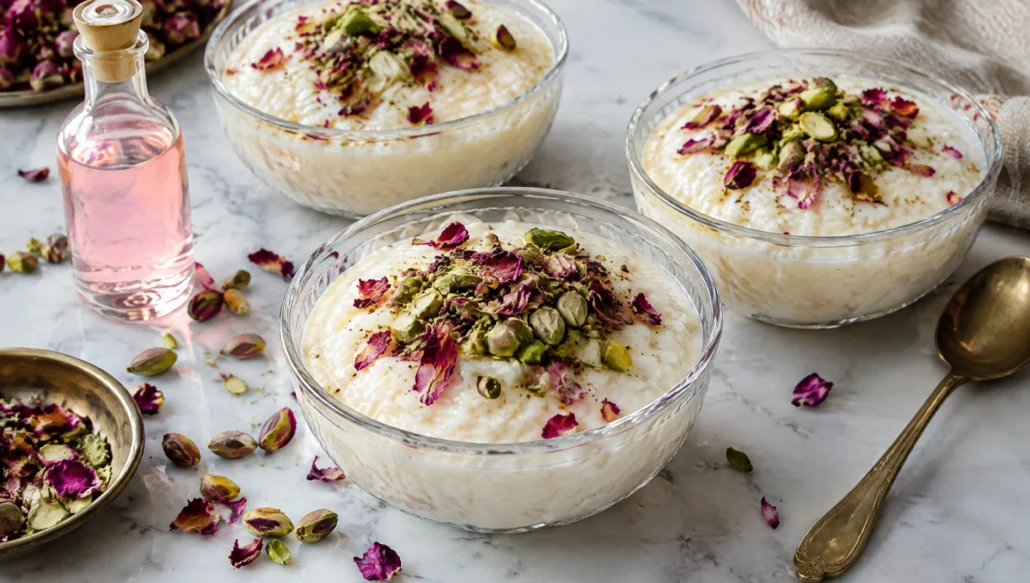
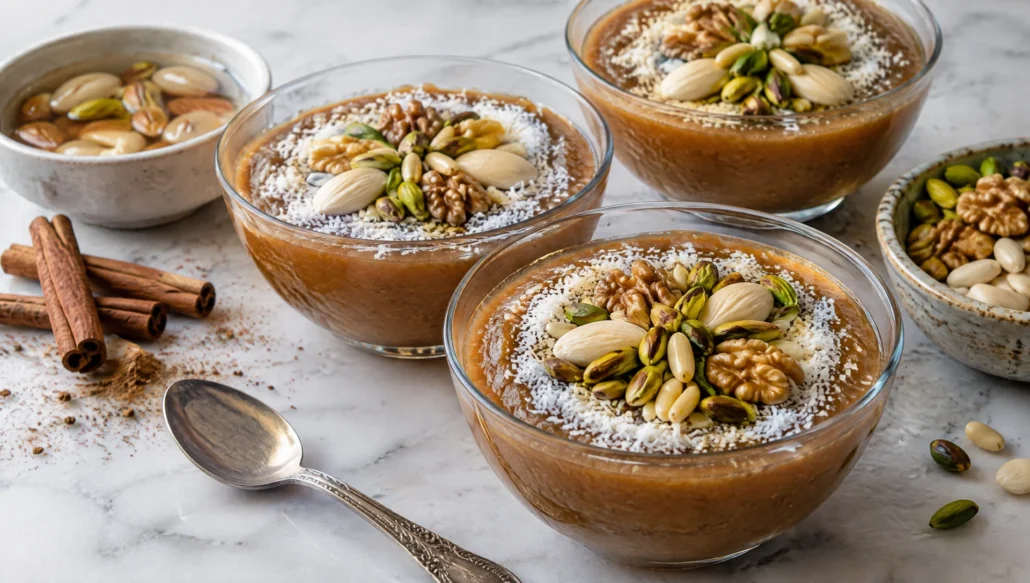
Riz bi haleeb (rice with milk) is one of the simplest Lebanese desserts and one of the most loved. Short-grain rice cooks first in water, then slowly in milk until the grains melt into a soft, spoonable cream. A few crushed grains of mastic give it a faint pine aroma, and rose water and orange blossom water (mazaher) make it smell like a Lebanese kitchen.
It is served chilled in small bowls, often after a family lunch, and it is a favorite for breaking the fast in Ramadan. The original version of this recipe used far too little milk for the rice and too short a cooking time; the amounts below give a properly creamy pudding.
Ingredients
- 100 g (1/2 cup) Egyptian or other short-grain rice, such as Calrose or arborio
- 250 ml (1 cup) water
- 1 liter (4 cups) whole milk
- 100 g (1/2 cup) sugar
- 1 tablespoon cornstarch mixed with 60 ml (1/4 cup) cold milk (optional, for a firmer set)
- 2 to 3 small mastic tears, crushed with a pinch of sugar (about 1/8 teaspoon)
- 1 tablespoon orange blossom water
- 1 teaspoon rose water
- To garnish: 2 tablespoons chopped pistachios, dried rose petals or a little ground cinnamon
Instructions
- Rinse the rice in a sieve until the water runs mostly clear, then soak in fresh water for 15 minutes and drain.
- Put the rice and 250 ml (1 cup) water in a heavy-bottomed saucepan. Bring to a boil over medium heat, then simmer for 10 to 12 minutes, stirring now and then, until the water is almost fully absorbed and the grains are swollen.
- Pour in the milk and bring it up to a gentle simmer over medium heat, stirring so it does not catch. Watch closely as milk boils over fast.
- Lower the heat to medium low and simmer for 25 to 30 minutes, stirring every few minutes with a wooden spoon and scraping the bottom. The rice should be completely soft and the mixture should look like thin porridge.
- Stir in the sugar until it dissolves. If using cornstarch, stir the slurry again and pour it in, stirring constantly, and cook 3 to 4 minutes until the pudding thickens and coats the back of the spoon.
- Sprinkle in the crushed mastic and stir for 1 minute so it dissolves evenly.
- Take the pan off the heat and stir in the orange blossom water and rose water. The pudding will still look loose; it thickens a lot as it cools.
- Ladle into small bowls, let cool for 20 minutes, then cover and chill for at least 3 hours. Garnish with pistachios and rose petals just before serving.
Tips for the best riz bi haleeb
- Use short-grain rice. Long-grain rice stays separate and never turns creamy.
- Use a heavy pan and keep the heat moderate. Scorched milk ruins the flavor, so scrape the bottom as you stir.
- Crush the mastic with sugar in a mortar. On its own it sticks to everything.
- Go easy on the flower waters and taste. Too much rose water tastes like soap.
Variations
- Without cornstarch: simmer 10 minutes longer for a softer, more old-fashioned pudding.
- Rich version: replace 250 ml (1 cup) milk with cream, or top each bowl with a spoon of ashta (clotted cream).
- Swap the flower waters for a strip of lemon peel and cinnamon in the milk, removed before serving.
How to serve and store
Serve cold, with the garnish added at the last minute so the pistachios stay crisp. Covered bowls keep 4 days in the fridge. Riz bi haleeb does not freeze well.
The flower waters are the soul of this pudding. Cortas and Al Yaman both make rose water and orange blossom water in Lebanon, and pistachios from Al Helbawi finish it well.