



How to Make Maamoul (Lebanese Date Stuffed Cookies)
Buttery semolina cookies filled with date paste, made for Easter and Eid in Lebanese homes. Start the dough the night before and the rest is easy.
- Prep time
- 1 hour, plus overnight rest
- Cook time
- 15 to 18 minutes per tray
- Serves
- About 35 cookies
- Difficulty
- Involved
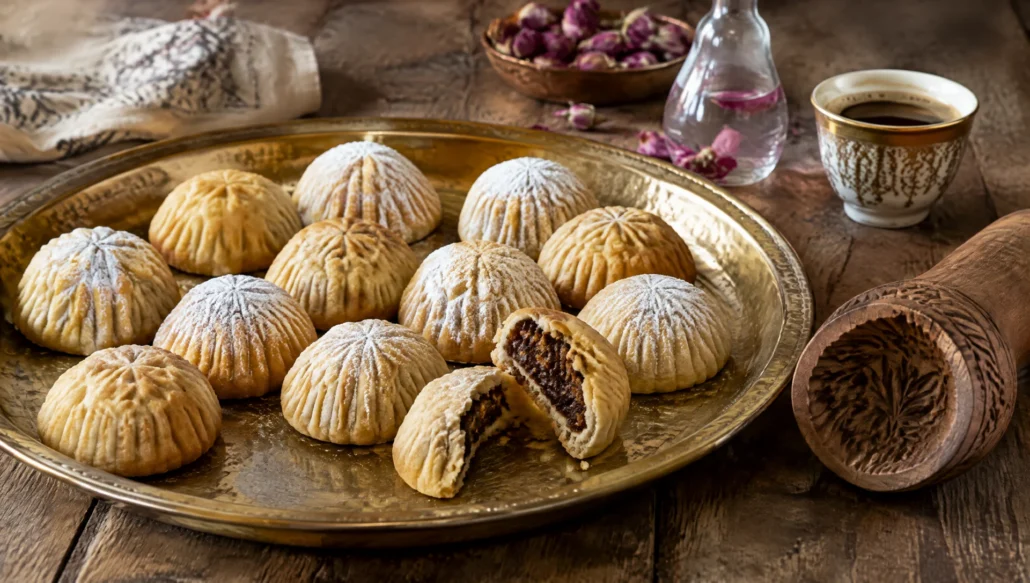
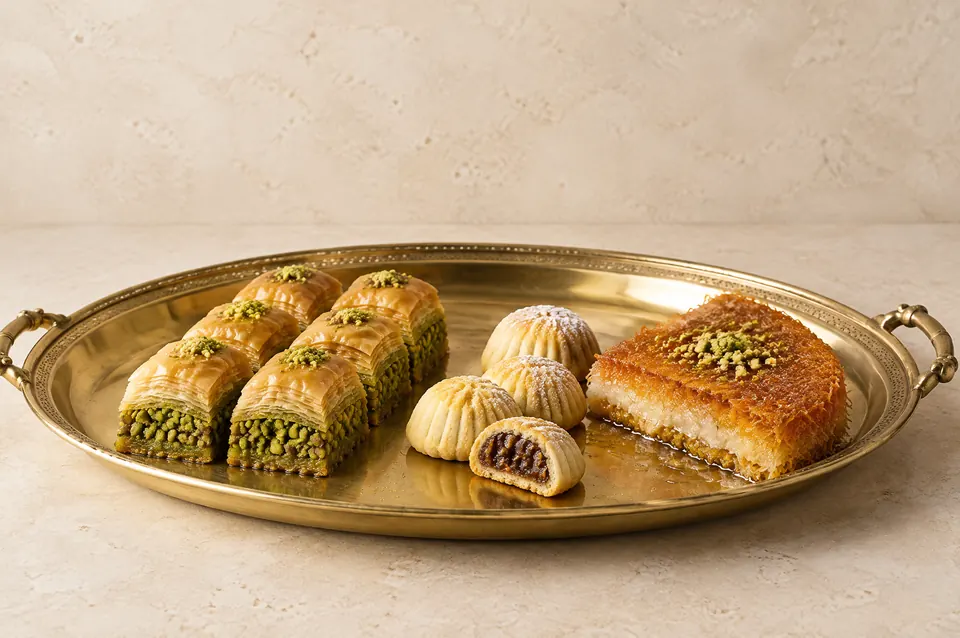
Maamoul (ma’amoul) are small shortbread-like cookies made from semolina, ghee and flower waters, wrapped around a filling of dates, walnuts or pistachios and pressed into a carved wooden mold called a tabe’. In Lebanon they belong to the big feasts. Christian families bake trays of them for Easter, Muslim families for Eid al-Fitr and Eid al-Adha, and in many villages neighbors gather in one kitchen to shape hundreds at once.
The secret is time. Semolina needs to soak up the melted ghee overnight so the dough becomes sandy and tender instead of hard. Each mold shape traditionally tells you the filling: a round dome for dates, an oval for walnuts and a pointed or long shape for pistachios. This recipe gives the classic date version, called maamoul bi tamer, with a walnut option below.
Ingredients
For the dough
- 350 g (2 cups) coarse semolina
- 150 g (¾ cup plus 2 tbsp) fine semolina
- 250 g (1 cup plus 2 tbsp) ghee or unsalted butter, melted and warm
- 50 g (¼ cup) sugar
- ½ tsp ground mahlab (optional but traditional)
- ¼ tsp instant yeast (optional, for a lighter crumb)
- 3 tbsp (45 ml) rose water
- 3 tbsp (45 ml) orange blossom water
- 2 to 4 tbsp (30 to 60 ml) whole milk, as needed
For the date filling
- 450 g (1 lb) soft date paste (ajweh)
- 1 tbsp (15 g) butter or ghee, softened
- ½ tsp ground cinnamon
- 1 tbsp (15 ml) orange blossom water
To finish
- Powdered sugar for dusting (optional)
Instructions
- The night before, mix both semolinas, sugar and mahlab in a large bowl. Pour in the warm melted ghee and rub it through with your fingertips for 3 to 4 minutes, until every grain is coated and the mix looks like wet sand.
- Cover the bowl and leave it at room temperature for at least 8 hours or overnight. The semolina will absorb the fat and feel firm.
- The next day, sprinkle in the yeast, rose water and orange blossom water and knead gently by hand. Add milk 1 tablespoon at a time until the dough just holds together when squeezed and does not crack at the edges. Do not overwork it. Rest 30 minutes while you make the filling.
- For the filling, knead the date paste with the butter, cinnamon and orange blossom water until smooth. Roll it into about 35 balls of 12 to 13 g each (a little smaller than a walnut).
- Heat the oven to 200°C (400°F) with a rack in the middle. Line two baking sheets with parchment.
- Take about 25 g of dough (a ball the size of a large walnut). Press it into a cup shape in your palm, pushing the walls thin and even, about 5 mm.
- Place a date ball inside, then pinch the dough up and over to close it completely. Roll it gently into a smooth ball.
- Press the ball into a lightly floured maamoul mold, seam side up, flattening the back with your palm. Tap the edge of the mold firmly on the counter to release the cookie onto your hand. Without a mold, flatten into a disc and decorate the top with tweezers or a fork.
- Arrange the cookies 2 cm (1 inch) apart and bake for 15 to 18 minutes, until the bottoms are golden and the tops are still pale with just a hint of color on the ridges. Bake one tray at a time.
- Cool completely on the tray, at least 30 minutes, because maamoul are fragile when warm. Dust with powdered sugar if you like.
Tips for the best maamoul
- Do not skip the overnight rest. It is what makes the cookie crumble softly in your mouth.
- Check the bottoms, not the tops. Properly baked maamoul stay pale on top.
- If the dough cracks while shaping, it is too dry: knead in another spoon of milk.
- Keep the filling balls slightly cool so they are easy to wrap.
Variations
- Walnut maamoul (bi joz): mix 250 g (2 cups) finely chopped walnuts with 50 g (¼ cup) sugar, ½ tsp cinnamon and 1 tbsp rose water. Use an oval mold.
- Pistachio maamoul (bi fistok): mix 250 g (2 cups) finely chopped pistachios with 60 g (⅓ cup) sugar and 1 tbsp orange blossom water.
- Flour version: some Tripoli bakers use part flour for a smoother, whiter cookie. Replace the fine semolina with the same weight of all-purpose flour.
How to serve and store
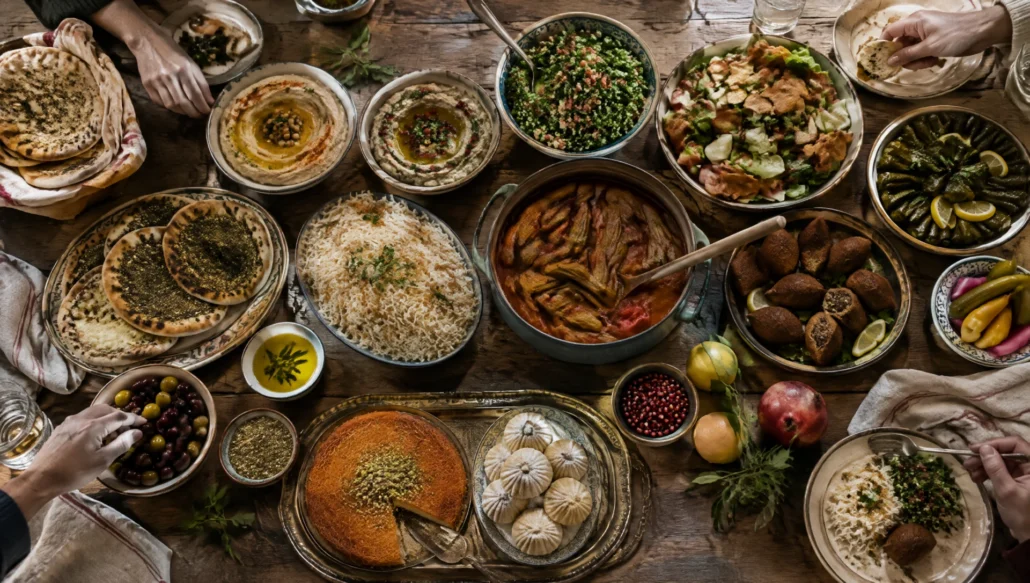
Serve with Arabic coffee or mint tea. Store in an airtight tin at room temperature for up to 2 weeks, or freeze for 3 months and thaw in the tin. Add the powdered sugar only before serving if you freeze them.
For the flower waters, Lebanese pantry staples like Cortas rose and orange blossom water are easy to find. If you would rather buy than bake, Tripoli houses such as Halabi Sweets make maamoul year round.