

Best Cycling Routes in Lebanon: 9 Rides from Coast to Peaks
From flat dawn rides by the sea to some of the hardest climbs in the Middle East, these are the rides Lebanese cyclists keep coming back to.
- Region
- Across Lebanon
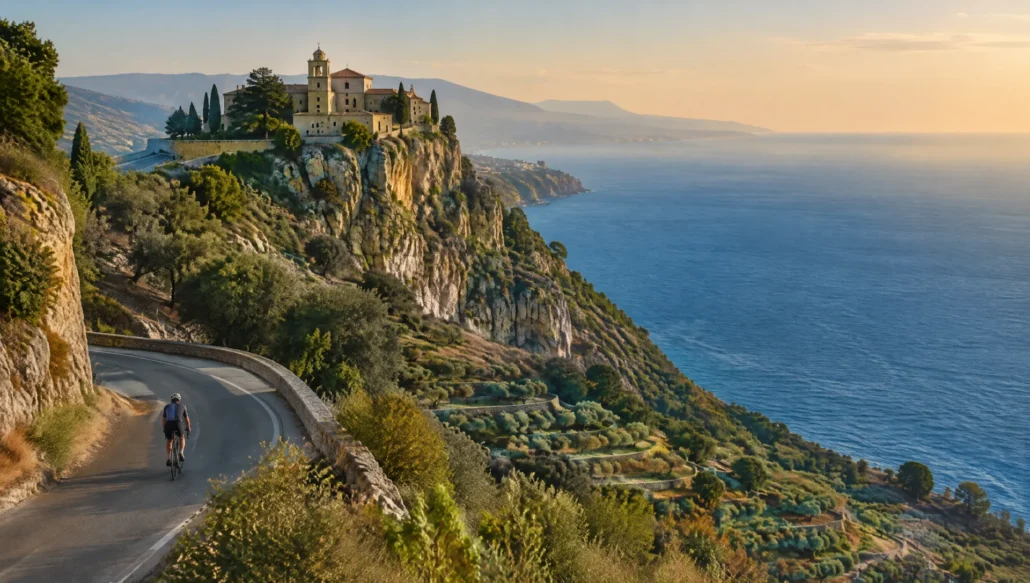
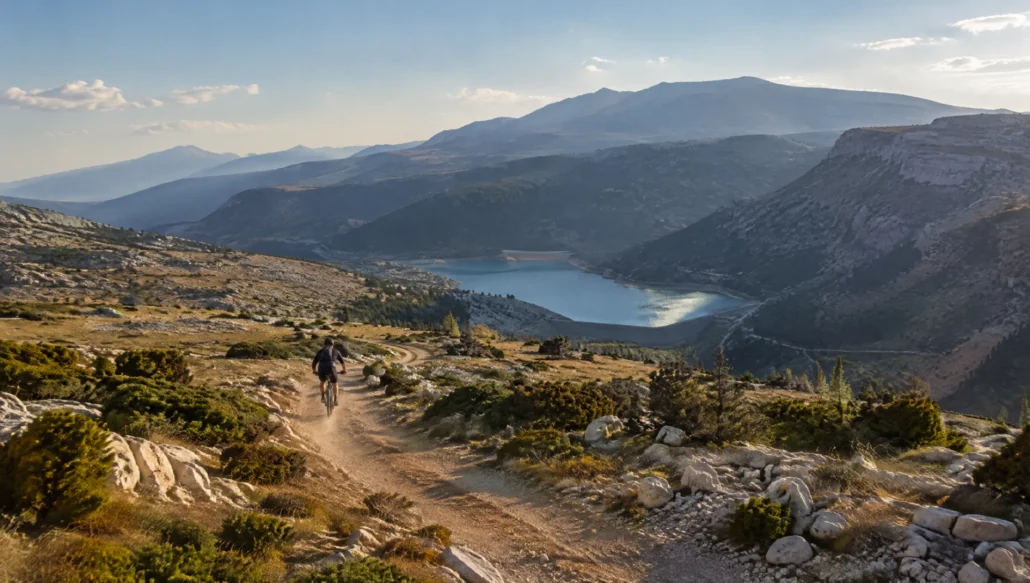
Lebanon is a small country with a very big elevation profile. In under an hour you can go from a flat seafront ride to a climb of more than 1,000 meters, and the country’s highest roads cross passes well above 2,000 meters. That makes it a hard but rewarding place to ride: coastal loops for easy mornings, long mountain climbs for road cyclists and pine and cedar forest trails for mountain bikers.
There are few dedicated bike lanes, so most routes use quiet roads, village lanes and forest tracks. The routes below are well known to Lebanese riders and are grouped from gentle to tough.
How we chose
We kept the strong routes from the older version of this page (the Chekka coast, the Bekaa and the high north) and replaced loose suggestions with specific, well-documented rides. We drew on route logs shared by riders on platforms such as Komoot, coverage in Lebanon Traveler and information from nature reserves. We have not ridden every route ourselves, so treat distances as approximate and check conditions locally before you set off.
The routes
1. Beirut seafront at dawn (Beirut)
The corniche from Ain el Mreisseh past the Pigeon Rocks at Raouché toward Ramlet al-Baida is the easiest ride in the country and the best place to start. It is flat, by the sea and lined with runners and fishermen early in the day. Riders who log the longer coastal loop north of Beirut say the coast road is quiet and mostly car-free early in the morning.
Tip: go at first light, ideally on a weekend, and avoid the corniche in the evening when it fills with walkers. If you do not own a bike, an e-bike from Wave is an easy way to try city riding.
2. Jbeil coast: Amchit to Batroun (Jbeil and Batroun)
North of Byblos, the old coastal road runs through Amchit, Kfar Abida and into Batroun, with stretches of quiet road between beaches. Shorter loops around Kfar Abida of about 35 kilometers with modest climbing are among the easiest rides logged in the area. End in Batroun’s old town and cool off with a glass of Hilmi’s Lemonade, a family recipe made in Batroun.
Tip: the main highway runs parallel and is dangerous for cyclists, so stick to the old coastal road through the villages.
3. Batroun to Chekka via Hamat and Saydet el Nourieh (North Lebanon)
This is the classic coastal challenge from the original list. From Batroun the road heads north and climbs over the headland of Ras ash-Shaqaa past Hamat, with the monastery of Saydet el Nourieh perched on the cliff above the sea, then drops to Chekka. Popular loops are around 70 to 90 kilometers with roughly 600 to 700 meters of climbing. Some riders note the back roads suit a gravel bike better than a race bike.
Tip: stop at the monastery on the way up for the view straight down the cliffs to the water.
4. West Bekaa: Ammiq and the vineyards (Bekaa)
The Bekaa Valley floor is the flattest riding in Lebanon, at around 900 meters above sea level. The western side around Ammiq combines farm roads, the Ammiq wetland (part of the Shouf Biosphere Reserve and a major stop for migrating birds) and vineyards climbing toward the Barouk ridge. Finish with a long country lunch at Tawlet Ammiq, the farmers’ kitchen above the village.
Tip: summer afternoons are hot and windy in the valley, so ride in the morning.
5. Chouf: Barouk to Maasser el Chouf and on to Jezzine (Mount Lebanon)
The Chouf mountains offer one of the best road journeys in the country, riding from Barouk to Maasser el Chouf along the cedar reserve, then through Khraibe and Mokhtara toward Jezzine. It is hilly all the way, with forest, terraced villages and big views over the valleys. The Shouf Biosphere Reserve lists biking among its activities and is a good source of local advice.
Tip: combine the ride with a walk among the cedars at Barouk or Maasser el Chouf, and plan where to stay so you do not have to ride back in the dark.
6. Jezzine and the Bkassine pine forest (South Lebanon)
Jezzine and the huge pine forest of Bkassine below it are mountain bike country, with easy and hard off-road trails and some of the most strenuous climbs in the south. La Maison de la Forêt, an eco-tourism site in the Bkassine forest, is a common base. Riders combine the forest with Jezzine’s waterfall and old town.
Tip: pine needles make trails slippery after rain, so lower your tire pressure a little and ride within your limits.
7. Mzaar Kfardebian climb and trails (Keserwan)
For road riders, the climb up to the Mzaar ski area above Faraya is a benchmark. A logged loop from the resort area runs about 42 kilometers with nearly 1,200 meters of climbing. In summer, the Mzaar resort itself promotes mountain biking trails and lift access, so you can mix climbing and descending at around 1,850 to 2,465 meters.
Tip: even in July it can be cool and foggy at the top, so pack a wind jacket for the descent.
8. Horsh Ehden forest (North Lebanon)
Horsh Ehden Nature Reserve, above the town of Ehden, protects cedars, firs and the rare Lebanese wild apple, and offers mountain biking alongside hiking. Riding here is about forest and cool air rather than speed, and it pairs well with an evening in Ehden’s busy summer square.
Tip: check with the reserve which trails are open to bikes, as some are reserved for walkers.
9. The high road from the Cedars to the Bekaa (North Lebanon)
The toughest ride on this list replaces the old idea of riding to Qornet es Sawda’s summit. From the Cedars above Bsharri, a mountain road climbs over the bare ridge below Lebanon’s highest peak and drops down to Ainata on the Bekaa side. It is remote, exposed and high, and snow closes it for much of the year. Riders also link the high mountains in longer journeys such as Faqra to the Cedars, which is a serious multi-day effort.
Tip: ride it only in summer, with a support car or a group, plenty of water and warm layers.
Tips
- Start early. Traffic is lighter, the light is better and summer heat builds quickly after 10 a.m.
- Use lights front and back, even by day, and wear bright colors.
- Carry water and snacks. Village shops are common on the coast but can be far apart in the mountains.
- Gear low. Lebanese climbs are steep, often 8 to 10 percent and more, so a compact chainset or a mountain bike cassette helps.
- Ride with local groups for your first mountain routes, and tell someone your plan when riding remote roads.
Need a bike or a repair first? See our list of bicycle shops in Lebanon, or go off-road with our guide to the best mountain bike trails.