

Top 10 Churches to Visit in Lebanon, From Beirut to Qadisha
From a Crusader church in Byblos to a monastery cut into the Qadisha cliffs, these are the ten churches that tell Lebanon’s story best.
- Region
- Across Lebanon
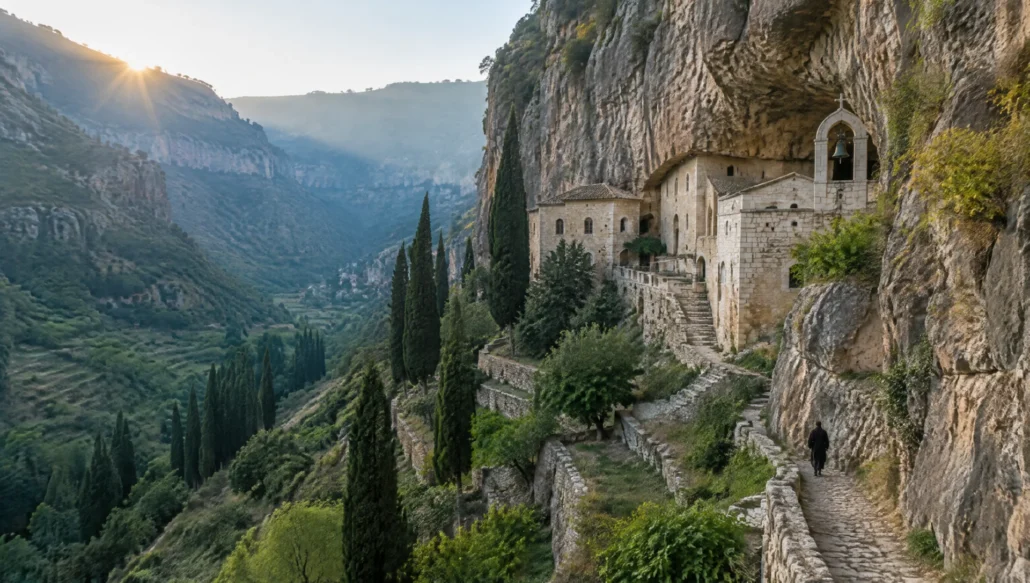
Lebanon’s churches range from Ottoman-era cathedrals in downtown Beirut to chapels cut into the cliffs of the Qadisha Valley. Maronite, Greek Orthodox, Greek Catholic, Armenian, Syriac and Latin communities all built here, often within a few streets of each other and of the mosques. The ten below are the ones that reward a visit even if you are not religious: they tell the story of the country through stone, icons and the people who still pray in them.
Most are working parishes or monasteries rather than museums, so they open for mass and are usually unlocked during the day. Go with patience, a scarf or shirt with sleeves, and time to sit for a while.
How we chose
We kept the picks from the original list that are real, open and worth the trip, corrected the facts using official heritage pages and published histories, and swapped one Beirut church that is mainly a local congregation for the shrine at Harissa, which far more visitors ask about. We aimed for a spread of denominations and regions so you can build a day around each one.
1. St George Maronite Cathedral (Downtown Beirut)
The seat of the Maronite Archdiocese of Beirut was built between 1884 and 1894, and its interior was modelled on the Basilica di Santa Maria Maggiore in Rome: a long nave, rows of columns and a gilded coffered ceiling. It was badly damaged in the civil war, fully restored and re-inaugurated in 2000, then damaged again in the port explosion of August 2020.
Look up at the bell tower added in 2016. It was built to the same height as the minarets of the Mohammad al-Amin Mosque next door, a deliberate gesture that sums up downtown Beirut better than any guidebook line.
2. St George Greek Orthodox Cathedral (Nejmeh Square, Beirut)
This is the oldest standing church in Beirut. The current building was consecrated in 1764 on the site of a Byzantine cathedral, then rebuilt in 1772 with three naves after its first vault collapsed. Frescoes added around 1910 were left to decay during the war and have since been restored.
Do not skip the crypt museum underneath, opened in 2011 after excavations in the 1990s. A short walk takes you down through Hellenistic, Roman, Byzantine and medieval layers, with tombs and mosaic floors, and it explains the city better than an hour of reading.
3. St Louis Capuchin Cathedral (Bab Idris, Beirut)
Capuchin missionaries built this small Latin Catholic cathedral between 1864 and 1868 on the slope below the Grand Serail, next to Bab Idris, one of the old city gates. The architect Edmond Duthoit mixed Romanesque and Byzantine forms, and the sandstone facade and tall campanile are easy to spot from Riad el Solh.
The church was looted and burned in 1975, when a friar was killed on the premises, and it reopened after restoration in 2002. It is quieter than the downtown cathedrals and a good place to sit for ten minutes between sights.
4. Cathedral of St Elias and St Gregory the Illuminator (Debbas Square, Beirut)
The Armenian Catholic cathedral, funded in 1928 by Pope Pius XI, stands a short walk from Martyrs’ Square. It is the cathedral of the Armenian Catholic Patriarchate of Cilicia, and its honey-coloured stone and pointed arches feel quite different from the Italianate Maronite cathedral nearby.
Pair it with a walk to Bourj Hammoud, Beirut’s Armenian district, to see how the community that built it lives today, and stay for lunch at Onno, known for Armenian-Lebanese home cooking.
5. Our Lady of Lebanon (Harissa)
About 20 km north of Beirut and some 650 metres above Jounieh Bay, the white bronze statue of the Virgin, 8.5 metres tall, has stretched her arms toward Beirut since 1908. Christians and Muslims both come here to pray, and the modern basilica beside it hosted a Mass by Pope John Paul II in 1997.
The classic way up is the Téléphérique cable car from Jounieh, which swings over rooftops and pine slopes. You can also drive. Climb the spiral stairs around the statue’s base for the full view of the bay.
6. Saydet el Tallé (Deir el Qamar)
Our Lady of the Hill is the heart of Deir el Qamar, the old stone town of the Chouf emirs. The church is said to stand on the site of a temple to Astarte and was rebuilt several times, notably under Fakhreddine I in the 16th century and again under Bashir II. Inside you will find a Byzantine column, an old cross carved in stone above the former gate and an 1867 icon of the Virgin by Achille Guerra that locals consider miraculous.
The church has long been revered by Druze as well as Christians. On the first Sunday of August, a procession carries the icon through town. Stay overnight in a restored house such as Beyt El Jabal and visit Beiteddine Palace the next morning.
7. St John-Marc Church (Byblos)
Inside the old town of Byblos, a UNESCO World Heritage site, this church was begun by the Crusaders in 1115 on the site of an earlier church destroyed by an earthquake in 555. Parts were rebuilt after another earthquake in 1170, which is why the stonework shifts in style as you walk around it. The small open-air baptistery under a stone canopy beside the church is the photo everyone takes.
It is a two-minute walk from the Crusader castle and the old souk, so it fits easily into a day in Byblos. For a glass of local wine afterwards, look up Domaine St Gabriel, a family winery in Ghalboun in the Byblos hills.
8. St Stephen’s Church (Batroun)
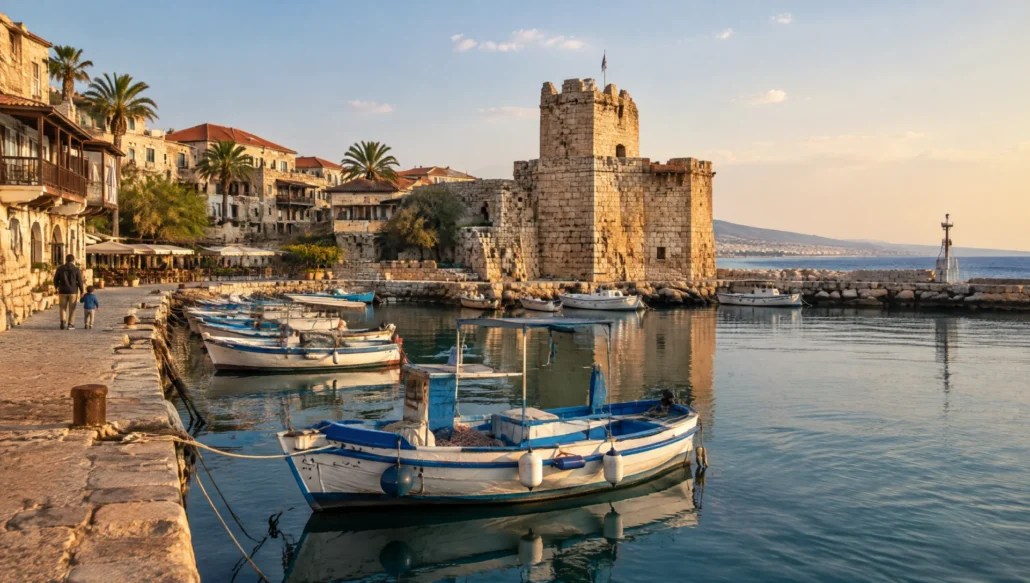
Mar Estephan faces the old fishermen’s port of Batroun. The Italian architect Giuseppe Maggiore designed it and supervised the work, blending Byzantine and Roman forms with Gothic touches. Inside, look for the heavy marble columns and the light coming off the sea through the windows.
Come in the late afternoon, then walk the old souk and the Phoenician sea wall a few minutes away. If you want to stay the night, Beit Al Batroun is a small bed and breakfast in the hills above town.
9. Monastery of St Anthony of Qozhaya (Qadisha Valley)
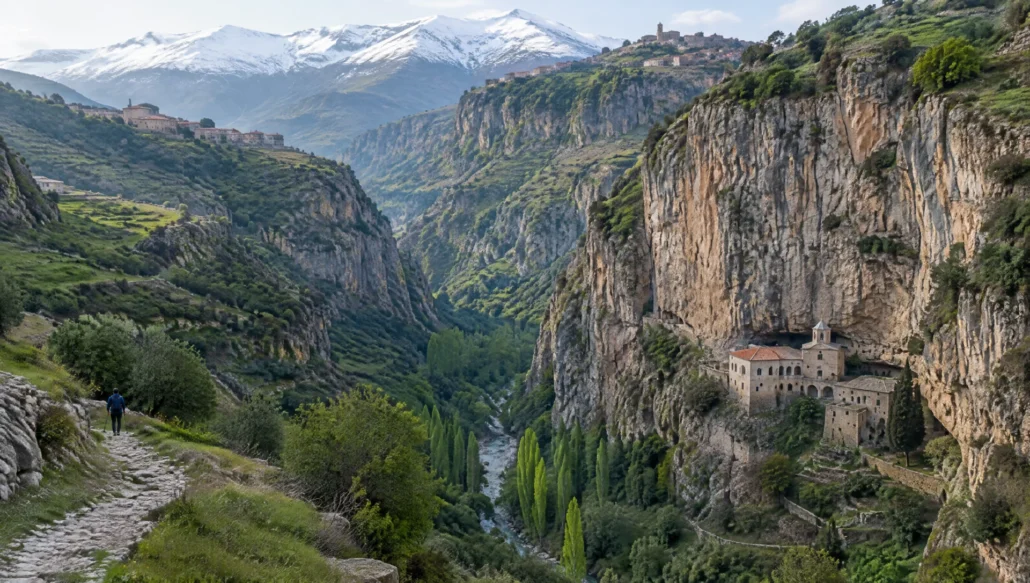
Qozhaya is one of the oldest monasteries in the Qadisha Valley, the UNESCO-listed gorge where Maronite hermits lived in caves for centuries. The church is built into the cliff, and the large grotto of St Anthony next to it has long drawn families who come to pray for healing. The monastery is also known for one of the first printing presses in the Middle East, which you can still see on site.
Drive down from Ehden or walk in on the valley trail. Bring water and wear proper shoes: the paths are steep and stony.
10. Mar Sarkis and Bakhos (Ehden)
Known as Ras al Nahr, the head of the river, this Antonine monastery sits around 1,500 metres up, above the spring that feeds one of the Qadisha’s rivers. The first church here dates to the mid 8th century, a church to Our Lady followed in 1198, and buildings were added until the late 17th century. Locals call it the watchful eye of Qadisha because of its view over Ehden and the valley villages.
It is a short drive or a pleasant walk from Ehden’s main square. Combine it with a forest walk in Horsh Ehden, and pick up a bottle from Mont d’Almaz, a family winery above the valley near Bsharri.
Tips
- Dress for a place of worship: shoulders and knees covered, and a light scarf is useful.
- Avoid walking around during mass, and ask before photographing people or services.
- The four Beirut churches are all within walking distance of each other downtown, so plan them as one morning.
- Many churches have a feast day with processions and music. Ask the parish or check local news before you go.
- Leave a small donation if a sacristan opens a door or a crypt for you.
- For the Qadisha monasteries, start early in summer, since the valley floor gets hot by midday.