Top 5 Museums to Visit in Lebanon: Beirut and Beyond
Phoenician sarcophagi, a century of Lebanese art, two thousand minerals and a hillside of sculpture: Lebanon’s five best museums.
- Region
- Beirut and Jbeil
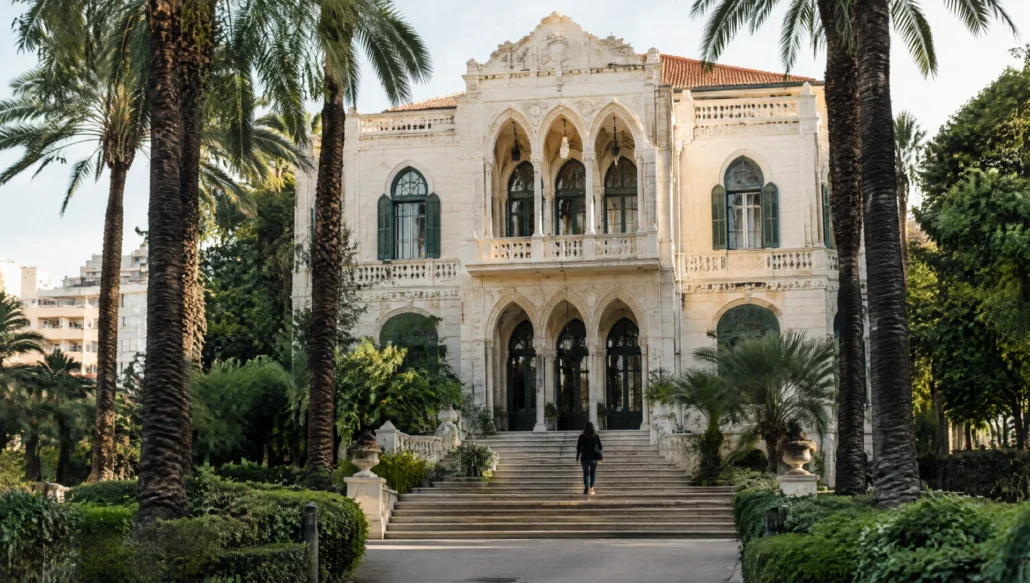
Lebanon’s museums are small by world standards, but they hold some remarkable things: the sarcophagus that carries one of the oldest Phoenician inscriptions, a century of Lebanese painting in a 1912 villa, more than two thousand minerals on a university campus and a hilltop of sculpture above Jbeil. Several of them survived war, closure or the 2020 port explosion and reopened, which is part of what makes a visit meaningful.
Four of the five below are in Beirut and can be combined in a day or two. The fifth is a short drive north and pairs well with a day in Byblos.
If you only have one day, do the National Museum in the morning, lunch in Achrafieh, and Sursock in the afternoon. With two days, add MIM and the Robert Mouawad museum in Beirut, then drive up to MACAM and spend the rest of the day in Byblos. Museums are also the best plan for a hot August afternoon or a rainy winter day, when the coast and the mountains are less inviting.
How we chose
We kept all five picks from the original list because each is real and still operating, and corrected several facts that were wrong in the old version, including dates and who founded what. Details were checked against the museums’ own websites and published references. Opening days change, so always check the museum’s site or social pages before you go.
1. National Museum of Beirut (Museum Street, Beirut)
This is the place to start. The National Museum was inaugurated in 1942 and holds the country’s main archaeological collection, from prehistoric tools to Mamluk ceramics. Its most famous piece is the sarcophagus of Ahiram, King of Byblos, carved with one of the earliest known examples of the Phoenician alphabet. Look also for the Egyptian-style colossal statue from Byblos, the marble statues of children offered to the healing god Eshmoun at his temple near Sidon, and large Roman mosaics with mythological scenes.
The museum stood on the civil war’s front line, and its staff saved the collection by walling up objects and encasing the heaviest pieces in concrete. A short film near the entrance tells that story and is worth the fifteen minutes. Allow about two hours in total.
Do not miss the lower level, which is given over to funerary art: painted tombs, sarcophagi and grave goods that show how people in this land thought about death across thousands of years. If you are heading to Byblos, Sidon or Tyre later in your trip, the museum gives you the background that makes those sites far easier to read.
2. Sursock Museum (Achrafieh, Beirut)
The Sursock Museum occupies a white villa built in 1912 for Nicolas Ibrahim Sursock, who left it to the city on his death. It opened as a museum in 1961 and became the home of modern and contemporary art in Lebanon, known for its long-running Salon d’Automne. After a major expansion it reopened in 2015, was badly damaged in the port explosion of August 2020, and has since been restored and reopened.
Inside, the permanent collection galleries show Lebanese painting and works on paper from the 19th century onward, and temporary exhibitions change through the year. Walk the Sursock street afterwards to see the old Ottoman and Venetian-style mansions around it.
3. MIM Mineral Museum (Beirut)
MIM is one of the most surprising museums in the region. It opened in 2013 in Beirut to show the private mineral collection of Salim Eddé, and today it displays more than 2,000 minerals from around the world, arranged by class and by country, with galleries for fluorescent and radioactive specimens. It also shows fossils, including a pterosaur nicknamed MIMO and an exhibition of around 200 marine fossils, with fish fossils from Lebanon among them.
The displays use interactive screens and good lighting, which makes it a strong choice for children and for anyone who thinks they are not interested in rocks. Plan an hour and a half.
Before you go, the museum’s website lets you browse the collection by mineral class or country of origin ahead of the visit, which is a nice way to get children excited about what they are going to see.
4. Robert Mouawad Private Museum (Zokak el-Blat, Beirut)
This neo-Gothic palace was built in 1891 and became the home of Henri Pharaon, a politician and serious collector of Eastern art. The jeweller Robert Mouawad restored it and opened it as a museum in 2006. The rooms are as much the attraction as the objects: carved wooden panels, Byzantine mosaics, Roman marble sculpture, Chinese porcelain, Islamic ceramics, Melkite icons, rare books and manuscripts, plus a display of jewellery and precious stones.
It is a few minutes from the Grand Serail, so it fits easily between downtown and the National Museum. Go slowly and look up: the ceilings and woodwork are part of the collection.
5. MACAM, Modern and Contemporary Art Museum (Alita, near Jbeil)
MACAM began in 2013 when two former factories in the hills of Alita, about 7 km uphill from the Qartaba exit of the coastal highway above Jbeil, were turned into a museum. It focuses on Lebanese sculpture and installation. Its permanent show, the Panorama of Sculpture in Lebanon, covers about a century of work with more than 400 pieces, many displayed outdoors among the trees and old industrial buildings.
MACAM also runs workshops, school visits and an artists’ residency. It keeps shorter opening days in winter than in summer, so check before driving up, and combine it with Byblos for a full day.
Tips
- Combine the National Museum, the Robert Mouawad museum and Sursock in one day; they are a short taxi ride apart.
- Many museums close one day a week; the National Museum, for example, is closed on Mondays. Check before you go.
- Carry ID; some museums ask for it at the desk.
- For more Beirut culture, see the photography archive of the Arab Image Foundation and exhibitions at Dar El-Nimer for Arts and Culture.
- Outside Beirut, the Debbane Palace and the Soap Museum in Sidon and the crypt museum under St George Greek Orthodox Cathedral are worth adding.
- Photography rules vary. Ask before using a flash or a tripod.