

Hiking in Chouf: A Family Day Trip in the Cedar Reserve
Ancient cedars, short marked trails and two of Mount Lebanon’s best-loved stone towns, all within a day’s drive of Beirut. Here is how to plan it with kids in tow.
- Region
- Chouf, Mount Lebanon
- Time needed
- A full day, or a weekend
- Best time to visit
- April to June, September to November
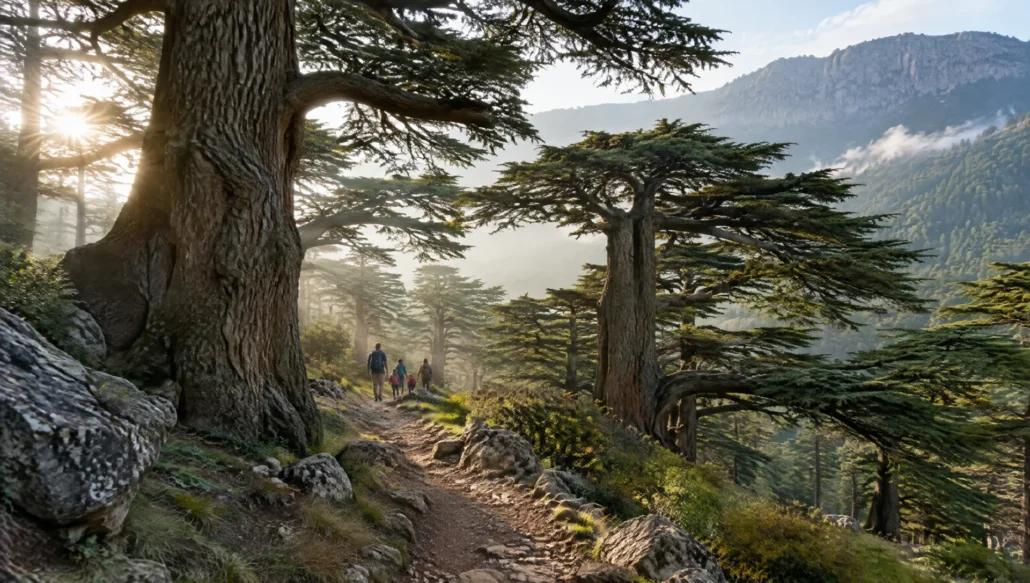
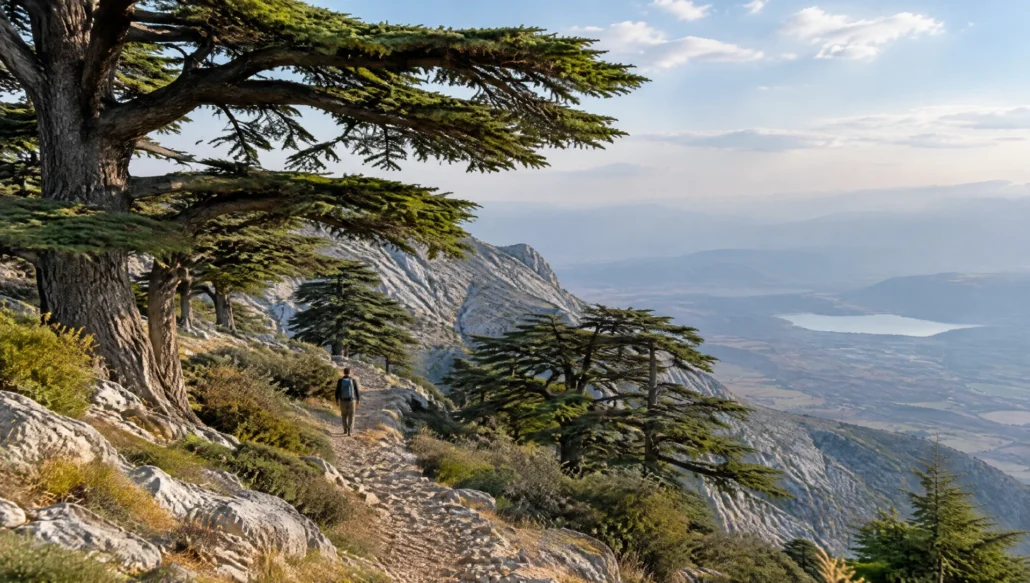
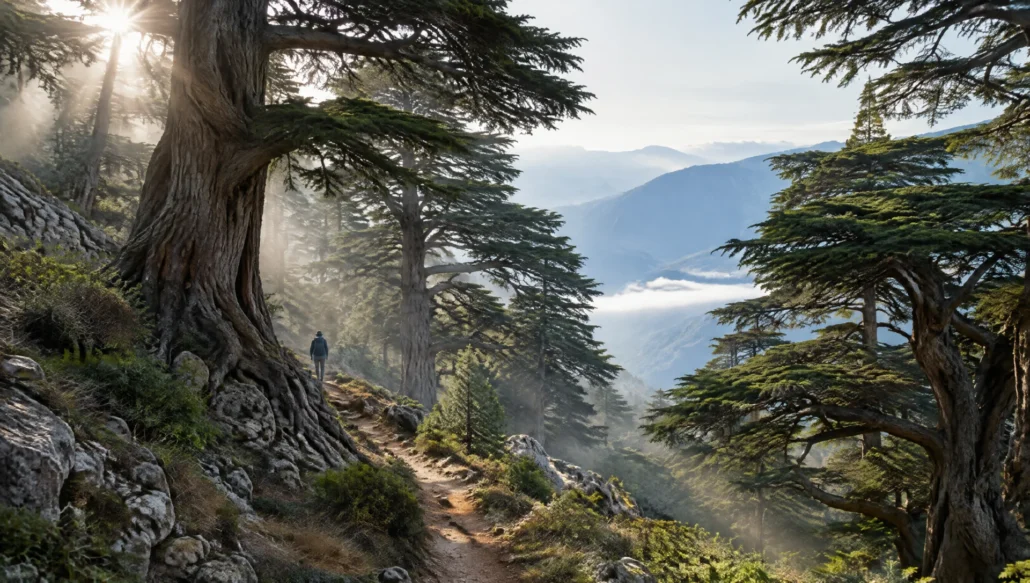
The Chouf is the mountain district south east of Beirut, and for hikers it means one thing first: the Shouf Biosphere Reserve. Created in 1996 and recognised by UNESCO as a biosphere reserve, it covers roughly 500 square kilometres along the Barouk ridge, between about 1,200 and 1,980 metres above sea level. Its three cedar forests, Maasser el Shouf, Barouk and Ain Zhalta to Bmohray, hold around a quarter of the cedar forest Lebanon has left, and the reserve estimates some of its trees at about 2,000 years old.
That makes the Chouf one of the easiest places in the country to give children a real mountain day: marked paths, cool air in summer, visitor facilities at the main gates, and stone villages with long stories on the drive home. This guide brings together everything you need to plan a single day, plus ideas for stretching it into a weekend or a photography trip.
Which trail to pick
The reserve has several entrances, and each one suits a different kind of group. For families with young children, start with the cedar forests themselves, where the walking is short and the trees do the work.
- Maasser el Shouf cedar forest: the entrance opens straight onto about 16 hectares of the oldest and largest cedars in the reserve, including the old tree known as the Lamartine cedar. There are short self-guided walks, an information hut, toilets and a small shop. Best first visit for little legs.
- Barouk cedar forest: about 2 km above Barouk village, with trails across more than 400 hectares of cedar and a stone hide for watching birds and wildlife. Good for families with older children who want a longer loop.
- Ain Zhalta to Bmohray: the northern gate, closest if you come up the Damascus road through Aley, with paths through about 170 hectares of cedar.
- Jbaa, Darb el Hajal (the Partridge Trail): a 7 km loop of about 2.5 hours, rated easy to moderate, with a renovated picnic area at the entrance. A good choice when you want a proper hike that still finishes where the car is.
- Niha: a short climb leads to the medieval cave fort of Niha (Shqif Tayroun), cut into the cliff above the valleys. Exciting for children who like castles.
Longer marked trails
For teenagers and keen walkers, the reserve publishes longer themed routes. Times below exclude stops, so add an hour or two for lunch and photos.
| Trail | Start | Length | Time | Level |
|---|---|---|---|---|
| Darb el Hajal (Partridge Trail) | Jbaa entrance, loop | 7 km | 2.5 hours | Easy to moderate |
| Darb al Yanabih (Trail of Springs) | Ain Zhalta to Bmohray gate | 12.2 km | 4 hours | Moderate |
| Emir Fakhreddine Trail | Niha | 13 km | 2.5 hours | Moderate |
| Baadaran Natural and Cultural Trail | Baadaran village centre | 13 km | 2.5 hours | Moderate |
| Barouk to Fraidiss Trail | Barouk | 20 km | 4 to 5 hours | Moderate to difficult |
| Cultural Heritage of Maasser el Shouf | Maasser el Shouf | 20 km | 6 hours | Moderate to difficult |
Qualified local guides work from Maasser for the longer trails, and booking one is worth it on any route you do not know. The Lebanon Mountain Trail also runs along this ridge, so you will see its markings in places.
A suggested day
Morning: cedars first
Leave Beirut early and take the coastal highway south to Damour, then climb through Kfarhim and Deir el Qamar toward Beiteddine. From Damour, the Maasser el Shouf gate is roughly 30 to 45 minutes. Stop for man’oushe on the way, then aim to be walking by 9 am, when the forest is quiet and the light is soft. Two hours among the Maasser cedars, or the Partridge Trail at Jbaa, is plenty for most families.
Afternoon: lunch and a palace
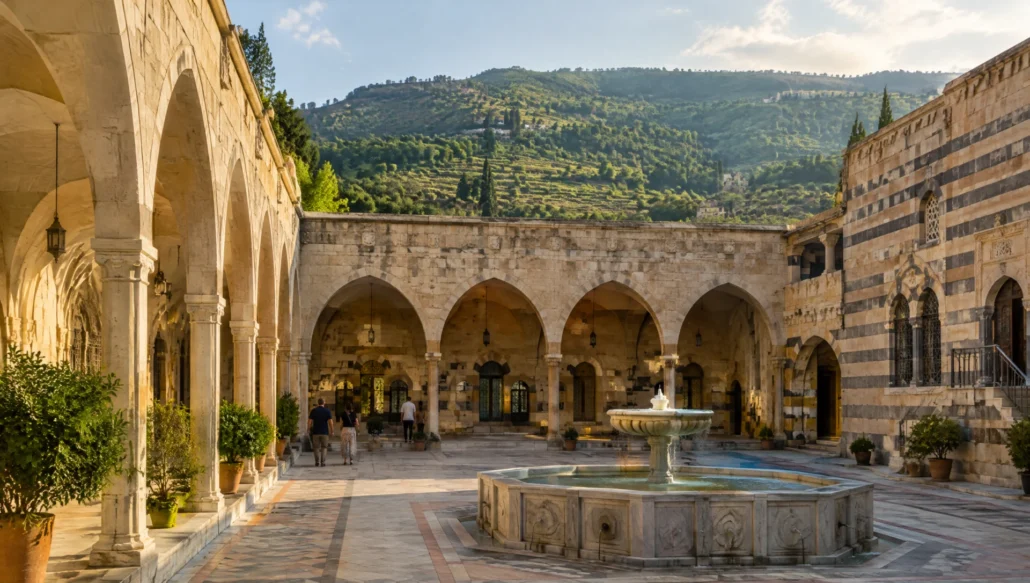
Drive down through Moukhtara, past the Jumblatt palace, toward Beiteddine for a late lunch. Bouyouti in Maasser Beiteddine has a restaurant in a hillside estate of stone cottages, an easy stop on the way down. Then visit Beiteddine Palace, built by Emir Bashir II between 1788 and 1818. Children tend to love the courtyards, fountains and the arched stables, and parents get some of the best Byzantine mosaics in the country. In summer the courtyards host the Beiteddine Art Festival, so check the programme if you are visiting in summer.
Evening: Deir el Qamar
End in Deir el Qamar, a few minutes away. Lebanon’s emirs ruled from this town between the 16th and 18th centuries, and its stone square (the Midan), old mosque, churches and serails are compact enough to wander with tired children. Have ice cream or a coffee on the square while the stone goes golden, then head back to Beirut before dark.
Making it a weekend
With two days you can split the reserve: the southern forests and Niha on day one, Barouk or Ain Zhalta on day two. Stay in a restored stone house such as Beyt El Jabal in Deir el Qamar, or at Bkerzay near Baakline, an eco-village with pottery workshops that keeps children busy on a rainy afternoon. If you want a multi-day route on foot, see our three to five day Chouf hiking guide.
For photographers
- The cedar forests face the ridge, so early morning and the last hour of daylight give long shadows between the trunks. Midday light is flat under the canopy.
- Late spring brings wildflowers on the open slopes; autumn brings low cloud that rolls through the cedars, which makes for moody frames.
- Winter snow can close the high roads and trails. When it is open, snow on cedar branches is the classic Lebanese mountain picture, but go with a guide.
- Bring a longer lens for birds: the reserve sits on a major migration route and birdwatching is one of its main activities.
Practical tips
- The reserve charges an entry fee and keeps set opening hours, so check the official website before you go.
- Lighting fires, hunting, driving 4×4 vehicles and collecting archaeological objects are all banned inside the reserve.
- Even in July it is noticeably cooler at the cedars than in Beirut. Pack a fleece, sun hats, water and good shoes, as paths are rocky.
- There are few shops near the forest gates. Bring snacks and a picnic for children, and carry your rubbish out.
- Phone signal can drop on the higher trails. Download your route and tell someone your plan.
Take the Chouf home
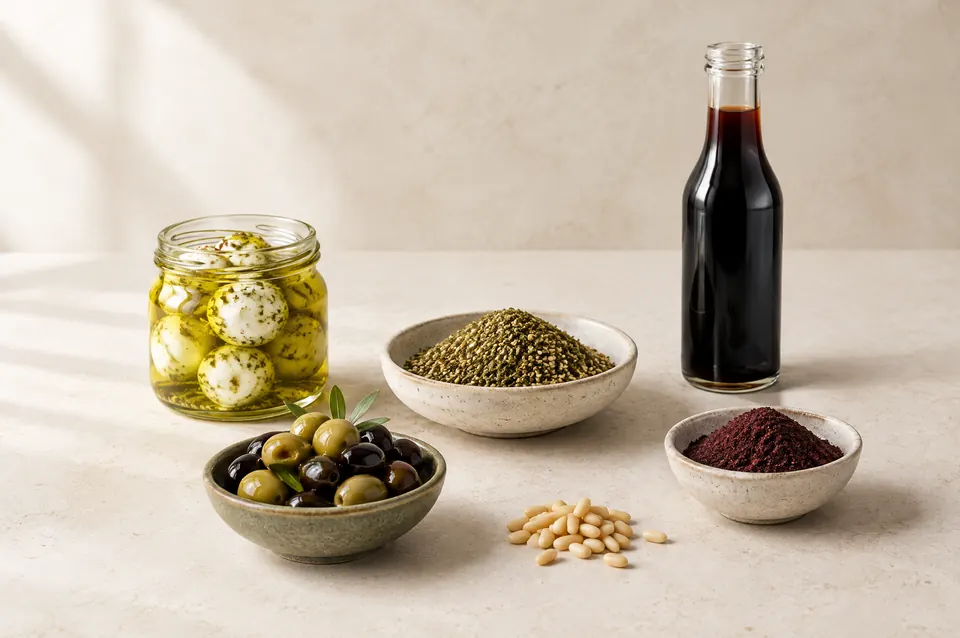
Before you leave, pick up cedar honey from Asalli, whose hives sit among the Barouk cedars, or a jar of additive-free za’atar from Mountain Boons, grown on farmland in Al Barouk. Both make your breakfast the next morning taste like the mountain.