



Hiking in the Chouf: A 3 to 5 Day Route for Solo Travelers
Walk the cedar ridge of the Shouf Biosphere Reserve on the Lebanon Mountain Trail, sleep in village guesthouses, and finish among the palaces of Deir el Qamar.
- Region
- Chouf, Mount Lebanon
- Time needed
- Three to five days
- Best time to visit
- April to June, September to November
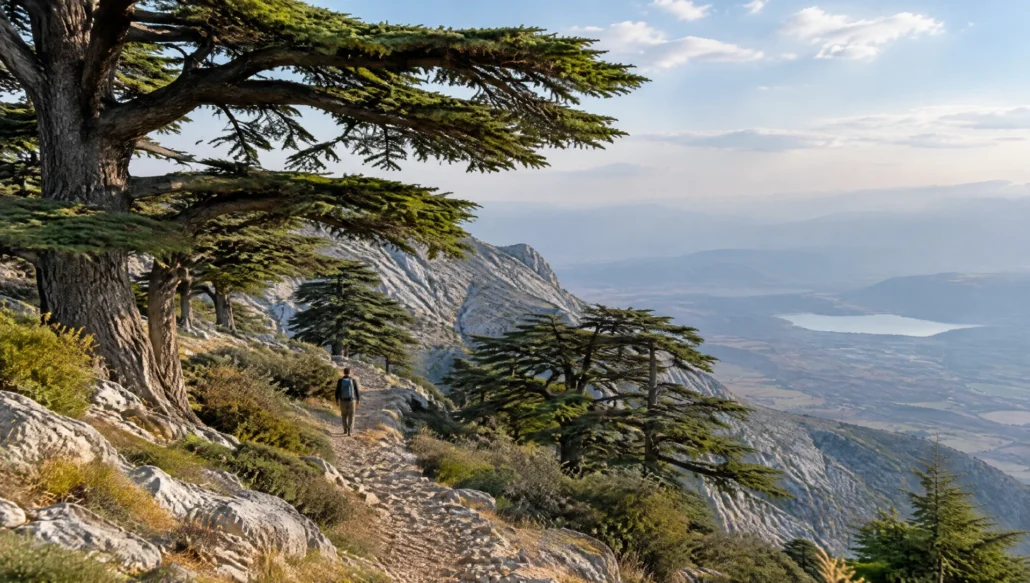
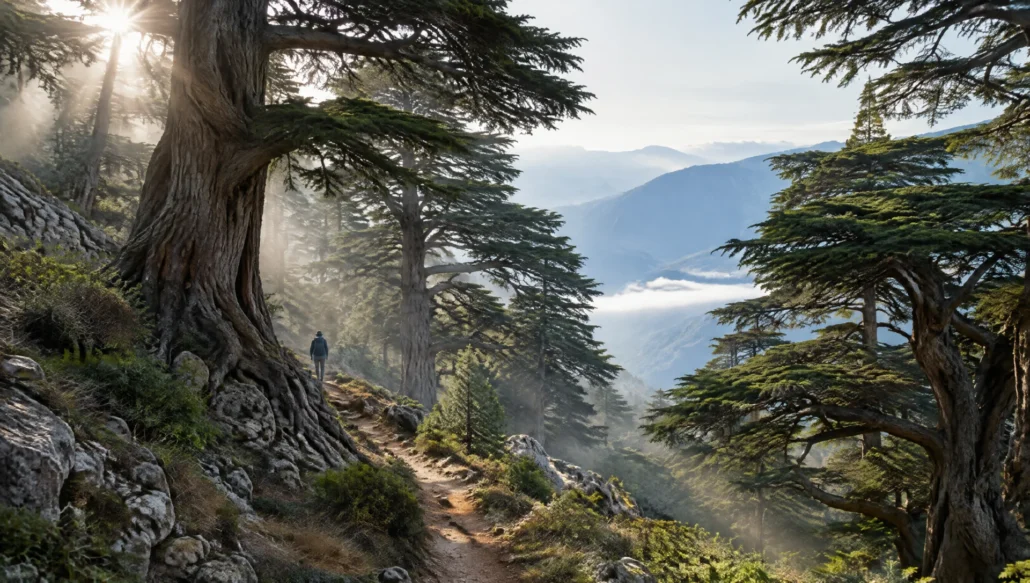
The Chouf (also written Shouf) is the southern stretch of Mount Lebanon, a ridge of cedar and oak forest above terraced Druze and Christian villages, about an hour and a half from Beirut. Its high crest is protected by the Shouf Biosphere Reserve, Lebanon’s largest nature reserve at about 500 square km, which holds three cedar forests (Maasser el Chouf, Barouk and Ain Zhalta-Bmohray) and roughly a quarter of the country’s remaining cedars. UNESCO named it a biosphere reserve in 2005.
It is also one of the easiest places in Lebanon to hike alone for several days. The Lebanon Mountain Trail (LMT), which runs some 470 km from Andaket in the north to Marjayoun in the south, crosses the reserve in day-length sections that end in villages with guesthouses. Below the ridge, the old towns of Deir el Qamar and Beiteddine make a perfect rest day. Here is a plan for three to five days.
Before you go
The reserve’s trails are marked and its entrances at Ain Zhalta, Barouk and Maasser el Chouf have ranger posts and visitor services. The reserve lists licensed local guides, and as a solo hiker you should seriously consider one, at least for the high ridge sections. Book your nights ahead, tell someone your route each day, and carry more water than you think you need, because springs on the crest can run dry by late summer.
A suggested 3 to 5 day route
Day 1: Ain Zhalta to Barouk
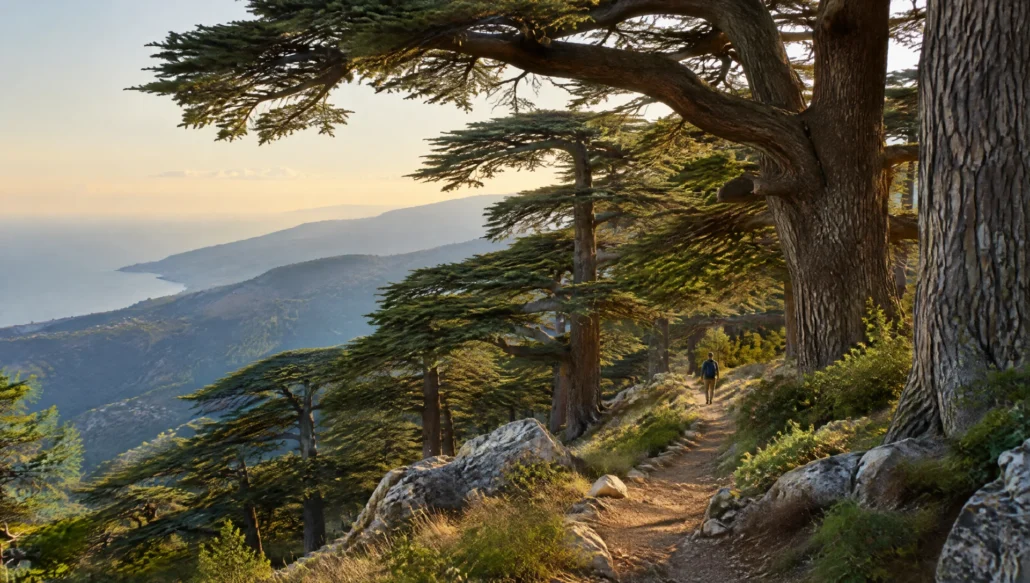
Start at the Ain Zhalta-Bmohray entrance of the reserve and follow LMT section 18 south along the ridge to the Barouk reserve gate. It is short in distance but rated very difficult, with about 544 m of ascent and 681 m of descent over rocky ground. The reward is your first walk under big cedars and long views west to the sea and east over the Bekaa. Sleep in or near Barouk, the village at the foot of Jabal Barouk.
Day 2: Barouk to Maasser el Chouf
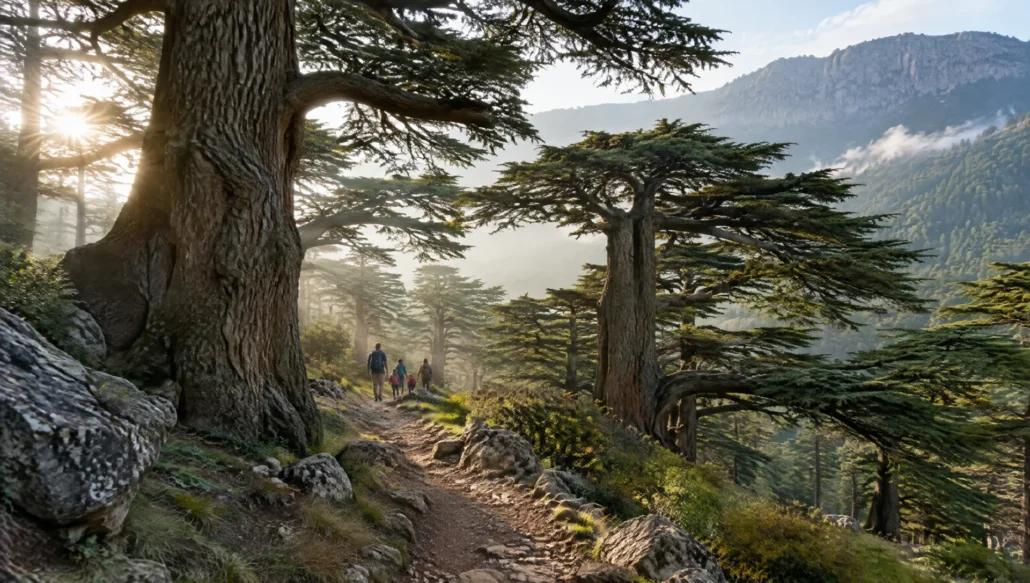
LMT section 19 covers about 14 km from Barouk to Maasser el Chouf, with around 690 m of climbing. You pass through the Barouk cedar forest, one of the largest in Lebanon, and over open limestone ridges where you can see Lake Qaraoun shining in the West Bekaa. Maasser el Chouf is the reserve’s main village, with the Park House on the square. Its own cedar grove, among the oldest in the country, lies about 7 km above the village.
Day 3: Maasser el Chouf to Niha
LMT section 20 runs about 12 km from Maasser to the main square of Niha, dropping out of the cedars into oak and juniper and old village terraces. Niha is known for its cave fortress, carved into the cliff and linked to Emir Fakhreddine II. If you are doing only three days, arrange a ride from Niha down to Deir el Qamar or back to Beirut.
Day 4: Niha to Jezzine (optional)
To keep going, LMT section 21 is a moderate 14 km south to the Nabaa Jezzine spring in Jezzine, a town of pine forests and waterfalls. Read our Jezzine waterfalls guide for what to see there.
Day 5: Deir el Qamar and Beiteddine
Give your legs a day off in the valley. Deir el Qamar was the seat of the emirs of Mount Lebanon and has been under monument protection since 1945. Around its central square stand the Fakhreddine Mosque, built in 1493 by Emir Fakhreddine I, the church of Saydet el Talle, the old silk khan and the serail of Emir Youssef Chehab. Up the road, Beiteddine Palace was built for Emir Bashir Shihab II in the early 19th century, with courtyards, fountains and mosaics. Between the two, Moussa Castle is a stone castle that Moussa al-Maamari built himself over decades, filled with displays of Lebanese village life.
Shorter loops if you have less time
The reserve also maintains its own trails, good for a single day or for linking with the LMT:
- Sustainable Forest Management Trail, Batloun to Barouk, Maasser and Botmeh: 16 km, about 5 hours.
- Maasser el Chouf Cultural Heritage Trail: 20 km, about 6 hours, through the Maasser cedar forest.
- Darb al-Yanabih (Trail of Springs) from Ain Zhalta to Nabeh al-Safa: 12.2 km, about 4 hours.
- Darb el Hajal (Partridge Trail), a 7 km loop from Jbaa: easy to moderate, about 2.5 hours.
Where to eat and sleep
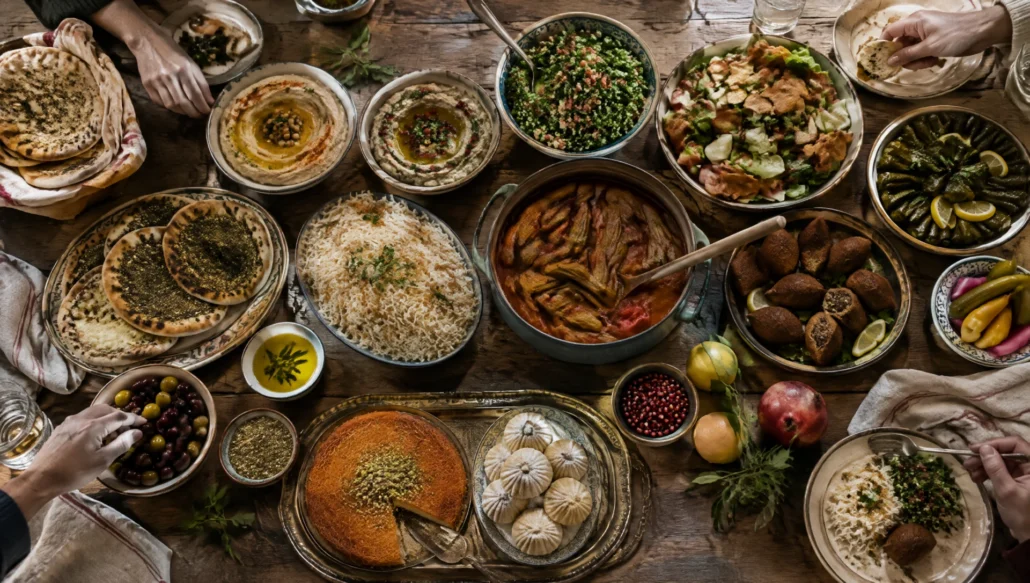
Chouf villages cook with what grows there: mana’ish with wild za’atar for breakfast, labneh and olives, kibbeh and seasonal greens. For a comfortable night near the palaces, Beyt el Jabal is a restored stone house in Deir el Qamar, and Bouyouti is a hillside estate of stone cottages in Maasser Beiteddine with a restaurant and gardens. In Baakleen, Bkerzay is an eco-village with pottery workshops and rooms.
For food to carry home, Mountain Boons grows thyme and sumac in Al Barouk for additive-free za’atar, and Asalli keeps hives among the Barouk cedars for cedar honey. The Shouf Biosphere Reserve shops also sell local products.
Practical tips for solo hikers
- Best seasons are April to June and September to November. Summer middays on the open ridge are hot, and the crest is under snow in winter.
- Download the LMT section maps and GPS tracks before you go, as mobile coverage is patchy on the ridge.
- Pay the reserve entrance fee and follow the rules: no fires, no off-trail walking, no picking plants.
- Stay off the trails in fog or storms. The ridge is exposed and easy to lose in poor visibility.
- Carry a basic first-aid kit, a headlamp and some cash for guesthouses and village shops.
- In summer, the Beiteddine Art Festival holds concerts in the palace courtyards, a good reward at the end of a trek.
Nearby
For one-day walks, see our guides to the Barouk Cedars, Maasser el Chouf and family hiking in the Chouf. For the villages themselves, read our Beiteddine village guide.