



Spiritual Nature Trails in Lebanon: Pilgrim Walks and Shrines
Hermit caves, cliffside monasteries and a new trail in the footsteps of Saint Charbel: the best walks in Lebanon for pilgrims and quiet walkers.
- Region
- Across Lebanon (North and Mount Lebanon)
- Time needed
- One day per walk, a week for a full route
- Best time to visit
- April to June, September to October
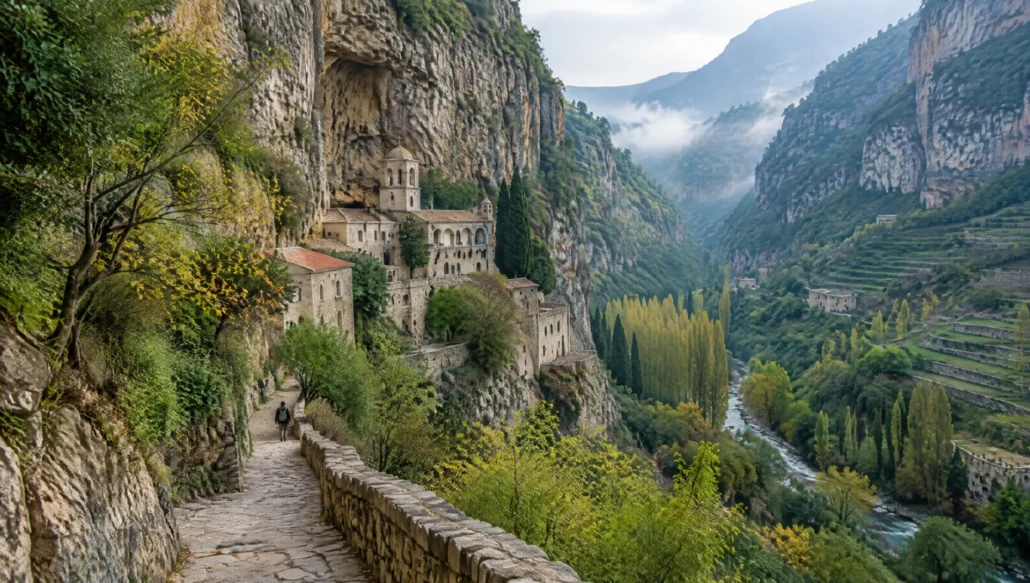
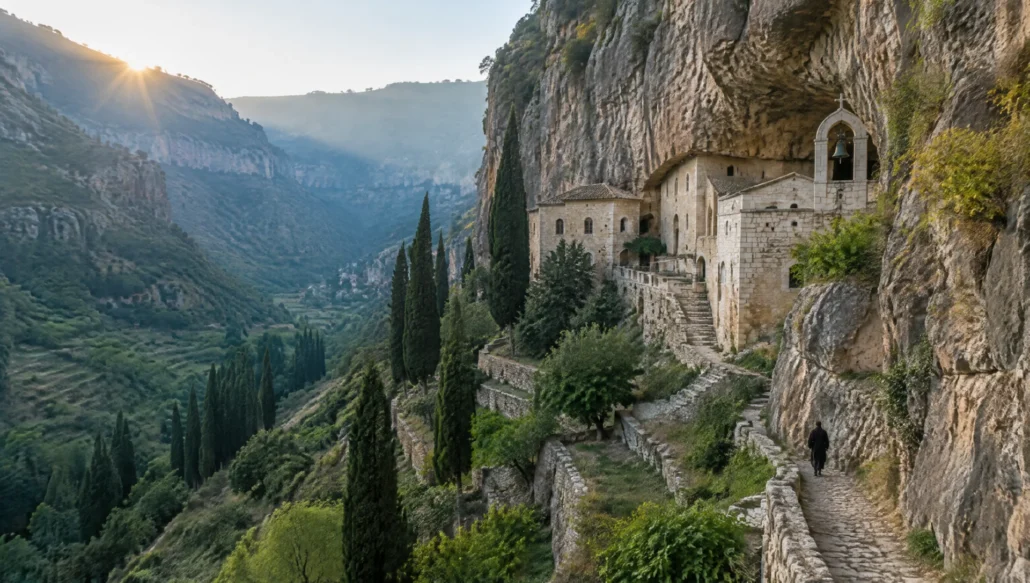
Lebanon has been a place of retreat for a very long time. Hermits cut cells into the cliffs of the Qadisha valley in the first centuries of Christianity, monks built monasteries on ledges above the river, and the cedar forest above Bsharri was treated as sacred. Today those same places are linked by footpaths, and walking between them is one of the most rewarding ways to see the country.
This guide brings together the best walks for pilgrims and quiet walkers: routes that join monasteries, shrines and holy forests through real mountain landscape. Most are Christian sites, since that is where the trail network is most developed, but several are shared places that people of all faiths visit with respect.
Darb Mar Charbel: the Saint Charbel Trail
The newest and most ambitious pilgrim route in Lebanon follows the life of Saint Charbel, the 19th century Maronite hermit whose tomb at the Monastery of Saint Maron in Annaya draws visitors from around the world. It was developed by Darbessama with the Lebanon Mountain Trail Association, and its first section, from Annaya to Mayfouq, opened on 20 July 2025, the saint’s feast day.
When complete, the trail will run about 130 km (around 80 miles) in two routes. A northern route of about 80 km starts at the Monastery of Saint Anthony of Qozhaya in the Qadisha valley and passes the saint’s birthplace before reaching Annaya. A southern route of about 50 km starts at the Maronite Patriarchate in Bkerke, passes the Shrine of Our Lady of Lebanon in Harissa and ends at his tomb. Parts are still being built, so check which sections are open before you go. Walkers describe it as demanding, with steep climbs and descents.
Along the open section, the Monastery of Our Lady of Ilige in Mayfouq was a seat of the Maronite patriarchs from 1121 to 1440. Above Annaya, the small hermitage of Saints Peter and Paul, where Saint Charbel spent his last years, is a short and quiet climb from the monastery.
The Qadisha valley: the Holy Valley
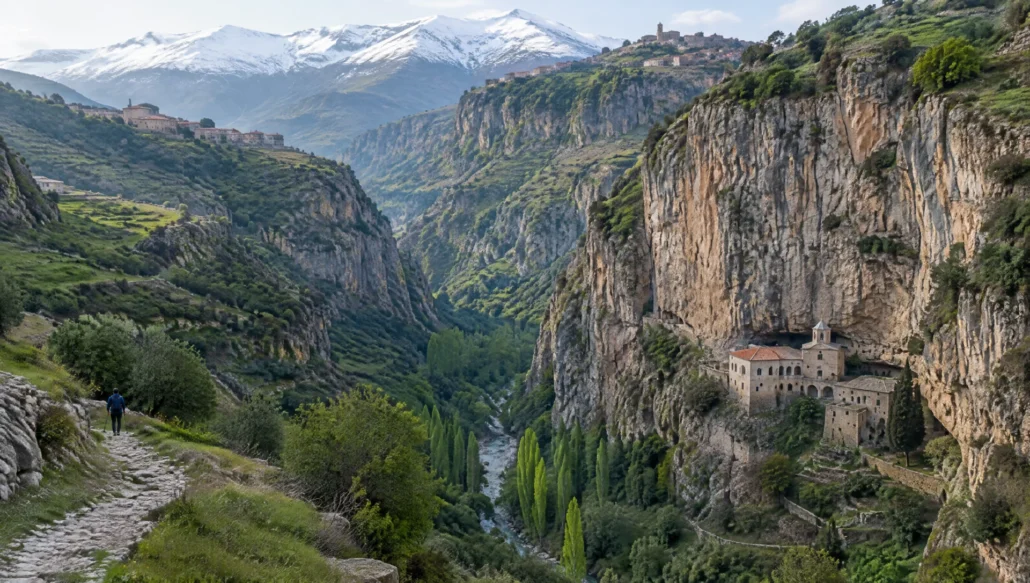
The Qadisha valley in North Lebanon is listed by UNESCO together with the Forest of the Cedars of God for its monastic communities, some of them among the oldest in Christianity. A path runs along the valley floor and up its sides, connecting hermit caves and four main monasteries: Saint Anthony of Qozhaya, Our Lady of Hawqa, Qannoubine (seat of the patriarchs for centuries) and Mar Lichaa (Saint Elisha), just below Bsharri.
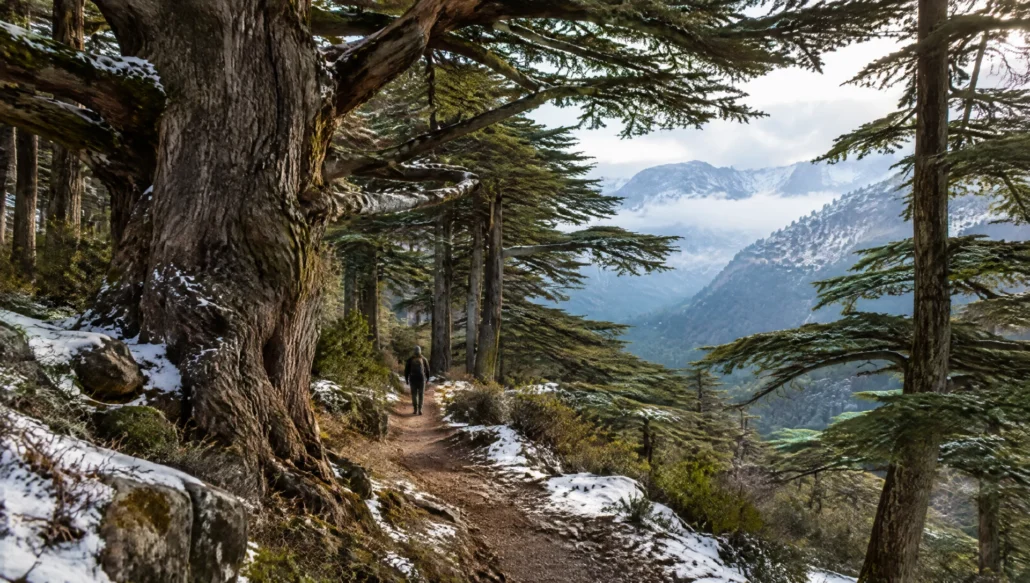
A classic day on foot drops from the cliffs near Bsharri to Mar Lichaa, follows the river to Qannoubine and climbs out again. It is shaded in places and steep at the ends. Our Qadisha valley guide has more detail. Above Bsharri, the old trees of the Cedars of God make a fitting end to the walk.
Kfifan and the saints of Batroun
In the hills of Batroun, the Monastery of Saints Cyprian and Justina in Kfifan is where Saint Charbel studied under Saint Nimatullah Al-Hardini, and where Blessed Brother Estephan Nehme spent much of his life. The country roads and farm tracks around it are pleasant to walk in spring, when the terraces are green, and the area links naturally with a visit to Annaya.
Jabal Moussa: Roman stairs and village paths
For a quieter, nature-first retreat, the Jabal Moussa Biosphere Reserve in Keserwan has fifteen marked trails through oak and pine forest, including a stretch of ancient Roman stairs. The reserve works with village guesthouses, so you can walk for two or three days and sleep in family homes. It is close to the Adonis valley, a landscape with its own long religious history.
Harissa and the Mountain of Divine Mercy
The Shrine of Our Lady of Lebanon in Harissa, above the bay of Jounieh, is the most visited Marian site in the country and sits on the southern route of Darb Mar Charbel. Higher up, in Ghosta, the Mountain of Divine Mercy has a statue of Christ about 12 metres tall overlooking the bay, with smaller shrines to Saint Charbel, Saint Rafqa and Saint Teresa of Calcutta. Neither is a wilderness walk, but both are good places to pause at the start or end of a pilgrimage.
Niha and Nebi Ayyoub in the Chouf
In the Shouf Biosphere Reserve, the Niha entrance offers a short hike to the medieval Niha fortress cut into the cliff and a longer walk up to the shrine of Nebi Ayyoub (the Prophet Job), a hilltop site honoured by the Druze community and visited by people of many backgrounds. See our Chouf hiking guide for longer routes in the area.
Planning a walking pilgrimage
Choose your route
For a single day, the Qadisha valley or the Annaya to Mayfouq section of Darb Mar Charbel gives the strongest sense of pilgrimage. For a week, combine the Qadisha valley, Kfifan and Annaya, then finish at Harissa. Local operators such as Liban Trek run guided walks and can arrange transport between trailheads, and the Lebanon Mountain Trail Association can help with route information and local guides.
Where to rest and eat
Many monasteries welcome walkers and some offer simple rooms; ask in advance. In the Qadisha area, Bsharri has small hotels and guesthouses, and Les Vergers des Cèdres in Bcharre makes apple juice and cider from local orchards, a good thing to carry on the trail.
Practical tips
- Dress modestly at monasteries and shrines: shoulders and knees covered, and quiet voices inside chapels.
- Many monasteries close their doors at midday. Ask locally about visiting times rather than relying on online hours.
- Spring and autumn are the best walking seasons. Summer is hot in the valleys, and winter brings snow above about 1,500 metres.
- Carry water, wear proper boots and walk with a companion or guide on steep sections.
- Check current travel advice for Lebanon before you go, as conditions vary by region.
Frequently Asked Questions
What is Darb Mar Charbel?
Why is the Qadisha valley called the Holy Valley?
Can you walk between monasteries in Lebanon?
What should I wear to visit Lebanese monasteries?
Sources and further reading
- Ouadi Qadisha and the Forest of the Cedars of God (UNESCO)
- Lebanon announces the launch of the Darb Mar Charbel trail (Lebanon Traveler)
- American priest walks Lebanon’s St. Charbel Trail (EWTN News)
- Beyond Lebanon’s famous shrines, 5 religious sites that draw pilgrims (EWTN News)
- Visiting the Shouf Biosphere Reserve