


How to Make Grilled Halloumi, the Lebanese Way
Squeaky white cheese seared until golden and soft inside, then finished with olive oil, za’atar and fresh mint. Ten minutes, start to finish.
- Prep time
- 5 minutes
- Cook time
- 6 minutes
- Serves
- 4 as part of a mezze
- Difficulty
- Easy
Halloumi, called halloum in Lebanon, is a firm white brined cheese traditionally made from sheep’s and goat’s milk, often mixed with cow’s milk today. It is closely tied to Cyprus, but it has long been made and eaten across Lebanon. Because it holds its shape when heated, it is perfect for grilling: the outside turns golden and the inside goes soft and slightly stretchy.
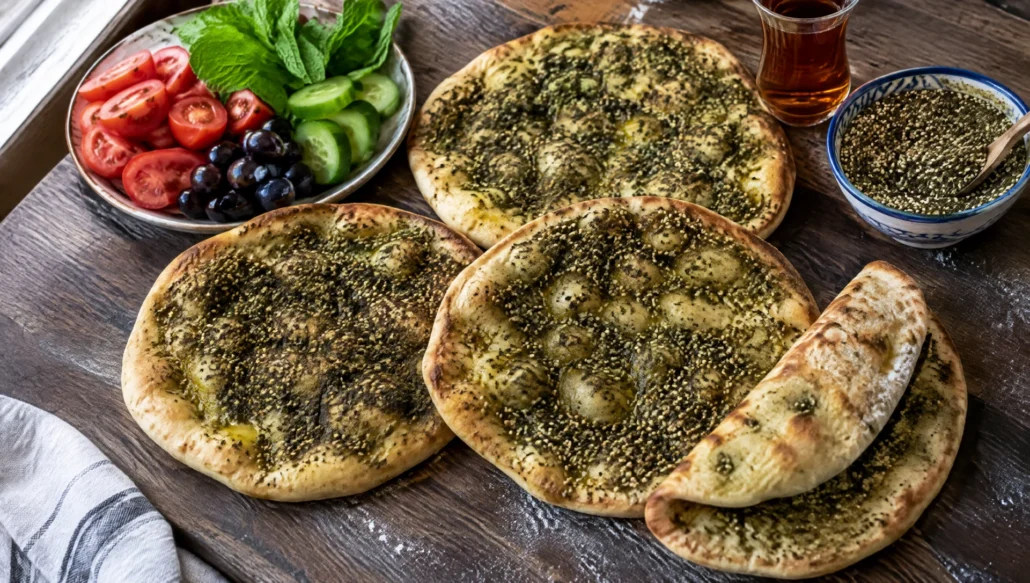
Grilled halloum, halloum mishwi, is a hot mezze, a breakfast with tomatoes, cucumber and olives, and a favorite filling for a quick sandwich with za’atar. The secret is high heat, short cooking and eating it straight away, before it cools and turns rubbery.
Ingredients
For the cheese
- 250 g (9 oz) block of halloumi
- 1 tablespoon (15 ml) olive oil
For the Lebanese topping
- 1 tablespoon (15 ml) extra virgin olive oil
- 1 teaspoon za’atar
- A few fresh mint leaves
- 2 ripe tomatoes and 1 small cucumber, sliced, to serve
- Lemon wedges, to serve
For the honey version (optional)
- 1 to 2 tablespoons honey
- Leaves from 2 sprigs fresh thyme
- Freshly ground black pepper
Instructions
- Taste a small piece of the cheese. If it is very salty, as some Lebanese halloum is, soak the slices in cold water for 20 to 30 minutes.
- Cut the halloumi into slices about 1 cm (1/2 inch) thick. Thinner slices dry out; thicker ones do not soften in the center.
- Pat the slices very dry with paper towels. Dry cheese gets better color and sticks less.
- Heat a ridged grill pan, heavy frying pan or outdoor grill over medium-high heat, about 200 to 230°C (400 to 450°F) for a grill. It should be hot enough that a drop of water sizzles away at once.
- Brush the slices lightly with the olive oil and lay them on the hot surface.
- Leave them alone for 2 to 3 minutes, until they release easily and have deep golden marks. If they stick, give them another 30 seconds.
- Flip with a thin spatula and cook for 1 to 2 minutes more, until the second side is golden and the cheese feels soft when pressed.
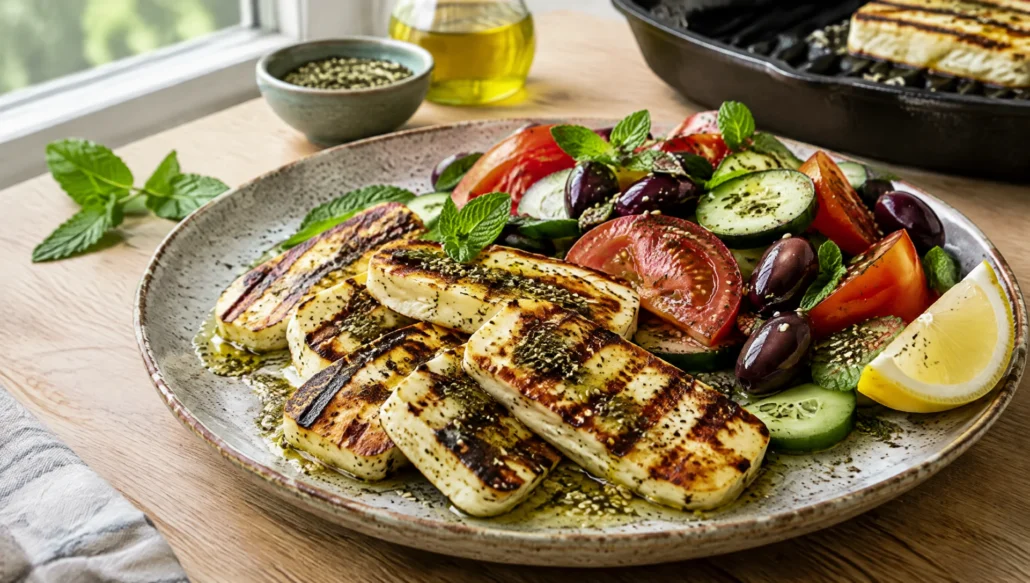
- Move the slices to a warm plate. For the Lebanese version, drizzle with olive oil, sprinkle with za’atar and scatter with mint. For the honey version, drizzle with honey, add thyme leaves and a grind of black pepper.
- Serve right away with the tomatoes, cucumber and lemon wedges.
Tips for the best grilled halloumi
- Serve it hot. Halloumi firms up and squeaks more as it cools.
- Do not move the slices too early. They release on their own once a crust forms.
- Keep the oil light. Too much oil fries the cheese rather than grilling it.
- A squeeze of lemon cuts the saltiness nicely.
- Buy halloumi in a block rather than presliced. You control the thickness, and the cheese stays moister in its brine.
- No grill pan? A dry nonstick pan works well; you will get an even golden crust instead of stripes.
Variations
- Halloumi sandwich: tuck hot slices into pita with za’atar, tomato, cucumber and mint.
- Summer plate: serve with cubes of cold watermelon and mint, a popular pairing in the Levant.
- Skewers: thread cubes with cherry tomatoes and peppers and grill for 6 to 8 minutes, turning.
How to serve and store
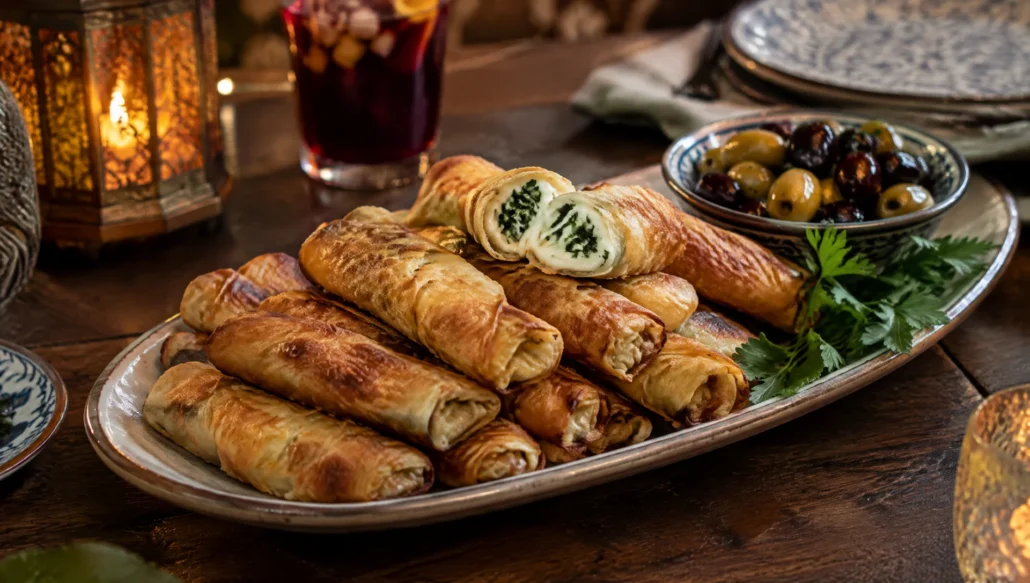
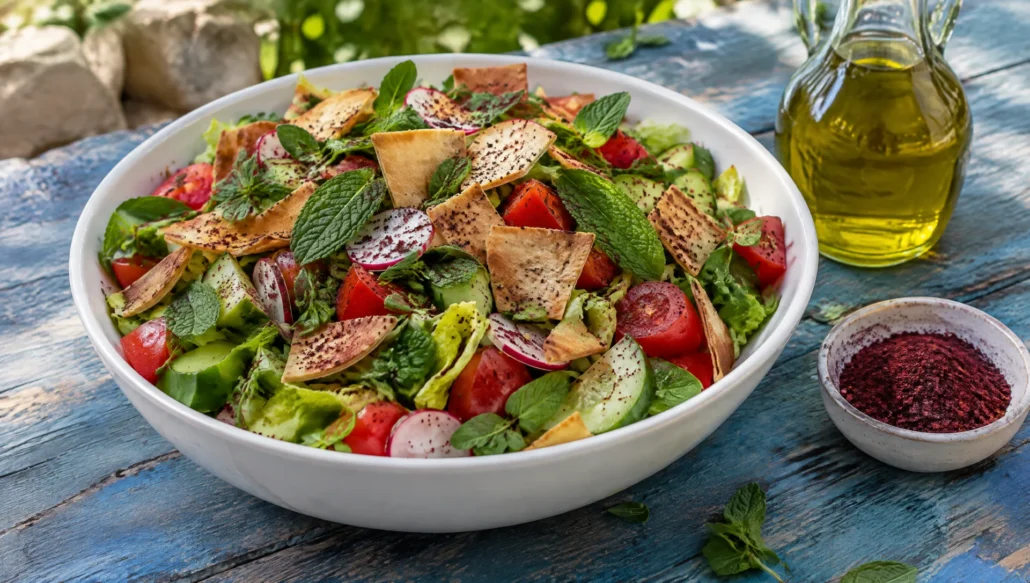
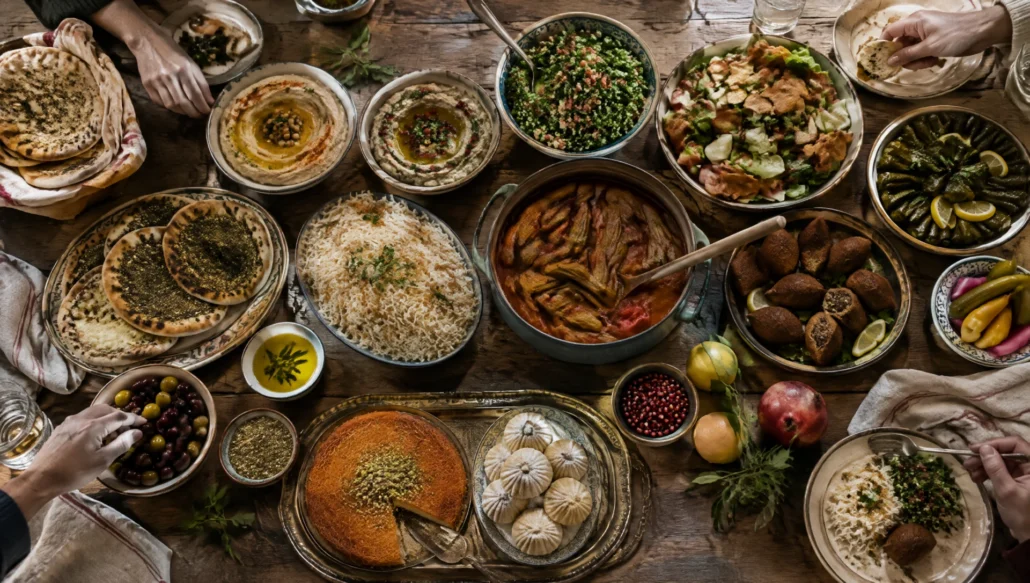
Serve with the mezze, next to fattoush and rakakat, or as breakfast with olives and bread. Uncooked halloumi keeps for weeks sealed in the fridge; once opened, store it in salted water for up to a week. Grilled leftovers can be reheated briefly in a hot pan.
Lebanese producers for the key ingredients
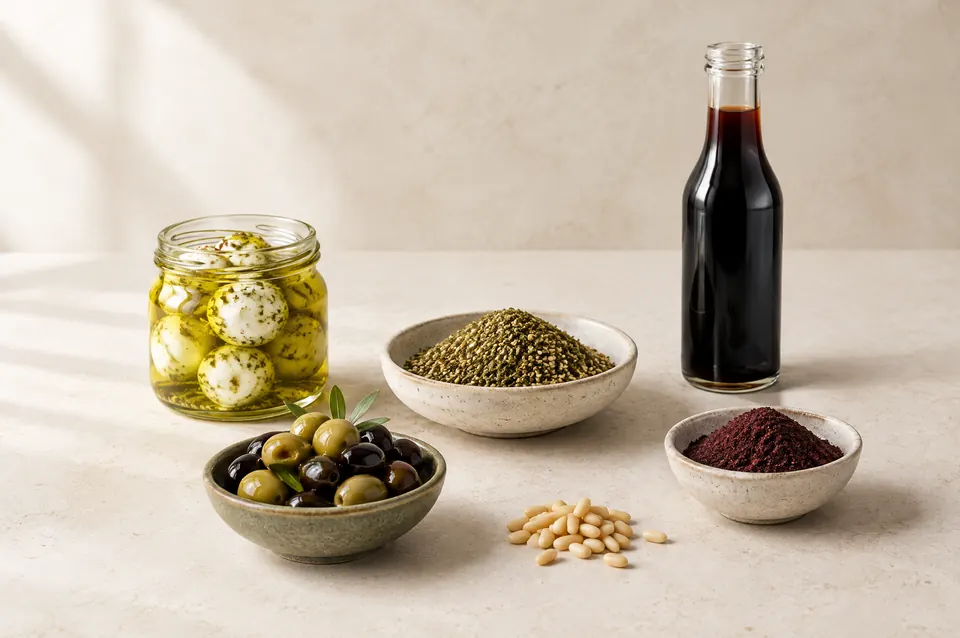
Bionord, a family dairy in Kelbata, Koura, makes cow’s milk halloum. For the za’atar, Mountain Boons grows its thyme and sumac on farmland in Al Barouk, in the Chouf.