
Chouf Mountains Food Guide: Authentic Recipes and Where to Eat
Saj bread on the roadside, kibbeh at Sunday lunch and jars of mouneh at breakfast: the Chouf is where Lebanese mountain cooking lives.
- Region
- Chouf, Mount Lebanon
- Time needed
- A full day or a weekend
- Best time to visit
- May to November; autumn for mouneh
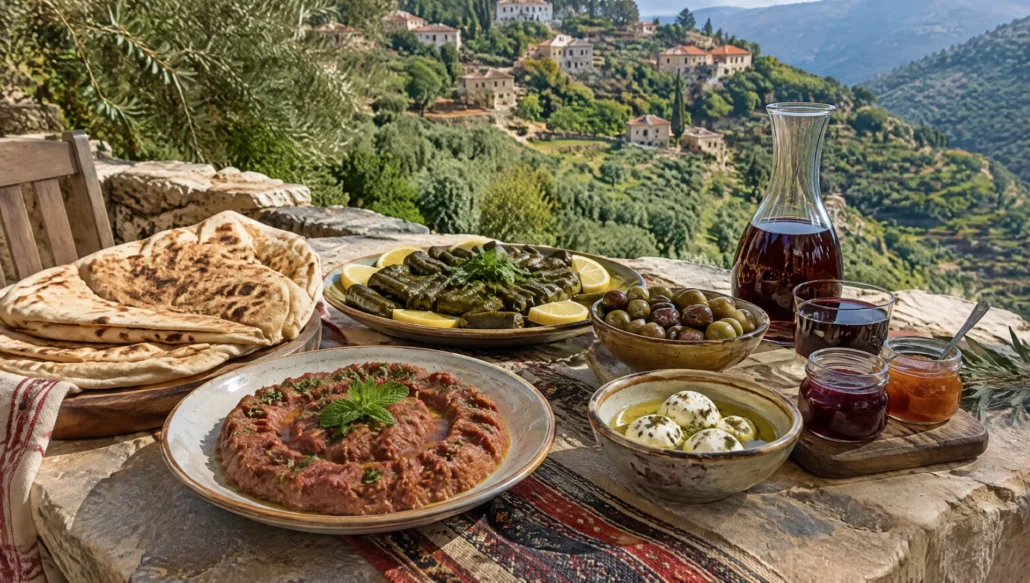
The Chouf (also written Shouf) is the mountain district southeast of Beirut, a landscape of stone villages, terraced olive groves and, higher up, the cedar forests of the Shouf Biosphere Reserve. It is also one of the best places in Lebanon to eat the food people cook at home: mountain dishes built on olive oil, wheat, wild herbs and the preserves that families put up every autumn, known as mouneh.
This guide is for travellers who want to plan a day or a weekend around that food, with the historic towns of Deir el Qamar and Beiteddine, the cedars above Barouk and Maasser el Shouf, and the producers who still work the land.
What to eat in the Chouf
Bread from the saj
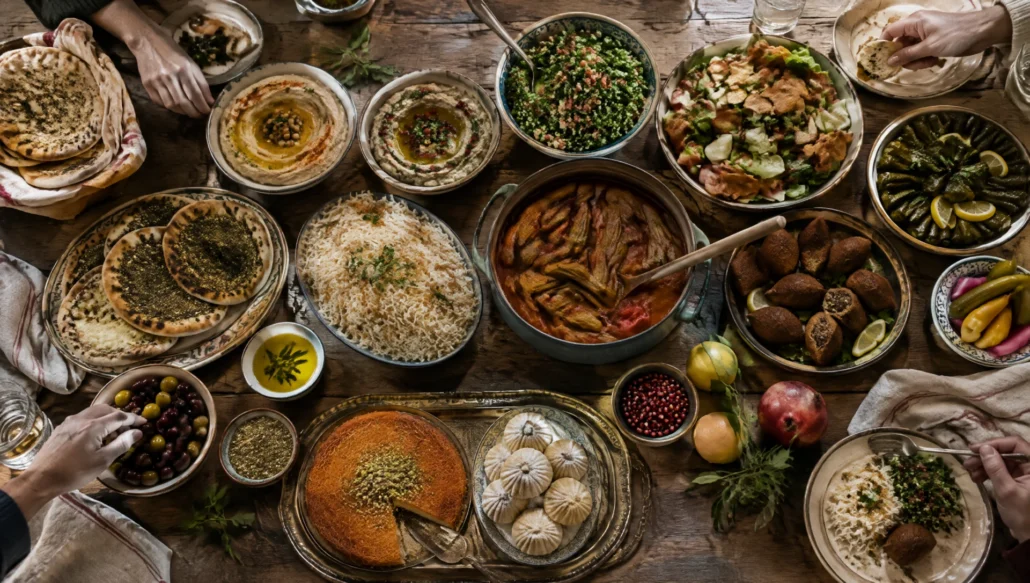
Along the mountain roads you will see women rolling dough paper thin and baking it on a saj, a domed iron griddle set over a flame. The result is markouk, a soft, very thin bread, and saj manoushe filled with za’atar, kishk or white cheese and folded hot. It is the classic Chouf breakfast and roadside snack.
Kibbeh in every form
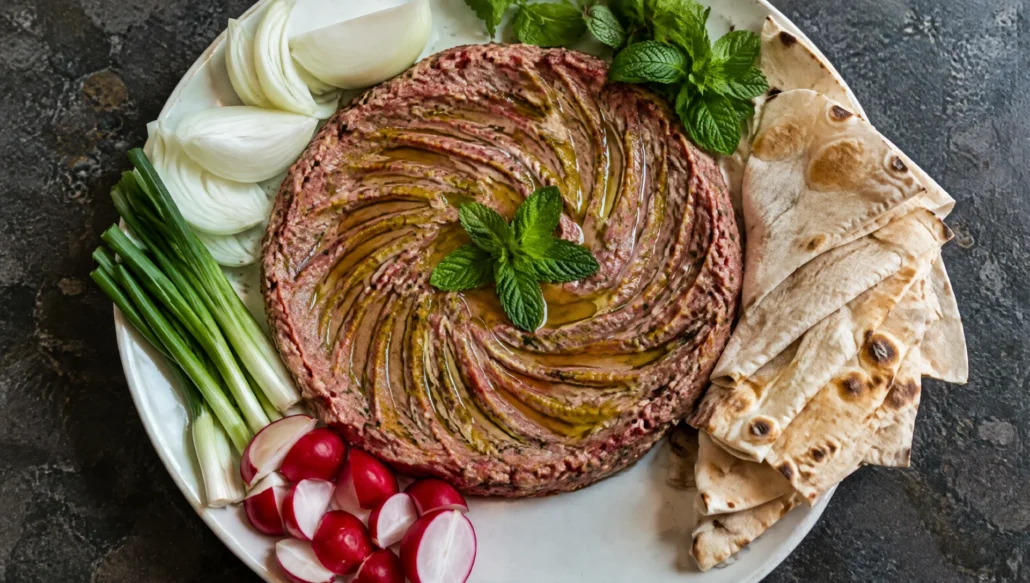
Kibbeh nayyeh, raw lamb pounded with fine bulgur and spices and served with olive oil, mint and raw onion, is a Sunday table centrepiece in mountain villages (see our kibbeh nayyeh recipe). Families also make fried kibbeh, baked kibbeh in a tray and meatless kibbeh during Lent.
Warak enab and stuffed vegetables
Vine leaves from the terraces are stuffed with rice, tomato, parsley and mint and slow cooked in olive oil and lemon (warak enab bi zeit). In summer the same filling goes into zucchini and eggplant. Our stuffed grape leaves recipe follows the village method.
Mouneh: the mountain pantry
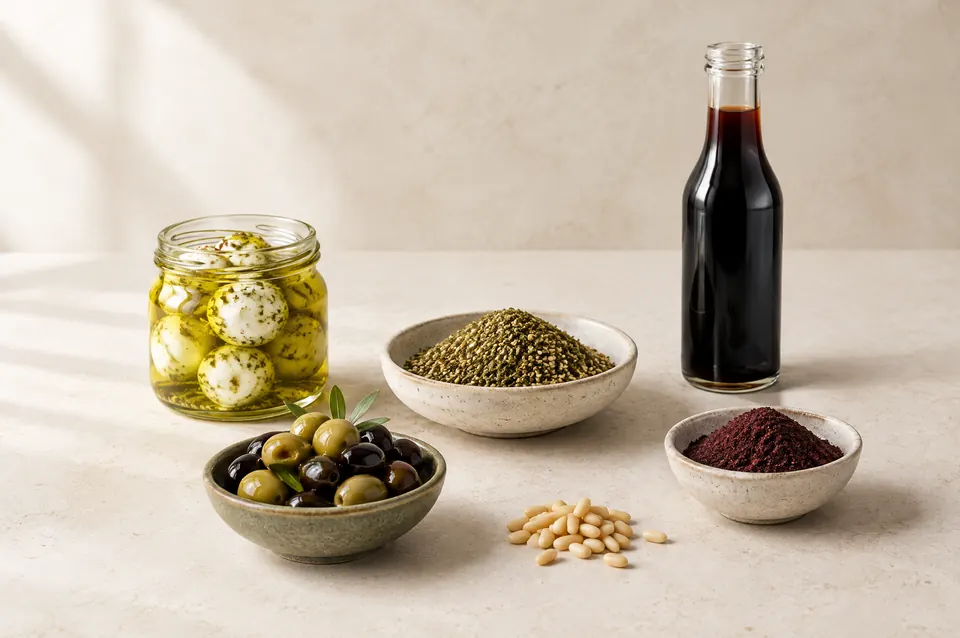
Autumn in the Chouf means drying, pickling and preserving: kishk (bulgur fermented with yogurt and dried in the sun), labneh balls in olive oil, jams, pickled vegetables, sun dried za’atar and sumac, and cured olives from the lower villages. Many guesthouses serve their own mouneh at breakfast, which is often the best meal of the trip.
Honey, herbs and wine
The Barouk slopes produce cedar honey and wild thyme. Asalli keeps hives among the Barouk cedars, and Mountain Boons grows thyme and sumac on farmland in Al Barouk for additive free za’atar. For wine, Château Florentine makes boutique wines on the terraced heights of the Chouf.
What to see between meals
Deir el Qamar
About 38 km from Beirut and around 900 metres up, Deir el Qamar was the seat of the Emirs of Mount Lebanon. Its central square holds a mosque, a church and a synagogue within a few steps of each other, along with old stone palaces and a small cultural souk. Climb to the cross above the town for views over the valley.
Beiteddine Palace
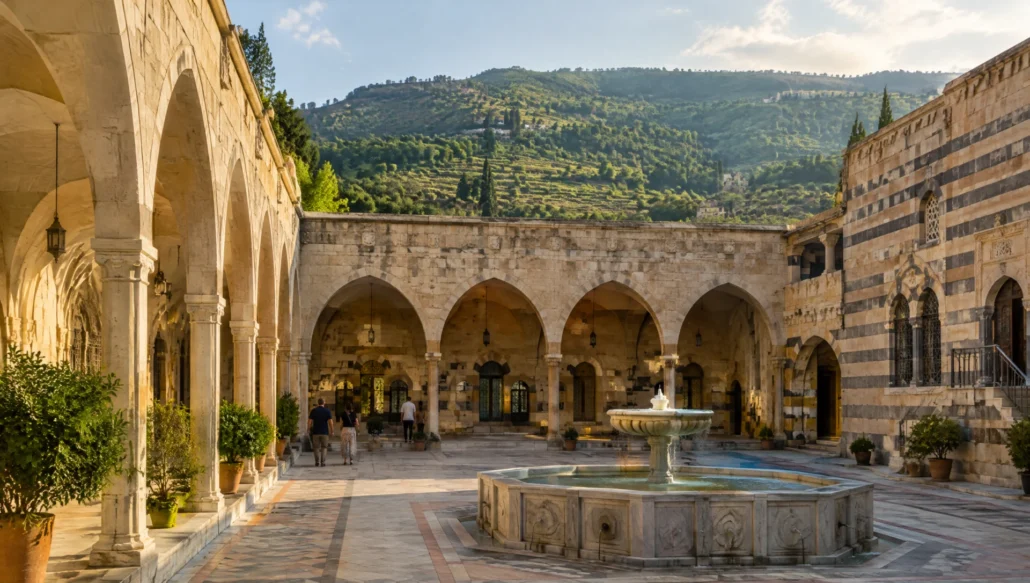
Across the valley, Emir Bashir II built Beiteddine Palace between 1788 and 1818. Its courtyards, carved wood, mosaics and fountains are the finest example of 19th century Lebanese palace architecture. Part of the palace is still a presidential summer residence, and the rest is open to visitors, including a museum. In summer the courtyards host the Beiteddine Art Festival.
Moussa Castle
On the road between Deir el Qamar and Beiteddine, Moussa Castle is a castle built by hand over decades by one man, Moussa Maamari, and filled with scenes of village life. It is quirky rather than historic, and children love it.
The cedars of the Shouf Biosphere Reserve
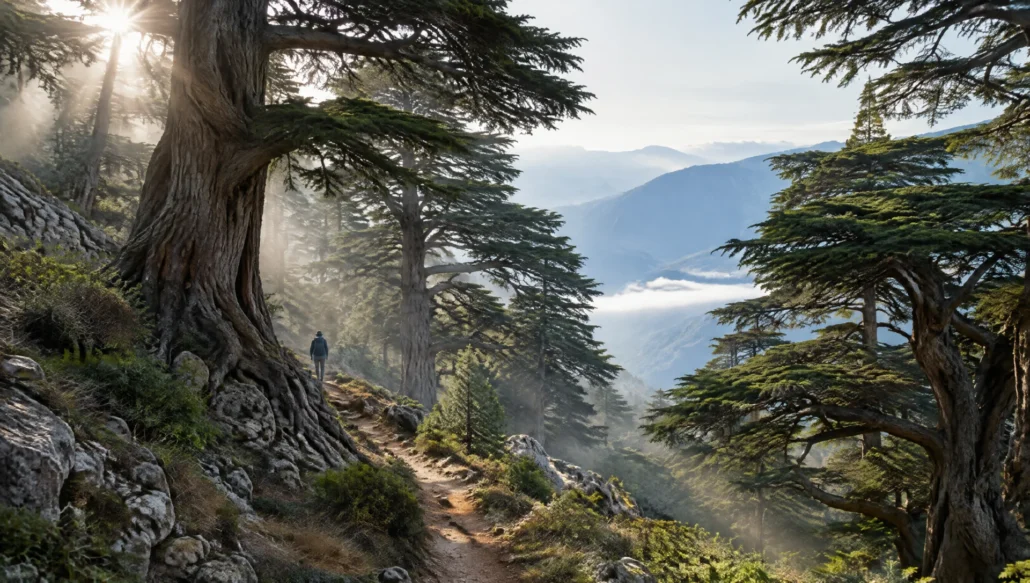
Higher up, the reserve protects three cedar forests, Maasser el Shouf, Barouk and Ain Zhalta and Bmohray, together about a quarter of Lebanon’s remaining cedar forest. Some trees are estimated to be around 2,000 years old. Read our Barouk cedars guide and our Maasser el Chouf guide before you go.
A suggested day
Morning
Leave Beirut early and stop for a saj manoushe on the climb. Spend the morning walking the Maasser or Barouk cedar forest while it is cool.
Afternoon
Drive down to Beiteddine for the palace, then have a long, late village lunch in Deir el Qamar: mezze, kibbeh, warak enab and grilled meat. Afterwards, wander the square and the souk.
Evening
Stay overnight if you can. Beyt El Jabal is a restored stone house in Deir el Qamar, and Bkerzay near Baakline is an eco village with a pottery workshop and rooms among olive trees.
Where to eat and shop
For a farm to table meal, Tawlet Ammiq, run by Souk el Tayeb, sits at the Ammiq wetland entrance of the reserve on the Bekaa side and serves home cooking from local women. In Deir el Qamar, Tawlet Beit el Qamar serves a homemade Lebanese meal on garden terraces. Reserve gift shops at Maasser, Barouk and Ammiq sell honey, jams, herbs and other products from the reserve villages.
Practical tips
- A car is the easiest way to explore. Roads are winding and narrow, so allow extra time.
- Village restaurants are busiest on Sunday lunch. Book ahead, or go on a weekday.
- The Chouf is home to Druze, Christian and Muslim communities. Dress modestly in villages and religious sites.
- Autumn (September to November) is the season for mouneh making, apple and olive harvests.
- Carry cash for roadside saj stands and small producers.
Nearby
The Chouf is a natural base for walking. Our family hiking day in the Chouf and Chouf festivals guide pair well with a food weekend.